Help Animals Live Healthier, Longer
Dr. Christina Chambreau D.V.M. -
"Many of us, even alternative health care practitioners, take our animals
to a good veterinarian and follow implicitly their directions, even if they contradict our personal philosophies. We do not
vaccinate our children at all, yet we vaccinate our animals for 8 diseases
yearly. We feed canned or dry food to our animals when we eat the freshest,
most organically prepared food we can afford. We treat whatever symptoms
the animal exhibits with whatever the veterinarian recommends, yet look
carefully at which approach would be the best for the particular problem
we are experiencing." Dr. Chambreau
Following are excerpts from Dr. Chambreau's lecture to a homeopathic health
minded audience
"INTEGRATING HOMEOPATHY AND HOLISTIC MEDICINE INTO YOUR VETERINARY PRACTICE"
FEED THE BEST DIET
For the health of your animal and for the health of the planet, the
ingredients should be the most consciously raised - organic vegetables,
free ranging holistically treated animals. Briefly, the
best diet is raw meat including raw bones for dogs and cats, grated
raw vegetables as well as cooked vegetables, maybe some grains, seeds and
nuts, and supplements.
If bones are not eaten, then a calcium supplement
is needed. There are now at least 5 good books on
home preparing food for your animals to coach you and I offer courses to
help you transition to fresh food. Every animal needs and wants a different
combination at different times in their lives, just as we do. If you also
feed some commercial food, buy it from the health food stores. With any
food, observe each of your animals for the effect that food has on them.
You decide what is best.
Experiment. Have fun. All animals need the least processed foods.
Horses need oats and other grains, fresh hay - not pelleted
food or pre-made molasses feeds. Tiny herbivores (guinea pigs, hamsters,
rabbits, etc) should have fresh vegetables and raw grains appropriate to
them rather than pellets. The best is to let them graze for themselves
when possible. Avoid chemicals and processing just like you do for yourself.
The same basic principles that guide our food selections will need to applied
to animals in our lives, adapting to the individual physiological differences.
- STEP ONE: Use the freshest, purest ingredients you can afford.
- STEP TWO: Read different books about the holistic approach to animal nutrition.
As with books written for human diets, there are differences in opinion.
There are differences not yet written in books that you will find by going
to lectures, reading holistic animal magazines or consulting with a holistic
animal practitioner.
- STEP THREE: Start using one nutritional approach with your animals. Evaluate
their health. You may want to start a journal that describes their current
health condition, so you can re-evaluate in the future. YOU are the one
to decide if the diet you are feeding is a good one. WARNING: Do not stray
too far from the basic guidelines you read in the books. Cats CANNOT be
vegetarians. They need at least 60% meat in their diet, and maybe 90%.
There are some healthy dogs being fed a vegetarian diet, but most of the
healthy ones self-selected a vegetarian diet rather that having their owners
impose one. Most dogs need at least 25% meat and some need up to 60% or
maybe even more. Wait, you say, what about canned and dry animal foods,
or pelleted feeds? That is the only diet my veterinarian recommends. Think
people. Would you be your best eating instant breakfasts and military K
rations as your total diet? They meet the MDRs. Dogs and cats need raw
meat to be really healthy and even the best processed foods cook their
good ingredients, and most commercially available foods, even the expensive
ones, use the cheapest ingredients (that means dead, diseased and decaying
meat and by-products).
WHAT ABOUT THE QUALITY OF THE INGREDIENTS?
Organic or not organic? As noted on the scale above, organic is certainly
best, but when not available or affordable, fresh is key. You can compile
a list of where is purchase meats(the most expensive item) at what prices
and quality. Remember that wild game is hormone and steroid free even when
they eat pesticide reared corn and crops. Look into meat lockers and reselling
wild meat, or finding butchers who will keep the scraps from game, or hunters
willing to bring in the organ meat they clean out in the field, and the
stores who discount their almost ready to expire meat. The more research
you can do to find inexpensive, healthy meat sources, the more likely your
patients will get to eat healthy meat. I remind people that paying extra
for organic is like making a charitable contribution to the health of our
planet, and sometimes people can afford better food if they decrease their
tithing and put some of that money into organic ingredients.
General Nutritional Guidelines
 Every animal is an individual and has different requirements - you need
to find out what will satisfy their personal nutrition needs. Dogs need
25% - 50% (even up to 90%) protein, and a few can be healthy with a vegetarian
diet. I have seen dogs die who did not do well on vegetarian diets.
Cats need at least 60% protein, mostly meat, and therefore cannot be vegetarian.
(Some cats do best with up to 90% meat, even ones with kidney problems.)
Carbohydrates need to be overcooked/soggy and raw vegetables ground finely
since dogs and cats have very short digestive tracts. In the wild, the
intestinal contents of the prey are seeds, which are high fat and protein,
not our modern grains which are high carbohydrate. While many animals will
tolerate carbohydrates, others can not be fully healthy and need few ,
if any, grains. Do dogs or cats require grains in their diet?
Every animal is an individual and has different requirements - you need
to find out what will satisfy their personal nutrition needs. Dogs need
25% - 50% (even up to 90%) protein, and a few can be healthy with a vegetarian
diet. I have seen dogs die who did not do well on vegetarian diets.
Cats need at least 60% protein, mostly meat, and therefore cannot be vegetarian.
(Some cats do best with up to 90% meat, even ones with kidney problems.)
Carbohydrates need to be overcooked/soggy and raw vegetables ground finely
since dogs and cats have very short digestive tracts. In the wild, the
intestinal contents of the prey are seeds, which are high fat and protein,
not our modern grains which are high carbohydrate. While many animals will
tolerate carbohydrates, others can not be fully healthy and need few ,
if any, grains. Do dogs or cats require grains in their diet?
Meat should be raw. Cooking destroys their
food relatively whole) needed to digest food properly. You can buy
in quantity and freeze in portions, (Freezing only slightly decreases the nutritional value). An excellent meat is heart
meat (good price, too). Other organ meats are great.
Liver must be organic since it processes toxins. A must to read on the
topic of raw meat is Pottinger's Cats.
An M.D. in the 1930's kept 3 groups of cats in large outdoor enclosures.
He found that feeding raw meat, raw milk and cod liver oil produced great
health, including reproductive and off-spring health. When either the milk
or the meat was cooked, health deteriorated rapidly. We rarely see Salmonella,
E. coli, and toxoplasmosis due to the intestinal flora and short transit
time of dogs and cats. Raw bones, yes bones, are great on a regular basis.
If the animal is eating the bones, you need not supplement with
calcium. Raw fruit and vegetables are great, but must be grated so their
short intestinal tracts can fully digest them. Milk products are fine.
Only a few animals get diarrhea from milk. As with people, some animals
do not thrive on specific food items, so individually adjust your companion's diet.
Digestive Supplements
No one knows exactly which animals need which supplements, just as each
person needs different supplements. There are a basic few that follow,
and many owners give 10 to 20 different supplements they have heard of.
If an animal needs more than just a few supplements to stay healthy, more
holistic treatment is needed, as healthy animals will get the nutrients,
vitamins and minerals, from a good diet. Keep experimenting to see which
supplements are really needed for each individual. Juliette de Bairacli
Levy recommends letting animals graze and select their own herbal supplements.
Vitamins and minerals are needed, especially calcium, phosphorus, magnesium,
A, D, and E, so please follow the books' guidelines or use a commercial
source. VITAMIN C is good: 500-2,000 mg per day, especially when pets are
stressed. Ester-C is the most absorbable(C-flex is good for animals). Helpful
when the body needs acidifying is sodium ascorbate powder (or ascorbic
acid), which comes very concentrated. For young (under 12 mos.) very large
breed dogs, use calcium ascorbate. Many other supplements are available
- see the catalogs and read your mail.
I DO NOT EVEN COOK FOR MYSELF, HOW CAN I COOK FOR THEM?
This is a common response. My interaction often starts with: Do you
eat? Meals can be prepared weekly, and/or entrees and salad bars purchased
for your animals. Next best, for busy or traveling owners, or while switching
over, you can use a combination of good quality commercial food and home
prepared food. Buy Pet Guard, or Wysong, (usually available at pet food
stores or health food stores.) Then supplement with raw meat, vegetables,
starches, fruits and specific supplements. I do not recommend most foods
available in your supermarket, pet store, veterinarian's, or even health
food store. Yes, even Science diet. They usually are full of chemicals
and poor ingredients. Different animals need different foods: you will
be the judge of what foods are best for your friend by watching the effect
of the diet. Pet Guard, Wysong, PHD, and Precise are good foods.
WHY DO WE VACCINATE, AND FOR WHAT?
We have a fear of getting sick, and if someone can tell us that by getting an injection we and our loved ones
will not get that disease, we want that injection. Unfortunately, we would
rather prevent one problem than take the time to slowly build up such good
health that we do not need specific disease prevention - and are much healthier
overall. Stop for a moment, and
 reflect on the number of pet vaccinations many
veterinarians now recommend for dogs and cats: Distemper, Hepatitis,
Parainfluenza, Parvovirus, Bordetella, Corona, and Lyme disease vaccines
for dogs, and Panleukopenia, Calici, Rhino, Chlamydia, Leptospirosis, Feline Leukemia,
Feline Infectious Peritonitis and now ringworm vaccine for cats. Every
year (or more frequently) animals are being injected with 4-8 viruses,
in addition to Rabies. Would you rebel if your doctor told you to now get
MMR and DPT (Measles, Mumps, Rubella, Diptheria, Pertussis, Tetnus), Hib,
Hepatitis, and Rabies every year of your life until you died, instead of
only a few doses as a child? The leaders in conventional veterinary medicine
are now questioning the whole vaccination protocol, but private practitioners
may be slow to respond. RABIES is required by law and because of the public
health significance, must be done with an approved vaccine by a veterinarian.
We can attempt to avoid the possible negative effects of the Rabies vaccine
by using homeopathy and good timing.
reflect on the number of pet vaccinations many
veterinarians now recommend for dogs and cats: Distemper, Hepatitis,
Parainfluenza, Parvovirus, Bordetella, Corona, and Lyme disease vaccines
for dogs, and Panleukopenia, Calici, Rhino, Chlamydia, Leptospirosis, Feline Leukemia,
Feline Infectious Peritonitis and now ringworm vaccine for cats. Every
year (or more frequently) animals are being injected with 4-8 viruses,
in addition to Rabies. Would you rebel if your doctor told you to now get
MMR and DPT (Measles, Mumps, Rubella, Diptheria, Pertussis, Tetnus), Hib,
Hepatitis, and Rabies every year of your life until you died, instead of
only a few doses as a child? The leaders in conventional veterinary medicine
are now questioning the whole vaccination protocol, but private practitioners
may be slow to respond. RABIES is required by law and because of the public
health significance, must be done with an approved vaccine by a veterinarian.
We can attempt to avoid the possible negative effects of the Rabies vaccine
by using homeopathy and good timing.
What is the best environment for an animal?
Again, each animal is different,
just like each child is different. Some children can go to any school and
do well, others must try out several schools before finding their ideal
learning situation. There is no right answer, only the search for the best
answer. Some horses love to race. Others, while appearing to enjoy racing,
are sick frequently.
Some dogs, even when very healthy, are basically couch potatoes and
like a moderate walk or a short spell of ball chasing. To require this
dog to go on 20 mile hikes every week- end may cause physical problems,
even if mentally the dog goes to please you. A cat who really wants to
be an outside cat may need you to play for longer times and more actively
than one who is content with the indoor, more sedentary life. Maybe you
will need to build a screened in porch in your 12th floor condominium to
have a healthy cat. Even when we do not have the perfect environment for
our animals, we can try to do our best by stopping and thinking about what
they need.
 The shift you have made in your own health that now has you seeking
ways to overall improve your health rather than merely getting
rid of each symptom or illness is the same philosophy you need to apply
to your animal friends. Again, there is no one right method of treatment.
Some (although very few) animals just do not like acupuncture needles,
some animals do not exhibit the characteristic idiosyncrasies we need to
best prescribed homeopathically, some need the energy support of Reike
or therapeutic touch or Zero balancing to be the most healthy. Most will
improve with any well-done treatment.
The shift you have made in your own health that now has you seeking
ways to overall improve your health rather than merely getting
rid of each symptom or illness is the same philosophy you need to apply
to your animal friends. Again, there is no one right method of treatment.
Some (although very few) animals just do not like acupuncture needles,
some animals do not exhibit the characteristic idiosyncrasies we need to
best prescribed homeopathically, some need the energy support of Reike
or therapeutic touch or Zero balancing to be the most healthy. Most will
improve with any well-done treatment.
You are the one responsible to decide
if your animal is being cured, palliated or suppressed by the treatment
given. A cure is when all the symptoms disappear, never to return , and
the animal is glowing with health. Healthy animals can, and should, get
sick occasionally with acute illnesses that resolve quickly with minimal
treatment.
Clues that you are progressing towards a cure are that emotionally
your animal is happier and more expressive, and you sense that there is
more resilience, more health even though the symptoms may be continuing.
There will often be a brief return of old symptoms (this is good) or a
short worsening of the current symptoms.
Improvement should be quick if the animal has been
sick a short time, and should take longer if the illness is longstanding.
If your cat has been itching for 5 years, it may take 5 months to completely
resolve the itching. If the itching goes away in a day, palliation or suppression
have probably occurred and that is not good in the long run. When there
is severe diarrhea for one day, you could expect it to disappear in a few
hours.
If you find you are having to re-treat frequently to keep the symptoms
in check, or your animal feels worse overall even though the main problem
is still gone, you need to talk with your practitioner or consult with
someone else. Keeping a journal is important
so you can look back and see what has gotten better and are problems getting
less frequent and less severe, which is your goal.
This journal will help you patiently wait for problems resolve because
you can see the pattern of the whole being changing for the better. Patience
is definitely an unsung virtue on the road to health. Even if the modality
you choose turns out not to be curative, your animal will be healthier
for using this approach. Finally, as you already realize, you are responsible
for your animal's health, not just your practitioner. If you feel the practitioner
you are using is palliating or suppressing, not curing, talk to them of
your concerns and suggest a referral or simply choose another one yourself.
Read, talk to other people, talk with your animal health care providers,
take courses. Pay attention to what works and what does not work (here's
that useful journal helping you keep track).
You may have a wonderful veterinary acupuncturist who thinks you should
vaccinate and feed canned food. You certainly can use her for acupuncture,
but follow your heart and feed raw meat and do not vaccinate. You stand
firm with what you feel is working. You need to be flexible enough to realize
you (or your practitioner) has made a mistake and
it is time for a change. The path to health for your animals can be fun
and challenging. Your animals will love your experimentation with all the
different forms of healing. You will learn how to be more healthy yourself.
You will eat better because you are feeding your animal better. You will
meet some other wonderful people committed to their animal's health. Have
fun. All holistic modalities treat the entire animal (or person) rather
than just trying to get rid of one symptom at the cost of weakening the
overall life force, but not every practitioner practices that way.
Why Do So Many Animals Suffer From Chronic Illness?
Why do so many animals suffer from autoimmune diseases, cancer, short
life spans, thyroid problems, diabetes, chronic allergies, inflammation ,bowel problems, and
behavior problems?
- Diets that are lacking essential nutrients; are not prepared with
love; food raised in soils that are very nutrient deficient; over processed
and chemically preserved canned and dry foods that sap the vitality.
- Drugs that are very effective at quickly making symptoms disappear
(this is often suppressive, and worsens the overall imbalance.)
- Drugs that are prescribed in case a problem might occur. Drugs taken
regularly for "prevention" of heartworms, parasites, etc. "Don't" let the
body have mild symptoms to allow the vital force to re-balance and strengthen.
- Overreaction by owners to symptoms - "I want the itch to stop now!"
Over treatment by drugs and pesticides.
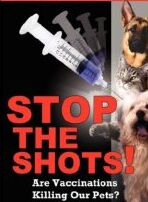
- Vaccinations. This is probably the main cause of the chronic conditions
in our animals today, and their inability to regain their health easily.
See later lectures by me, and read from bibliography.
- Environmental toxins and stressors - noise, hectic pace, electric
wires, pollution of all sorts. Eradication of superficial symptoms, such
as surgical removal of tumors and warts, topical treatment to eliminate
eruptions and discharges.
SIGNS OFTEN ACCEPTED AS "NORMAL" IN DOGS AND/OR CATS
- SKIN: doggy smell; attracts fleas a lot; dry, oily, lack-luster coat;
excessive shedding; not grooming, ear problems - waxy, oily, itchy, recurrent
mites; eye discharge, tearing, or matter in corner of eyes; raised third
eyelid; spots appearing on iris; "freckles" appearing on face; whiskers
falling out; fragile, thickened, distorted claws that are painful or sensitive
to trim.
- BEHAVIOR: Fears(of loud noises, thunder, wind, people, animals, life);
too timid; too rough or aggressive (even at play); too hard to train; barks
too much and too long; suspicious nature; biting when petted too long;
hysteria when restrained; clumsy; indolent; licking or sucking things or
people too much; not using litter box , not covering.
- DIGESTIVE: Bad breath; tarter accumulation; loss of teeth; poor appetite;
craving weird things(rubber bands, plastic, dirt, cat litter, paper, dogs
eating dog or cat stools, rocks, sticks..); sensitivity to milk; thirst
- a super healthy cat on non dry food will drink at most once a week; red
gum line; vomiting often, even hairballs more than a few times a year;
mucus on stools; tendency to diarrhea with least change of diet; obesity;
anal gland problems; recurrent parasites.
- STIFFNESS when getting up, early hip dysplasia; tires easily in hot or
cold weather; can no longer jump up on counters, or go up or down steps.
- TEMPERATURE: Low grade fevers - Normal for healthy cats and dogs is 100-101.5.
- AGE and REPRODUCTION: Should live a long life (Shepherds 17 years, Danes
12, cats 24); should be able to conceive easily, deliver normally, and
not pass on "genetic breed" traits.Fatty tumors - Lumps,
Bumps
Often soft and squishy to the touch, benign fatty tumors are not a threat
to your dogs health. (The exception is infiltrative lipomas, which can
invade muscle tissue, but these are relatively rare.) While lipomas can
be unsightly, many vets opt not to remove them unless they are in
a location where their growth impedes a dog's mobility.
This middle-aged Lab has at least one lipoma (behind his elbow, on the
chest wall). Unless it grows until it impedes the free movement of his
leg or the ability of his chest to expand to breathe, veterinarians will
likely decline to remove it. But many holistic veterinarians see lipomas
as far from innocuous. Instead, they stress, lipomas are symptoms of a
bigger problem. Susan headed her dog at home.
Her dog had what seemed to be pneumonia... coughing up blood...mucus filling nose and eyes.
Holistic view
"For conventional veterinarians, lipomas are just something that happens,
just like cancer happens, says Marty Goldstein, DVM, of Smith Ridge Veterinary
Center in South Salem, New York, author of The Nature of Animal Healing:
The Definitive Holistic Medicine Guide to Caring for Your Dog and Cat.
"What they don't get is that lipomas are a result of what we've done to
depress the metabolic functions and immune system of the animal."
Dr. Goldstein believes that lipomas are a sign of improper fat digestion
and a haywire metabolism, and that they often result from the unnatural
commercial dog food diets that have become the norm today. We've laden
dog food with 50 to 65 percent carbohydrates, even though in nature wolves
eat perhaps 1 to 3 percent grains.
While few (if any) conventional veterinary practitioners would agree
with this assessment (see Conventional Medical Opinion, next page), consider
the case of Tembo, a Rhodesian Ridgeback who had his first lipoma before
the tender age of one. Fed kibble and then a homemade diet heavy in grains
and carbs, Tembo had constant allergies ,corn gave him hives, and wheat
summoned forth blistering yeast infections on his feet and in his ears.
For the first seven years, the lipomas popped up like mushrooms, remembers
his owner, Elizabeth Akers of Concord, California, who had about 20 lipomas
surgically removed from Tembo's rib cage, legs, and chest. Some of the
growths were small, others were tangerine-sized. One on his groin was
growing faster than the speed of light.
Then, at age 7, Akers switched Tembo to a raw diet
and the lipomas responded as if she had flipped an off switch.
By the time he died at age 12, the only lipomas he had were in four places
where they had been removed and had grown back again, she remembers. He
had no new ones.
Holistic veterinarians are quick to note that diet changes are not miracle
cures: As in Tembo's case, they may slow or even stop the growth of existing
lipomas, or cause them to organize, or shrink. But expecting a wholesale
disappearance of them is likely unrealistic. Success is relative, Dr. Goldstein
says. If a lump is growing three inches every six months, and after you
make modifications in your dog's diet and lifestyle, it still gets bigger
but it's only growing one inch in that time frame, then you're moving in
the right direction.
Holistic medicine doesn't see diseases as unrelated entities that swoop
in to disrupt health like so many flying monkeys at Oz. Instead, disease
or any disruption of the body's functioning, no matter how seemingly
mild, like lipomas is a manifestation of a weakness with the body itself.
In other words, there's a Wicked Witch of the West lurking in the backdrop
acting as dispatcher. Simply put, lipomas are a sign that there are deeper
issues behind the scenes.
Many systems of healing have a name for the life energy that flows through
the body and maintains good health. In homeopathy, for example, it is called
the vital force. But no matter what you label it, what's clear to holistic
vets is that lipomas are evidence of the fact that the vital force is weakened
and perhaps blocked and likely has been for some time.
One sign of vitality is the expression of symptoms, because that's
the body's attempt to bring itself into balance, explains classically
trained homeopathic vet Michael Dym, VMD, of Morristown, New Jersey. By
contrast, lipoma patients have very weak symptoms, as the body struggles
to externalize its internal conflict in a kind of slow boil. In this scenario,
the patient has been ill on a deeper level for some time it's just that
they don't have adequate reactions, and have a very weak development of
symptoms.
For that reason, lipomas are not easy to treat, because making changes
on that deep and profound a level doesn't happen overnight. From a homeopathic
perspective, any sort of lump or growth is generally thought to be an outcome
of vaccinosis, or the adverse effects of vaccination on the body, Dr.
Dym continues. Animals that are ill from prior vaccinations can have chronic
warts, skin tags and fatty tumors and lipomas.
That's not to say that you will be able to draw a direct line from last
month's rabies vaccine to your dog's new growths. Instead, we look at
them as an outcome of weakness in a patient who's not in the best health,
Dr. Dym says, because the life force has been affected by vaccines
or toxins such as pesticides. Lipomas can be
unsightly, and some owners might be tempted to remove them for pure aesthetics.
But because surgery only treats the symptom of the problem, not its root,
most holistic veterinarians avoid it, except for lipomas that are so large
or awkwardly placed that they impede a dog's quality of life.
The risk of removing the growth surgically is that it leaves the uncured
disease to manifest at a deeper level, in a different form, Dr. Dym warns.
And from a homeopathic perspective, when you remove a growth, you stimulate
the vital force to greater activity. You can't cure an apple tree of growing
apples by cutting off its branches. In fact, you might spur it to blossom
even more profusely. And most lipomas tend to recur anyway.
While Dr. Goldstein agrees, he has had to remove lipomas that were in
a compromising position, such as behind the nasal cavity, where they could
obstruct breathing. Lipomas have their own finite capsule you just scoop
them out, he says. A technique he employs during such surgeries is to
roughen the tissue area around the lipoma, creating an inflammatory response.
This creates scar tissue that prevents the lipoma from growing back
on that spot, at least.
Individualistic treatment
The classic homeopathic remedy used to treat tumors and, while they
are benign, lipomas are tumors. Thuja, is also often used
for vaccine reactions. But Dr. Dym
cautions against such a paint-by-number approach: Because lipomas
are a symptom of a deep-seated imbalance in the body, he suggests a consultation
with a homeopath to find the proper constitutional remedy one that takes
into account your dog's own individuality and treat the dog over time.
Taking the wrong remedy even one that might seem to fit the picture
might stimulate a reaction that could highlight or activate the very
things you are trying to resolve, he warns. Traditional Chinese medicine
has a different name for this life force that animates us all: chi. But
that ancient modality also interprets lipomas as symptoms of a deeper imbalance.
In Traditional Chinese veterinary medicine, lipomas are a type of 'dampness'
called 'phlegm' that has stagnated in a particular area, usually an acupuncture
channel such as the Gallbladder channel, explains veterinarian Bruce Ferguson,
DVM, MS, a practitioner and instructor in traditional Chinese veterinary
medicine based in Perth, Australia. Issues of 'damp' are usually, in the
case of lipomas, caused by improper diet leading to a damage to the gastrointestinal
system, which is governed by the Spleen/Stomach meridian.
In traditional Chinese medicine, this channel is responsible for moving
a type of post-ingestive fluid around the body, Ferguson continues. When
a dog is fed a grain-based diet high in refined carbohydrates as opposed
to a more natural, meat-based diet the channel gets clogged, and gooey.
In addition to dietary change, Dr. Ferguson says lipomas can be addressed
with herbal formulas that tonify the spleen and resolve phlegm and dampness;
acupuncture to help restore the movement of chi through the body, particularly
the Spleen, and reverse stagnation; and occasionally gentle, non-traumatic
massage such as Tui Na. For his part, Goldstein sometimes prescribes
Chi- Ko/Curcuma, a Chinese-herb formula indicated for resolving masses,
specifically lipomas. He also considers nutritional supplements such as
L-carnitine and chromium picolinate, which assist in fat metabolism, as
well as a product called Mega Lipo-Tropic, which helps digest and burn
fat. Ditto for digestives enzymes that contain ox bile, a powerful fat
emulsifier.
Improve your pet's basic health
No matter what modality you choose to deal with the underlying imbalances
that might cause your dog's lipomas, all dogs will benefit from these commonsense
basics: good nutrition in the form of a biologically appropriate diet;
good mental health, with a lifestyle that provides stimulating play, problem-solving,
and social interaction; and no exposure to unnecessary vaccinations or
toxins such as pesticides. And don't forget exercise, Goldstein adds. The
only way to burn fat is to get your body and your dog's up to its aerobic
potential, he says. In the end, then, the good news about lipomas is that
they aren't life-threatening. But they are a signal that something is askew
in your dog's body.
When I was in veterinary college, lipomas were described as benign
masses that merely had a statistical rate of occurrence and did not 'mean
anything,' Dr. Ferguson says. By contrast, traditional Chinese medicine
teaches that anything out of the ordinary has meaning, and usually indicates
some type of imbalance. The task of the practitioner and the observant,
committed owner is to discover and correct it. Denise Flaim is the companion-animal
columnist at Newsday on Long Island, New York. She owns four raw-fed Rhode-sian
Ridgebacks and is the author of The Holistic Dog Book: Canine Care for
the 21st Century. See Resources, page 24.
Homeopathic remedies, including one often used for lipomas, are available
in health food stores but don't buy and administer them without the guidance
of a veterinary homeopath. your dog needs to
be properly diagnosed, treated for the totality of his symptoms as an individual,
and evaluated on an ongoing basis.
Dr. Christina Chambreau, DVM - "Frequent scheduling of
immunizations are probably the worst thing that we do for our animals. They
cause all types of illnesses but not directly to where we would relate
them definitely to be caused by the vaccine. Repeating vaccinations on
a yearly basis undermines the whole energetic well-being of our animals.
Animals do not seem to be decimated by one or two vaccines when they are
young and veterinary immunologists tell us that viral vaccines need only
be given once or twice in an animal's life. First, there is no need for
annual vaccinations and, second, they definitely cause chronic disease.
As a homeopath, it is almost impossible to cure an animal without first
addressing the problems that vaccines have caused to the animal, no matter
what the species."