Sunbathing for Optimum Health
 Dr. Mercola - "In recent years we've all been trained to fear the sun,
due to the threat of skin cancer. Nothing could be further from the
truth. Now there is a growing belief that exposure to the sun may not actually cause skin cancer. As a study published in the prestigious
Cancer journal indicates, exposure to sun actually decreases cancer rates."
Dr. Mercola - "In recent years we've all been trained to fear the sun,
due to the threat of skin cancer. Nothing could be further from the
truth. Now there is a growing belief that exposure to the sun may not actually cause skin cancer. As a study published in the prestigious
Cancer journal indicates, exposure to sun actually decreases cancer rates."
The ideal way to get vitamin D is by exposing your skin to appropriate sunlight. Unfortunately
for most of us there simply isn’t enough sun exposure for nearly half
of the year. However, even in the sun many of us are modern day cavemen
and we spend the majority of the time the sun is out shining inside
at work or in our home. Not many of us are regularly out in the sun.
Sun exposure (without sunscreen) of about 10 to 15 minutes a day, with
at least 40 percent of your skin exposed, is a general guide of how
much you need, although people with dark skin will need to stay out
significantly longer. Again, most of us struggle with seasonal vitamin
D winters in which we may not be able to get enough sun exposure during
certain parts of the year. It is important to understand that in the
summertime, when you put on your bathing suit and sunbathe for 30 minutes,
your body produces about 20,000 IUs of vitamin D -- as much as exists
in 200 glasses of milk, or the equivalent of about 50 typical multivitamins!
Why one should not be Dissuaded from enjoying the Sun for Optimal Health?
It has been frequently reported that those who are regularly exposed
to ultraviolet radiation (UVR) due to their occupation have a reduced
risk of developing melanoma [Garland et al., 1990; Kennedy et al., 2004].
The reasons appear to be twofold: 1 - they develop a tan that blocks
the penetration of UVR so it can't produce the free radicals that can
lead to melanoma; and 2 - they produce lots of vitamin D. Both links
have just been demonstrated in an excellent study by investigators studying
497 people with melanoma in and around Philadelphia and San Francisco
[Millen et al., 2004].
Contrary to popular belief, Sunlight may help Prevent Cancer
Insufficient exposure to ultraviolet radiation may be an important
risk factor for cancer in Western Europe and North America, according
to a new study published in the prominent Cancer journal that directly
contradicts official advice about sunlight. The research examined
cancer mortality in the United States. Deaths from a range of cancers
of the reproductive and digestive systems were approximately twice
as high in New England as in the southwest, despite a diet that
varies little between regions. There are 13 malignancies that show
this inverse correlation, mostly reproductive and digestive cancers.
The strongest inverse correlation is with breast, colon, and ovarian
cancer. Other cancers apparently affected by sunlight include tumors
of the bladder, uterus, esophagus, rectum, and stomach. Cancer March
2002; 94:1867-75
In recent years we've all been trained to fear the sun, due to the
threat of skin cancer. Now there is a growing belief that exposure to
the sun may not actually cause skin cancer. Either way, the fear
of skin cancer shouldn't keep you huddled indoors in the dark. According
to Dr. William C. Douglass, you can reap the sun's healthy benefits
with as little as 20 minutes of exposure a day.
However, skin cancers are more likely related to the large distortion most people
have in their omega-6 to omega-3 fat ratio.
The high excess of omega-6 fats in most people's diet puts them at a
much higher risk of developing skin cancer when exposed to excess sun.
So the solution is not to slather sun block on. Sun block can be quite
toxic and should be avoided by most people. The sensible approach would
be to limit sun exposure so you never get sun burned. It is sunburn
in conjunction with excess omega-6 fats that increases your risk of skin cancer.

 Sunlight Exposure Beneficial In Multiple Sclerosis
In a recently published exploratory study, mortality from multiple sclerosis
(MS) was found to be reduced by exposure to sunlight. Depending on the
degree of sunlight exposure, the risk of death from MS was reduced by
up to 76%. No theory on the precise mechanism of action in this reduction
was proposed by the authors. Occup Environ Med 2000;57:418-421
Why the Myth of the Sun Causing Skin Cancer Can Hurt Your Health
A recent study in the prominent US dermatology journal tell us that
only a small fraction of US schools have implemented policies that protect
students from over-exposure to the sun, and few provide shade, sunscreen,
or other ways to avoid ultraviolet rays. Since severe sunburns occur
during childhood, which may promote melanoma later, these experts recommend
that policymakers and school administrators encourage and implement
sun protection policies at schools nationwide. The authors of this study
recommend that schools without a sun protection policy adopt one, and
at least implement minor changes that could help shield students from
the sun, such as allowing staff to put sunscreen on students, and permitting
hats and sunglasses when outdoors. Archives of Dermatology June 2002;138:771-774
Sun Exposure (UVB) Protects Against 16 Types of Cancer - The new study links
UVB as protective to a total of 16 types of cancer, primarily epithelial
(pertaining to the surface) cancers of the digestive and reproductive
systems [Grant, submitted]. Six types of cancer (breast, colon, endometrial,
esophageal, ovarian, and non-Hodgkin’s lymphoma) were inversely correlated
to solar UVB radiation and rural residence in combination. This result
strongly suggests that living in an urban environment is associated
with reduced UVB exposure compared to living in a rural environment.
Another 10 types of cancer including bladder, gallbladder, gastric, pancreatic,
prostate, rectal and renal were inversely correlated with
UVB but not urban residence. Ten types of cancer were significantly
correlated with smoking, six types with alcohol, and seven types with
Hispanic heritage. Poverty status was inversely correlated with seven
types of cancer. Since the results for alcohol, Hispanic heritage, and
smoking for white Americans agree well with the literature [Trapido
et al., 1995; Thun et al., 2002], they provide a high level of confidence
in the approach and its results for UVB radiation
In a televised interview, Dr. Lorraine Day, MD, reported that rats
fed a healthy diet developed no cases of skin cancer when exposed to
the sun, while 25% of those fed the standard american did develop cancerous
lesions. The difference between the two diets is likely to be the quality
of the fats, as will be come more apparent shortly.
A study published electronically this week in the International Journal
of Cancer used a novel approach to examine the relation between solar
ultraviolet-B (UVB) irradiance, vitamin D, and cancer risk reduction.
In this study, mortality rates for non-melanoma skin cancer (NMSC),
which is primarily due to squamous cell carcinoma, were used as the
index of integrated lifetime solar UVB irradiance. NMSC mortality rates
provide higher confidence regarding the population exposure to solar
UVB than geographic location of residence, which has been used in such
studies in the past. Thus, locations with a larger fraction of the population
having outdoor occupations, such as farming, will have higher NMSC mortality
rates. In addition, lung cancer mortality rate was used as the index
for the adverse health effects of smoking.
Robert Bazell, Chief MSNBC Science & Health Correspondent
- "About three decades ago, dermatologists alarmed at the rising incidence
of skin cancer began a campaign to get people to stop spending so much
time in the sun, or at least to cover up with strong sunblock lotion
if they did. The effort was enormously successful. Now there is a big
problem with it. When the sun’s rays (unfiltered by lotion) strike our
skin, our bodies produce vitamin D. Scientists always knew vitamin D
is critical for good health. Children not exposed enough to the sun
can get a terrible disease called rickets. But around 1989 scientists
began to discover that vitamin D played an important critical role in
all the cells in the body, and they hypothesized that a lack of vitamin
D could increase the risks for cancer.
Large population studies have now verified that people with low vitamin
D levels indeed have higher levels of several common types of cancer,
including colon and breast. Some of the best research comes from the
Nurse’s Health Study and the Health Professionals Study -- two efforts
run by the Harvard School of Public Health that have been following
tens of thousands of people for decades. The latest study looks at cancer
incidence in men.
So how much vitamin D do we need?
Based on these latest studies,
experts now recommend a minimum of 1,000 units a day. We get about 200
from food and supplements usually contain 400. That is where the sun
comes in. No one is saying people should get sunburned or even tan.
But you can get 1,000 units of vitamin D by spending 10 minutes in the
sun in the middle of the day with your arms and face exposed. Amazingly,
with our automobile and indoor lifestyle many Americans do not get even
that much."
Freaky Facts about Spray-On Tans: Are You in Danger?
The study examines the dose-response
relationship between vitamin D and cancer, and is the first to use satellite
measurements of sun and cloud cover in countries where blood serum levels
of vitamin D3 were also taken.
According to the National Cancer Institute, lifetime exposure to
sunlight may reduce your risk of some of the most common types of cancer.
In an analysis of death certificates from 24 states over an 11-year
period, the NCI researchers found that people who lived in the sunniest
parts of the country, and those exposed to the most sunlight through
their jobs, had significantly lower rates of colon, andbreast cancer
than matched controls.
 The
scientists identified cases through a database maintained by the NCI,
the National Institute for Occupational Safety and Health, and the National
Center for Health Statistics. The data was collected from 24 states
from 1984 through 1995, and includes information on occupation, state
of residence at birth and at death, and cause of death. The researchers
took significant measures to ensure the accuracy of their data. They
only included people who were born and died in states in the same solar
radiation range. And they classified farmers in their own occupational
category, separate from other outdoor jobs, as they have been shown
to have higher overall rates of certain types of cancer. They also narrowed
down the cases substantially with a long list of exclusions.
The
scientists identified cases through a database maintained by the NCI,
the National Institute for Occupational Safety and Health, and the National
Center for Health Statistics. The data was collected from 24 states
from 1984 through 1995, and includes information on occupation, state
of residence at birth and at death, and cause of death. The researchers
took significant measures to ensure the accuracy of their data. They
only included people who were born and died in states in the same solar
radiation range. And they classified farmers in their own occupational
category, separate from other outdoor jobs, as they have been shown
to have higher overall rates of certain types of cancer. They also narrowed
down the cases substantially with a long list of exclusions.
Even after all those adjustments, the results were compelling. Overall,
people who lived in the highest solar radiation range (in states like
Arizona, Hawaii, Florida, and Texas) had less risk of dying of breast,
ovarian, prostate, or colon cancer than those who lived in the lowest
range (states like Maine, New Hampshire, Ohio, and Washington). The
occupational difference was most significant in relation to cases breast
and colon cancer; across all levels of solar radiation, people who worked
outside had 20 to 25 percent less risk of these two types of cancer.
And the benefits of outside work weren't attributable to the amount
of hard labor. Even after the researchers adjusted for level of physical
activity, the reduction in risk remained. In their discussion, the NCI
researchers theorize that sunlight offers cancer protection through
its contribution of vitamin D. Recent laboratory tests have shown that
vitamin D can slow or halt the proliferation of breast and colon cancer
cells. And in other research, breast cancer patients showed lower serum
concentrations of a form of vitamin D when compared with healthy controls.
It's the great cancer cover-up. Panicked into avoiding sunlight by
health experts, people are now dying in the thousands from diseases
linked to deficiencies of vitamin D. But still the exaggerated warnings
come. - Oliver Gillie
Related: Sunbathing an hour a day played a big role in
my health recovery - Shirley
You Can Naturally Relieve Pain With Simple Sunlight
Psychosomatic Medicine January/February 2005; 67(1):156-163
Exposure to sunlight may be the newest method of easing pain. According
to a report, boosting the amount of sunlight in a patient's hospital
room decreases their perception of pain and their need for painkiller
medication. Researchers enrolled nearly 90 patients who had undergone
spinal surgery and placed them in randomly assigned hospital rooms--the
rooms were either sunny or dim upon their return from surgery. With
the aid of light meter measurements, researchers found:
- Patients assigned to bright rooms received an average of 46
percent more natural sunlight a day, compared to patients in the
dim room, which translated to an average 21 percent reduction in
the cost of painkiller medication for patients in bright rooms
- Bright-room patients had considerably lower stress scores and
slightly lower pain scores when they left the hospital, compared
to patients in dimmer rooms.
- These results may motivate hospital administrators to relocate
patients with high painkiller requirements to rooms with higher
intensity sunlight.
Lack of sunlight prevents the formation of Vitamin D
Since a, it may be that high cholesterol levels result from a simple
lack of sunlight. People who stay indoors all the time and only go outside
using industrial-strength sun block (as opposed to increasing sun exposure
gradually and letting it fall on bare skin) would be subject to increased
cholesterol levels for that reason.
Exposure to sunlight may reduce asthma
 Australian researchers have found that exposure to measured doses of
ultraviolet light, such as sunlight, could reduce asthma. The research
team at Perth's Telethon Institute for Child Health Research, through
funding provided by the Asthma Foundation of WA, studied the effect
of ultraviolet light on the development of asthma-like symptoms in mice,
such as inflamed airways and lungs. The study found that exposure to
ultraviolet light for 15 to 30 minutes before allergen exposure significantly
reduces the development of asthma-like symptoms This UV exposure produces
a cell type that, when transferred into other mice before they're sensitised
to an allergen, can prevent the development of some of the asthma-like
symptoms. Associate Professor Prue Hart, leader of the research team,
which includes Dr Debra Turner, Dr Shelley Gorman and PhD student Jacqueline
McGlade, is excited by the ground-breaking results and possible future applications
Australian researchers have found that exposure to measured doses of
ultraviolet light, such as sunlight, could reduce asthma. The research
team at Perth's Telethon Institute for Child Health Research, through
funding provided by the Asthma Foundation of WA, studied the effect
of ultraviolet light on the development of asthma-like symptoms in mice,
such as inflamed airways and lungs. The study found that exposure to
ultraviolet light for 15 to 30 minutes before allergen exposure significantly
reduces the development of asthma-like symptoms This UV exposure produces
a cell type that, when transferred into other mice before they're sensitised
to an allergen, can prevent the development of some of the asthma-like
symptoms. Associate Professor Prue Hart, leader of the research team,
which includes Dr Debra Turner, Dr Shelley Gorman and PhD student Jacqueline
McGlade, is excited by the ground-breaking results and possible future applications
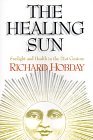
Healing Sun: Sunlight and Health in the 21st Century
Richard Hobday
 Richard Hobday, MSc, PhD is a member of the British Register of Complementary
Practitioners and has studied traditional Chinese Medicine and Chinese
exercise systems in China. Dr. Hobday has many years experience of solar
design in buildings and is a leading authority on the history of sunlight therapy.
Richard Hobday, MSc, PhD is a member of the British Register of Complementary
Practitioners and has studied traditional Chinese Medicine and Chinese
exercise systems in China. Dr. Hobday has many years experience of solar
design in buildings and is a leading authority on the history of sunlight therapy.
The human race evolved under the sun, and for thousands of years
lived in harmony with its heat and light. Yet over the last fifty years
we have lost this close contact with the sun and its healing powers.
We have become afraid of it.
However the sun is central to our well being and health. Did you
know that: designing and building sunlit houses can help prevent disease,
make us feel happier and save energy; sunlight can help prevent and
heal many common and often fatal diseases like breast cancer, heart
disease, multiple sclerosis and osteoporosis; before antibiotics, sunlight
was used successfully to speed up the healing of wounds; tanning moderately
throughout the year is better than avoiding the sun altogether; sudden
bursts of strong solar radiation are unnatural and dangerous, protection
needs to be built up slowly; early morning sunlight in cool temperatures
is particularly beneficial to the body.
Americans carry body Burden of Toxic Sunscreen Chemicals
A team of researchers from the University of California has found that sunscreen
can do more harm than good once it soaks into the skin, where it actually
promotes the harmful compounds it is meant to protect against. The research
team found that three commonly used ultraviolet (UV) filters -- octylmethoxycinnamate,
benzophenone 3 and octocrylene -- eventually soak into the deeper layers
of the skin after their application, leaving the top skin layers vulnerable
to sun damage. UV rays absorbed by the skin can generate harmful compounds
called reactive oxygen species (ROS), which can cause skin cancer and
premature aging. The researchers found that once the filters in sunscreen
soak into the lower layers of skin, the filters react with UV light
to create more damaging ROS.
Dr. Zane Kime wrote that suntan lotions should not be used because they can cause cancer.
Sunscreen may actually increase the risk of cancer, so proposed California
researchers in a paper published in January, 1993 in the Annals of Epidemiology.
Gray also wrote that those who smoke tobacco and marijuana and expose
them-selves to sunlight tend to get skin cancer. Cancer is common in
those who over-consume coffee and teas which contain toxic caffeine
and tannic acid, and expose themselves to sunlight, wrote Dr. Becker
and D. Alexander.
Immuno-suppressant drugs may contribute to skin cancer as well as
x-rays and chemotherapy. We may be able to reduce our cancer deaths
by inducing a partial or complete immunity by exposure of suitable skin
areas to sunlight, wrote Dr. Frank Apperly.
Basking in the Sun for Optimal Wellness
 The sun provides the basis for all life on earth. The sun is the
source of energy for all plants, and indirectly, for all animals. Take
away the sunlight and all life on earth would soon perish. Deprived
of sunlight, man loses physical vigor and strength and will develop
a disinclination for activity, wrote Dr. Herbert Shelton.
The sun provides the basis for all life on earth. The sun is the
source of energy for all plants, and indirectly, for all animals. Take
away the sunlight and all life on earth would soon perish. Deprived
of sunlight, man loses physical vigor and strength and will develop
a disinclination for activity, wrote Dr. Herbert Shelton.
I sunbathe nude almost everyday, at noontime, the hottest part of
the day, for several hours, and at age 67, having done this for over
45 years, I have never developed skin cancer, wrinkles or dryness.
Sunbathing does not cause cancer of the skin nor wrinkles nor drying
of the skin. Healthy people do not get skin cancer - unhealthy people
do. Sunbathing helps heal those with cancer by building up the body's
vital energies and increasing the oxygen in the tissues. Sunbathing
helps heal cancer of the skin, wrinkles and drying of the skin. Unfortunately,
those who develop skin cancer and/or wrinkles and also coincidentally
sunbathe have had many unhealthful habits that cause their skin cancer,
wrinkles and drying of their skin.
Chronic sunburn on skin containing free radicals leads to skin cancer.
Repeated sunburning, not suntanning itself, causes skin cancer, wrote
Dr. Michael Gray. Sunlight may change free radicals, dietary fat from
animal sources, cholesterol from animal sources and deranged antioxidants
brought to the skin from the eating of cooked foods into carcinogenic
substances. Antioxidant vitamins C and E are reduced or deranged by
cooking. Furthermore, fats and oils applied to the skin in suntan lotions
and other cosmetics are sources of free radicals which can lead to skin
cancer.
Sunbathing helped heal the skin cancer of Dr. Harland G. Call.
 His skin cancer
was diagnosed by two M.D.s, one of whom was a surgeon who recommended
surgical removal. Call employed sunbathing of the effected area, Within
a short time, the skin cancer disappeared, after which he reported back
to the M.D. who had recommended surgical removal. When the M.D. examined
him, he confirmed that the skin cancer had disappeared without surgical
removal.
His skin cancer
was diagnosed by two M.D.s, one of whom was a surgeon who recommended
surgical removal. Call employed sunbathing of the effected area, Within
a short time, the skin cancer disappeared, after which he reported back
to the M.D. who had recommended surgical removal. When the M.D. examined
him, he confirmed that the skin cancer had disappeared without surgical
removal.
A man had recurrent skin cancer. His doctor recommended surgery.
The cancerous man rejected the surgery. Instead he followed the advice
of Dr. John Ott to sunbathe without his glasses and after five months
his skin cancer completely disappeared. Sunlight treatments reduced
malignant cancer growths 50% in animal experiments in Russia, writes
A.P. Zabaluyeva.
Sunlight helps the body heal wounds and injuries and overcome virtually
any illness. Dr. Carl Hoffminster wrote that soldiers in World War II
healed and survived much better when their open wounds and broken bones
were exposed to sunlight.
Sunbathing helps strengthen muscles. Dr. Zane Kime wrote: Tuberculosis
patients being treated by sunbathing have been observed to have well-developed
muscles with very little fat, even though they have not exercised for
months. He also reported that a study on the effects of sunlight on
a group at a health resort showed that the group that was getting more
sunshine with their exercise had improved almost twice as much as the
group that avoided sunshine as revealed by their electrocardiograms.
Kime also wrote, The Romans made use of the sun in training their gladiators,
for they knew that sunlight seemed to strengthen and enlarge the muscles.
Cancer of the breast, prostate reproductive organs and colon may be
caused by not exposing these vital organs to the sun and air. Anything
that blocks sunshine from penetrating the skin will reduce the amount
of Vitamin D that the body makes. People with lower levels of Vitamin
D are at greater risk for colon cancer, writes the Lancet.
Sunlight helps people overcome winter depression. Seasonal Affective
Disorder (SAD) hits around 100,000 people and develops into severe depression
as daylight decreases in the winter. If SAD sufferers get out and get
some sunlight during winter, they will relieve their depression, writes Dr. Keki Sidhwa.
Dr. Jacob Liberman. - Sunglasses block healing ultra-violet
light and thus contribute to the increased incidence of blindness and
eye disease in this country"
Eyeglasses and contact lenses rob you of energy by blocking some
of the ultra violet rays that travel through the eyes to the pineal
gland, wrote Patricia McCormac. After discontinuing wearing his eyeglasses,
Dr. John Ott wrote that he exposed his eyes to sunlight without lenses
and his vision was much improved. He recommended similar therapy to
his friends and they gained similar improvement in their vision. Ott
wrote that nothing should block out the full spectrum of sunlight, no
glasses of any kind should block the ultra violet rays, and especially
no dark glasses.
Dr. Shelton wrote, "In truth man was designed by the Creator to enjoy
the direct rays of the sun and the soothing strengthening influence
of the winds over the whole surface of the body. He is by nature a nude
animal."
Arnold Rickli, whose sun and air institution in Switzerland attracted
patients from all over the world in the 19th century, wrote, Man is
made to live in the open air; therefore when exposed to the action of
the light, air and sun, he is in his real element. If we choose to expose
our nude skin to the sunshine, all we need to do is pay attention to
our bodies. Our bodies are always talking to us, and we must learn to
listen. If the sunshine is going to be harmful, our bodies will feel
uncomfortable in the sunshine. This will force us to withdraw our bodies
from the sunshine before it can injure us.
"A full sunbath in the nude is ideal. This is not a mere cosmetic
measure, but a health requirement for greatest value" wrote Dr. Shelton MD.
Bernarr McFadden -
"From the dawn of history the sun has been utilized specifically as
an aid to restoration of health and s a means of maintaining and increasing
it. The ancient Greeks and Romans, Egyptians and Assyrians, Arabians,
Babylonians and Cretans, the AZT:astonishing factsecs, the early Chinese
and Japanese, the inhabitants of India and most other nations that were
glorious in their day derived their superb health partly from their
contact with the rays of the sun, and healed their ailments by their
aid. Hippocrates, the Father of Medicine, practiced the sun-cure in
the temple of Esculapius on the island of Cos in ancient Greece."
Everyone sick or well looks better, feels better, gets better and
functions better after exposing every part of their nude bodies to the
beautiful sunshine. Sunbathe each moment you can. It helps you in every
possible way!
Light: Medicine Of The Future
 Jacob Liberman, O.D., Ph.D. explains how to utilize the therapeutic
benefits of light. He says that "light is the basic component from which
all life originates, develops, heals, and evolves." Everything that
humans do is affected in some way by light. Light has been used for
healing since the time of ancient Egypt.
Jacob Liberman, O.D., Ph.D. explains how to utilize the therapeutic
benefits of light. He says that "light is the basic component from which
all life originates, develops, heals, and evolves." Everything that
humans do is affected in some way by light. Light has been used for
healing since the time of ancient Egypt.
Modern scientists began recognizing the benefits of light therapy
in the late 1700's. Although many people believe the ultraviolet (UV)
light is harmful, Dr. Liberman maintains our bodies need at least a
small amount of UV light in order to function properly. He cites studies
which indicate that, due to all the ways in which we block sunlight
from our lives, including wearing sunglasses designed to block out UV
rays, "it is possible that we are unknowingly contributing to the increased
incidence of blindness and eye disease in this country." Dr. Liberman
does warn against looking at the sun directly, or exposing ourselves
to it between 10:00 a.m. and 2:00 p.m., but emphasizes that light is
a nutrient for the body.
He says people need to be outside in natural light, without sunglasses
or sun block, for a minimum of one hour a day. He warns that warm-white
and cool-white fluorescents "should absolutely be avoided." People who
cannot get outside regularly need to equip their work areas with full-spectrum
light fixtures. Syntonics is the name given to light therapy, which
involves utilizing specific colors for healing specific ailments. Dr.
Liberman discusses its benefits in treating vision problems, seasonal
affective disorder (SAD), cancer, and learning disabilities. He says
that "as we continue to discover and understand the role that light
plays in our lives, its use as both a therapeutic and preventive tool
will become more evident."
Natural Vision Health
Health of the eye depends on the well-being of one's entire body. Vision
problems are multiplying at epidemic proportions in our society. Over
half of the population over 75 years old has either cataracts, glaucoma,
or macular degeneration. This page show people how to become active
participants in their own vision care, giving back the power and responsibility
they have so trustingly handed over to their eye doctors. The information
here offerss a practical approach to keeping your eyes healthy based
on the underlying philosophy that emphasizes prevention rather than
cure, based on the latest scientific research.
The Silent Epidemic of Vitamin D Deficiency
 An examination of 506 regions found a close inverse correlation between
cancer mortality and levels of ultraviolet B light. The likeliest mechanism
for a protective effect of sunlight is vitamin D, which is synthesized
by the body in the presence of ultraviolet B. The study's author, Dr
William Grant, says northern parts of the United
States may be dark enough in winter that vitamin D synthesis shuts down
completely. While the study focused on white Americans, the same geographical
trend affects black Americans, whose overall cancer rates are significantly
higher. Darker skinned people require more sunlight to synthesize vitamin D.
An examination of 506 regions found a close inverse correlation between
cancer mortality and levels of ultraviolet B light. The likeliest mechanism
for a protective effect of sunlight is vitamin D, which is synthesized
by the body in the presence of ultraviolet B. The study's author, Dr
William Grant, says northern parts of the United
States may be dark enough in winter that vitamin D synthesis shuts down
completely. While the study focused on white Americans, the same geographical
trend affects black Americans, whose overall cancer rates are significantly
higher. Darker skinned people require more sunlight to synthesize vitamin D.
Dr. Mercola:- "The growing health problem of vitamin D deficiency
is considered a 'Silent Epidemic' for a very good reason -- most people aren't aware it even
exists. And as research continues in this area of concern, the list
of diseases potentially caused by this epidemic continues to grow and
grow. Diseases like osteoporosis, osteomalacia (the adult form of rickets),
some cancers, and even Alzheimer's disease. Sunlight is man's primary
source of vitamin D. It seems quite obvious that man developed in tropical
or subtropical areas and thus, has a need for sunlight as a nutrient.When
we migrated further away from the equator, our ability to obtain valuable
sunlight and its important influence on our health, was dramatically reduced.
Most all of us need to expose far more of our skin to the sun during the
noon hour to get the beneficial UV-B. Now, I can just hear scores of
you getting alarmed that this recommendation will increase your risk
of skin cancer. Well folks, nothing could be further from the truth.
I will provide all of the documentation and scientific research to support
this assertion in future issues. But, I am convinced beyond any shadow
of a doubt that as long as you avoid being sunburned, sun exposure at
noon on unexposed skin, is one of the healthiest things you can do for
your body. Krispin has been kind enough to mentor
me in the incredible value of vitamin D and how it is one of the biggest
missing nutritional links not being addressed, even by incredibly astute
physicians.
Using foods to optimize people's health has been my driving passion
for more than a decade. I have reviewed tens of thousands of articles
and I missed it big time, so I am sure many others have also. I will
be providing a series of articles in the upcoming weeks to further expand
on this extremely important topic. The necessary doses for vitamin D
are far higher than previously imagined. Most of us would likely benefit
from doses closer to 4,000 units, not 400 units. This is a full order
of magnitude higher than the RDAs.
However, the best way to get this is through sun exposure, NOT though
supplements. Unfortunately, for most of us in the U.S. there are only
a few months of the year where this is even possible. Then, even in
those months, if you live in a polluted urban area, or it is cloudy,
there will not be enough UV-B to penetrate the clouds, smog, or ozone
to stimulate vitamin D production in your skin.
I am working with a company on a very inexpensive UV-B meter that
can be brought with you places, so you can know exactly how much sunlight
you need on a given day to generate vitamin D exposure. It is a complex
determination, since you also need to factor in the color of your skin.
So, most of us will be stuck using supplements. My favorite is
cod liver oil, since that solves another major issue in our diet,
omega three deficiency. However, one needs to be cautious with supplements
at these doses, and the solution will be to monitor your blood levels
of vitamin D."
Naked at Noon, Understanding the Importance of Sunlight and Vitamin D
For the past number of years clinicians, physicians, national media
and the National Institute of Health have been warning Americans to
stay out of the sun. The purpose of this warning was intended to prevent
melanoma, a serious form of skin cancer. In spite of the ever-increasing
use of sunscreens and intentional reduction of sun exposure, incidence
of this cancer is on the upswing. There is some evidence that the advice
given regarding sunlight may have actually contributed to an increase
in incidences of melanoma because of issues relating to genetics, UV-A
radiation, UV-B radiation and extended exposure times due to reduction
in sun-burning by sunscreen use.
One of the known protectors of skin cells from pre-cancerous changes
is vitamin D. For most Americans the only source of vitamin D is sunlight.
We have a national disaster in progress due to a misunderstanding of
the nature of and need for UV-B and vitamin D.
The book explains how we get D from food, sunlight and supplements and
how we have become so seriously D deficient by changes in location (immigration
to genetically unfriendly climates), attitudes and lifestyles. There
is a chapter on skin cancer and another on the importance of essential
fats. It also covers information related to vitamin D's intimate relationship
with calcium and magnesium.
"Ultraviolet (UV) light is divided into 3 bands or wavelength ranges,
which are referred to as UV-C, UV-B and UV-A.6 UV-C is the most energetic
and shortest of the UV bands. It will burn human skin rapidly in extremely
small doses. Fortunately, it is completely absorbed by the ozone layer.
However, UV-C is present in some lights. For this reason, fluorescent
and halogen and other specialty lights may contribute to skin cancer.
UV-A, known as the “tanning ray,” is primarily responsible for darkening the
pigment in our skin. Most tanning bulbs have a high UV-A output, with
a small percentage of UV-B. UV-A is less energetic than UV-B, so exposure
to UV-A will not result in a burn, unless the skin is photosensitive
or excessive doses are used. UV-A penetrates more deeply into the skin
than UV-B, due to its longer wavelength. Until recently, UV-A was not
blocked by sunscreens. It is now considered to be a major contributor
to the high incidence of non-melanoma skin cancers.7 Seventy-eight percent
of UV-A penetrates glass so windows do not offer protection.
The ultraviolet wavelength that stimulates our bodies to produce
vitamin D is UV-B. It is sometimes called the “burning ray” because
it is the primary cause of sunburn (erythema). However, UV-B initiates
beneficial responses, stimulating the production of vitamin D that the
body uses in many important processes. Although UV-B causes sunburn,
it also causes special skin cells called melanocytes to produce melanin,
which is protective. UV-B also stimulates the production of Melanocyte
Stimulating Hormone (MSH), an important hormone in weight loss and energy
production.