What is Holistic Health?
Cindy Engel BSc PhD, author of "Wild Health
Lessons in Natural Wellness from the Animal Kingdom, writes:
"How do wild animals keep themselves well?" Scientists are
finding insects, birds and mammals self-medicating their ills.
Dr. Engel points out fascinating parallels between animal and human medicine. She offers intriguing
examples of how animals prevent and cure sickness and poisonings, heal open wounds, balance their diets, and regulate fertility.

For instance,monkeys, bears, and birds protect themselves from insect bites and fungal infections
by rubbing medicinal plants and insects into their skin. Chimpanzees carefully select
anti-parasitic medicines to deal with parasites. Elephants roam miles to find the clay
they need to help counter dietary toxins. And birds line their nests with pungent medicinal
leaves and so improve their chicks’ chances of survival. These health maintenance behaviors
are adaptive and have stood the test of survival in the wild.
In addition to these behaviors, animals also utilize herbal remedies as
part of their natural healing methods.
"Wild Health" provides a splendid and scientifically accurate account of animals’ knowledge
of what’s good for them to eat and what’s not. It provides evidence of lifesaving biological
pre-programming of animals and perhaps some evidence in support of animal culture. It is a "must buy" book
for anyone who wants to know more about how animals think and react to the world around them.” Dr.
Nicholas H. Dodman, Professor of Animal Nutrition, Tufts University
Sick of drugging your pet?
 Dr Charles E Loops DVM -
"After 10 years of traditional veterinary practice I became tired of having
no treatment for chronic disease, incurable conditions, and a
plethora of chronic allergic
maladies which seem to plague all veterinary practices. I was frustrated with
giving animals cortisone because I had no other solutions, or using antibiotics
for infections which I knew were of viral origin. There is so much that can
be done for an animal, bird, or reptile that is ailing by utilizing homeopathic medicine
and other forms of alternative medicine."
Dr Charles E Loops DVM -
"After 10 years of traditional veterinary practice I became tired of having
no treatment for chronic disease, incurable conditions, and a
plethora of chronic allergic
maladies which seem to plague all veterinary practices. I was frustrated with
giving animals cortisone because I had no other solutions, or using antibiotics
for infections which I knew were of viral origin. There is so much that can
be done for an animal, bird, or reptile that is ailing by utilizing homeopathic medicine
and other forms of alternative medicine."
Michael Dym D.V.M. - The two biggest factors in our
pets' population fitness decline over several
generations has been the severe overuse of multiple vaccines and
nutrient poor and toxin filled commercial pet foods. We have also failed to address the underlying cause
of illness by only suppressing symptoms with antibiotics, cortisone and related drugs,
so the disorder progresses and goes deeper. Homeopathy offers a viable
alternative in truly curing pets and making their bodies healthier."
The medical establishment often focuses on disease treatment rather than
prevention and wellness, driven by profit motives and collaboration with pharmaceutical companies.
For years dog pharmaceuticals have included toxic materials to artificially
maintain dog fitness as a temporary measure. The time has come to change to a
holistic approach toward pet well-being. Native remedies have been shown
to achieve more immediate, more complete and longer lasting fitness, vitality,
quality and longevity of animal lives.
There is a better way to bring your pet to vitality!
Dr. Will Falconer, DVM is a
holistic veterinarian who uses zero
drugs in his practice since 1992. - "Most of the chronic diseases we
commonly see in animals (and humans) have an immune basis, e.g.
diabetes, pet allergies, thyroid disease, inflammatory bowel
diseases, repeated ear infections, cancer, renal failure, etc.
Homeopathy
and other natural healing modalities can significantly shorten the course
of recovery by giving a much needed balancing effect to the immune system."
Just like humans, domesticated pets like dogs and cats are affected by
the environmental hazards of modern living. Pollution, poor nutrition, stress and feeble
lifestyles can lead to a variety of illnesses and conditions that are very similar
to those experienced by humans. These days, emotional and psychological problems
like depression, anxiety, ADHD and behavioral problems
are just as prevalent in pets as they are in their owners. Similarly, physical ailments such as
diabetes, arthritis, chronic fatigue, digestive disorders, cystitis, and liver disease,
skin disorders, obesity, thyroid dysfunction and other
problems are becoming more and more common in domesticated animals. Many, if
not most of these conditions can be prevented by helping your pets to live a
whole lifestyle. For pets already suffering from existing conditions, a
combination of lifestyle changes and native medicine can work wonders!

Healing From Within: Holistic Health
Dr. Jeffrey Levy DVM - "The greatest harm of drug treatment
is usually not so much the toxicity or side effects as it is the effects of
suppression. Allopathic (conventional Western) medical thinking generally seeks
immediate gratification: just make the symptom go away. So the patient may be
better in the short term, but is usually worse in the longer term. Homeopathy
is just the opposite: sometimes the symptoms are worse in the short term (such
as with aggravation or the reversal of a previous suppression), but the real
benefit is in the longer term. A symptom, say itchy skin, is the body's response
to a deeper problem."
Natural remedies offer a holistic approach to healing, addressing the root causes of
health issues rather than just the symptoms.
"When a symptom is suppressed, it is only the outward manifestation
of the problem that goes away. Since the deeper problem is still there, the
body may, in time, produce the same symptom again. Another possibility is that,
as a result of the suppression, the deeper problem progresses to the point that
a deeper, more serious symptom is produced. So the itchy skin may go away, but
then chronic diarrhea develops. If the diarrhea is then suppressed as well,
it may lead to, say, liver disease. But hey, at least the skin is cleared up!
I see this pattern, or variations on it, very frequently in reviewing the medical
records of new patients. It is the unrecognized, and often high, price that
we pay for the quick fix, for immediate gratification, for the shot or pill
that seems to make the problem go away."
Dr. Goldstein DVM - "Holistic pet care essentially revolves
around the notion that the best way to cure an animal who is ill is to help
the animal cure itself. We are not the true healers of our pets--they are. By
treating the root of the problem instead of its symptoms,
holistic medicine enables our pets to regain and maintain their own well-being." In his practice,
Dr. Goldstein has had extraordinary success treating cancer holistically.
 Dr. Pat Bradley, DVM, Conway, USA - "The most common problems
I see that are directly related to vaccines on a day
to day basis are ear or skin conditions, such as chronic discharges and itching.
I also see behavior problems such as fearfulness or aggression.
This is why we've seen such a dramatic, and chronic increase in pet allergies,
organ failures, and behavior problems. Often guardians
will report that these begin shortly after vaccination, and are exacerbated
with every vaccine. In a more general and frightening context, I see the overall
health and longevity of pets deteriorating. The bodies of most animals have
a tremendous capacity to detoxify poisons, but they do have a limit. I think
we often exceed that limit and over-whelm the body's immune system function
with toxins from vaccines, poor quality foods,
toxic insecticides, Flea, and Tick Shampoos, environmental
toxins, etc."
Dr. Pat Bradley, DVM, Conway, USA - "The most common problems
I see that are directly related to vaccines on a day
to day basis are ear or skin conditions, such as chronic discharges and itching.
I also see behavior problems such as fearfulness or aggression.
This is why we've seen such a dramatic, and chronic increase in pet allergies,
organ failures, and behavior problems. Often guardians
will report that these begin shortly after vaccination, and are exacerbated
with every vaccine. In a more general and frightening context, I see the overall
health and longevity of pets deteriorating. The bodies of most animals have
a tremendous capacity to detoxify poisons, but they do have a limit. I think
we often exceed that limit and over-whelm the body's immune system function
with toxins from vaccines, poor quality foods,
toxic insecticides, Flea, and Tick Shampoos, environmental
toxins, etc."
Russell Swift, DVM "Although many symptoms can be very difficult
to tolerate, especially skin and ear problems, one must bear in mind the very
high cost (in terms of future wellness) one pays for simply suppressing them.
"Would I rather my dog itch or have liver problems?" is the type of question
an animal guardian needs to bear in mind whenever the temptation to suppress
a symptom arises.
- A puppy has a skin rash. The rash is treated with medicine. After the
rash is gone, the puppy has diarrhea. This is a move from level one to level
two. This is going in the WRONG direction. The symptom has been suppressed
and the animal's immunity has been further weakened. The diarrhea is treated
with another medicine. The stools normalize but the pet begins to limp.
It has been suppressed to level three.
- A cat has ringworm. The ringworm is treated with a medicine which makes
it disappear. However, the cat develops a urinary tract problem. Again,
this is movement from level one to level two meaning suppression. This is
treated with medicine and the cat has cardiomyopathy one year later. This
is suppression from level two to level four.
Animal Epilepsy and Seizure - Causes, Predisposing Factors and Treatment
Carm's puppy began to experience severe seizures as a result being
exposed to organic pyrethrum.
The veterinarian was helpless. The dog was dying.
In her detailed testimonial, Carm explains what she did cure her dog of
seizures and how she saved his life.
Some dogs are sensitive to chemicals and if you feed and water them
from a plastic bowl, they ingest some of the chemicals and it can help
induce the seizures.Toxic chemicals, in particular, can contribute to seizures in pets,
highlighting the importance of eliminating these harmful substances from their environment.
There has been reports of a reduction of seizures
when the immune system was modulated and the inflammation reduced with a natural immune enhancing substance.
William Pollak D.V.M. - "The most common direct cause of seizures
seen in clinical practice in our pets is parasitic infection combined with
nutritional deficiencies based on 100% commercial pet food feeding."
Related:
Two testimonials of animals who recovered from seizures
"Feeding a natural raw food diet is vital
to not only maintaining the health of your pet, but also keeping ideal
immune function alive and well. Many times after eliminating seizures through
improving the diet, seizures return after commercial pet food is re-instituted."
"Today's modern approach to dealing with these problems is the administration
of more chemicals, injectable or otherwise and even greater processed "prescription"
diets. Seizures are masked by giving chemicals that profoundly dull the
CNS, slowing it down and confusing it so as to reduce the likelihood of
another seizure.
These chemicals oftentimes do not work and further confuse
the biological system as already described earlier. The underlying imbalance
is not directly addressed. Deranged metabolic disorders due to chemical
shortages or imbalances are superficially addressed by further limitations
in the diet; i.e.even more severely processed foods."
Canine Hypothyroidism Diagnoses are on the Rise
Hypothyroidism, or low thyroid function, is one of the most common canine
hormone imbalances. This was not always the case. In recent decades, hypothyroidism
diagnoses are on the rise. In mammals, the endocrine system is a system of glands,
each of which secretes a type of hormone directly into the bloodstream, that
regulate the body. The thyroid gland, one of the largest endocrine glands, controls
how quickly the body uses energy, makes proteins, regulates calcium and controls
the body’s sensitivity to other hormones.
 Research shows that in most dogs, hypothyroidism is caused by problems in
the dogs' own immune systems. In most cases, it is caused by an inherited autoimmune condition
called autoimmune thyroiditis (also known as lymphocytic thyroiditis). This
autoimmune disease results in the atrophy and destruction of the thyroid gland
tissue. Very often, several different areas in the body will be affected as
a result, e.g. the skin, the thyroid, and the digestive system.
Research shows that in most dogs, hypothyroidism is caused by problems in
the dogs' own immune systems. In most cases, it is caused by an inherited autoimmune condition
called autoimmune thyroiditis (also known as lymphocytic thyroiditis). This
autoimmune disease results in the atrophy and destruction of the thyroid gland
tissue. Very often, several different areas in the body will be affected as
a result, e.g. the skin, the thyroid, and the digestive system.
The thyroid is critical to metabolic processes and affects the functionality
of almost every other organ in the body. The endocrine system is highly sensitive,
and its delicate dance of hormones can be disrupted, potentially resulting in
illness condition. In dogs, the most common hormonal disorder diagnosed is hypothyroidism.
Typically, hypothyroidism occurs in dogs from 4-10 years of age, though in rare
instances dogs can actually be born with it. Because the thyroid hormone affects
the metabolism of the whole body, the clinical signs can be non-specific. That
being said, dogs with hypothyroidism often exhibit low energy levels, weight
gain, hair loss, a dull hair coat and concurrent skin infections.
Hypothyroidism can be mistaken for other endocrine disorders, and is best
diagnosed by a complete thyroid panel blood test. The tricky thing about the
thyroid gland is that the level of hormone release can be influenced by other
physical factors, making true hypothyroidism difficult to diagnose. For example,
stress caused by other illnesses can reduce thyroid function. Often, when these
issues are addressed, thyroid levels normalize without additional treatment.
Studies have shown that dogs treated with topical steroids or phenobarbital
(to control seizures) can artificially lower thyroid hormone. If your dog takes
a long-term medication with thyroid-related side effects, treatment may be necessary
to minimize the impact.
Almost 80% of all canine hypothyroidism cases are caused by an autoimmune inflammatory
disorder, called lymphocytic thyroiditis. Just like humans, domesticated
pets like dogs and cats are affected by the environmental hazards of modern living.
Pollution, poor nutrition, and stressed lifestyles can lead to a variety
of illnesses and conditions that are very similar to those experienced by humans.
Promoting optimum health through natural and comprehensive wellness practices can help mitigate
these risks and support the best possible health outcomes for your pets.
Identify and Treat the Causes of Disease
Toxic environment and your pet's well being
Illness does not occur without cause. Causes may originate in many areas.
Underlying causes of illness must be identified and removed before
complete recovery can occur. Symptoms can be expressions of the body's attempt
to defend itself, to adapt and recover, to heal itself, or may be results of
the causes of disease.
Irradiated pet food and Toxic Chemicals Endangering and Killing Pets
The Australian government in
late May ordered an immediate stop to sterilizing cat food via irradiation
after reviewing scientific studies pointing to food irradiation as the
culprit behind illnesses characterized by ataxia or paralysis of the limbs
The U.S. Food and Drug Administration (FDA) also allows animal feed, including
pet food and treats, to be irradiated.
Animals Stop Eating When Sick or Injured
A powerful animal healing practice
Dr. Felix Oswald says: "Serious sickness prompts all
animals to fast.
Wounded deer will retire to some secluded den and starve for weeks together."
Dr. Erwin Liek, endorses fasting and observes that "small children and animals, guided
by an infallible instinct, limit to the utmost their intake of food if they
are sick or injured."
 A dog or cat, if sick or wounded, will crawl under the wood shed or retire
to some other secluded spot and rest and fast until well. Occasionally he will
come out for water. These animals will, when wounded or sick, persistently refuse
the most tempting food when offered to them. Physical and physiological rest
and water are their remedies. A sick cow or
horse will also refuse food. The
author has seen this in many hundreds of cases. In fact, all nature obeys this
instinct. Thus does nature teach us that the way to feed in acute illness
is not to do it.
A dog or cat, if sick or wounded, will crawl under the wood shed or retire
to some other secluded spot and rest and fast until well. Occasionally he will
come out for water. These animals will, when wounded or sick, persistently refuse
the most tempting food when offered to them. Physical and physiological rest
and water are their remedies. A sick cow or
horse will also refuse food. The
author has seen this in many hundreds of cases. In fact, all nature obeys this
instinct. Thus does nature teach us that the way to feed in acute illness
is not to do it.
Domestic cattle may often be found suffering from some chronic "disease." Such
cattle invariably consume less food than the normal cow. Every stockman
knows that when a cow, or horse, or hog, or sheep, etc., persistently refuses
food, or day after day consumes much less than normally, there is something
wrong with that animal.
Dr. Oswald tells of a dog that had been put into the loft of a barn by the
sergeant of a cavalry regiment. Losing its balance, while in the door of the
loft and barking, it fell, turning a few somersaults as it came down, and landed
on the hard pavement, "with a crack that seemed to have broken every bone in
his body." He says "blood was trickling from his mouth and nose when we picked
him up, and the troopers advised me to 'put him out of his misery,' but he was
my little brother's pet, and, after some hesitation, I decided to take him home
in a basket and give the problem of his care the benefit of a fractional chance.
Investigation proved that he had broken two legs and three ribs, and judging
by the way he raised his head and gasped for air, every now and then, it seemed
probable that his lungs had been injured."
 For twenty days and twenty nights the little terrier stuck to life in its
cotton-lined basket without touching a crumb of solid food, but ever ready to
take a few drops of water, in preference even to milk or soup. At the end of
the third week it broke its fast with a saucer of sweet milk, but only on
the evening of the twenty-sixth day did it begin to betray any interest in a
plateful of meat scraps.
For twenty days and twenty nights the little terrier stuck to life in its
cotton-lined basket without touching a crumb of solid food, but ever ready to
take a few drops of water, in preference even to milk or soup. At the end of
the third week it broke its fast with a saucer of sweet milk, but only on
the evening of the twenty-sixth day did it begin to betray any interest in a
plateful of meat scraps.
Irwin Liek, noted German physician and surgeon, tells of instinctive fasting
in three of his dogs. One of these had been run over by a truck which had broken
several bones and injured it internally. The other had "devoured a considerable
quantity of rat poison. It became very, very ill, suffered from diarrhea containing
blood and pus" and "collapsed completely." The third lost an eye while "mixing
it" with a cat. All three of these dogs fasted and recovered.
Related: Testimonial: how I fast my dog
Shasta for optimum health
In her marvelous book,
'Wild Health: How Animals Keep Themselves Well and What We Can Learn From Them'
Cindy Engles, Ph.D documents how injured and sick animals retreat in an isolated
place to rest and fast until healed.
"Often the first indication of sickness is that an animal goes off its food
- an observation that has led many traditional herbalists to conclude that fasting
is a normal and beneficial response to sickness... This lack of appetite can
be an effective way of speeding recovery. Bacteria need iron, and the body makes
many adjustments to reduce the availability of iron during an infection. If
an animal keeps eating, any iron in its food also feeds the pathogens, so force-feeding
a sick animal or patient can be counterproductive. Fever reduces appetite, so
if a fever is artificially suppressed with drugs and appetite returns, not only
do we lower temperature but the increased iron intake can keep the infection
going longer. The traditional dictum 'Starve a fever' is medically sound advice." Cindy Engel
As long as your pet appears strong with good energy and clear responsiveness,
self imposed fasting often times ends by itself with a renewed gusto for life.
The system requires periodic rest and purification and so it is taken a native time.
Occasional fasting is natural in the cat and dog; it is the behavior of rest
and purification. Cleaning the bowl of all the commercial food every day, day
in and day out is unnatural and is the harbinger of most chronic disease seen
in our pet population. When nutritional depletions have been satiated on the
holistic raw food diet, overeating does not take place. Overeating is a behavior
encouraged by feeding commercial food, overeating does not occur in the natural
setting. Overeating deprives the system of rest and purification, for in a nutritionally
deficient state the body continues to crave; making the mind confused. The mind
then can only satiate itself through the dullness of further overeating. This
is not living; it is survival mode."
Related: Juliette de Bairacli Levy says that the two most important
aspects of natural animal rearing are: fasting and raw diet."
Systemic Yeast Infections - Candida Albicans
In the past years we have seen the overuse of antibiotics in humans and animals,
with little regard for the ramifications of this overuse on the environment
of the beneficial bacteria of the microbiome gut (intestinal flora). Antibiotics are necessary
at times, but need to be used judiciously, and at the same time as we are using
antibiotics, we need to supplement.
"The main cause of yeast infections, such as Candida Albicans, is from grain-based
foods. Dogs were never meant to eat grains. Their main diet in the wild is raw meat and vegetation. The only
grains they ever get are already predigested in the stomach or the bowels of
their prey. Cooked foods—anything in a can or a bag, vaccines—which
compromise and destroy the immune system, and
antibiotics that kill the friendly bacteria
would ordinarily fight and overwhelm the yeast, any other
drugs are all additional reasons for seeing such a preponderance of yeast infections.
Symptoms include: chronic ear infections; incessant licking of the genitals
or the paws or both; lick granulomas; habitual scratching, usually the ears,
sides of the torso and underbelly; rashes, most often on the underbelly; and
when the yeast begins to move into the head; loss of hearing; loss of eyesight;
loss of intelligence, memory and comprehension. Yeast infections always start
somewhere in the digestive system; then move to the genital area or to the ears;
then finally to the brain, taking over the entire body. It is insidious. Very
often these problems are treated with antibiotics or steroids, which only make
matters worse." Pat McKay

Diarrhea Usually not Disease - Just Cleaning House
William Pollak D.V.M. - "Short periods of diarrhea are very
helpful in removing the impurities reflective of a normal active immune system
doing its job effectively in enhancing Wellness. These short lived bouts of
purification are nothing to be concerned about as long as the animal is bright
eyed and bushy tailed. To allow for quick return to normal stool the best thing
for the colon is to rest, and this can only be done through fasting.
Clean, quality water should always be available as long as the dog or cat is not
vomiting. Vomiting AND diarrhea together can present a serious situation, and
professional Veterinary advice and/or care should be sought. A fast for a day
or two after some diarrhea is usually all that is necessary to rest the bowels.
Break the fast by feeding raw meat, ? cup to 2 cups depending on the size of
the dog or a ? cup or 1/8 cup to a cat . Feeding raw meat is like tea and toast
for humans when we’re not feeling quite right."
Inflammatory Bowel Syndrome (IBS)
"After six years of escalating misery, all of my cat’s inflammatory
bowel disease (IBD) symptoms disappeared—quite literally—within 24
hours of making the complete transition to a
raw, grain less diet. That was nearly three years ago and the symptoms have
not returned. Ultimately, I came to the realization that I was putting my IBD
cat at much greater risk by feeding species-inappropriate commercial foods than
by feeding him a carefully-prepared, balanced, grain-free, raw food based diet.
Interestingly, plenty of other folks I know with cats that have digestive troubles
report this same experience. A grain-free diet “does the trick” for these IBD
cats, but a raw diet with grains does not. Why is that? They’re carnivores."
- Paunch manure
has done wonders to firm up my dog's soft stool by improving his digestion
- Slippery elm
can be useful in treating digestive conditions with inflamed mucous membrane linings such as gastritis, gastric or
duodenal ulcer, enteritis, and colitis, where it has a soothing demulcent action.
- Antibiotics, which are commonly used by conventional veterinarians in an attempt to treat small intestinal
bacterial overgrowth and chronic diarrhea
can cause serious side effects.
Inflammatory Bowel Syndrome (IBS) is an autoimmune condition. Christie
Keith writes that she has known at least three dogs diagnosed with IBs who
responded to a switch to a grain-free
homemade diet (raw OR cooked, it didn't matter) with the addition of the
herbs peppermint and alfalfa. One of these dogs also was given the herb slippery elm.
They all three came off of flagyl and prednisone and lived
(or are still living) perfectly normal lives. Only if their owners
gave them grains again did they regress. I agree with Christie.
Shirley's Dog Shasta
At age 2, when our German Shepherd Dog,
Shasta, came to our home, she had chronic
loose, smelly stools and was severely underweight. Personal stories
like Shasta's provide valuable anecdotal evidence in health information,
highlighting the impact of diet changes on pet health. A gradual change from her
diet of kibble and canned food to an all raw food resolved the problem. For
the past 10 years her stools have been consistently firm and she gained weight.
Shirley
Dr. Michael E Dym DVM - "The
research is likely alarmingly occurring with the epidemic levels of inflammatory
bowel disease in our pets seen over the past few decades that was rare 30 years
ago. Just think how many POLYVALENTLY vaccinated dogs with distemper (a measles
virus) are suffering such chronic infections and pathology in their intestines.
I wish that someone would do the research in pets, but of course we all know
that this will never happen. But I wonder how many academically-oriented veterinary
gastro-enterologists would be interested in reading Dr. Wakefield's research,
and examining this issue in our dogs and cats, who are the true victims here.
At least it would open up for academic discussion potential origins of this
"new" disease of the past few decades.
Don Hamilton, DVM - "The panleukopenia virus of cats induces
an intense, rapidly progressive malfunction in the digestive tract, leading
to vomiting and/or diarrhea. In adult vaccinated animals this translates into
a chronic state of diarrhea and sometimes vomiting. This condition is known as
inflammatory bowel disease (IBD), an autoimmune condition of
the intestines. IBD has been occurring at near epidemic levels over the past
several years; no other reasonable explanation has been proposed for the proliferation of cases of the disease."
Some veterinarians believe that inflammatory bowel disease occurs when the
pancreas is working harder than it should to produce enzymes.
Giving your dog or cat digestive enzymes made for pets allows the
pancreas to work more efficiently.
Are Conventional Antibiotics Making Your Pet Sick?
"Diarrhea, abdominal pain, severe inflammation of the colon (colitis),
irritable bowel syndrome, skin problems, fever, elevated white blood cell
count, weak immune system, vomiting, dehydration, potassium deficiencies,
allergies, colon perforation, bad breath, excess stomach gas, yeast problems,
nutritional deficiencies and constipation are just some of the many side
effects and problems linked to antibiotics." - Jesse Dallas
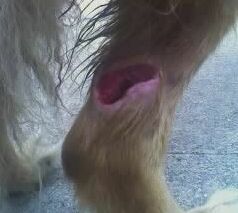 My
German Shepherd dog was attacked by a Pitbull and sustained a horrible 3"
to 4" gaping wound on his leg, exposing his bone. I never took him to the
vet. I treated him with native remedies at home and allowed him to lick
his wound as much as he wanted to. He never had an infection or a fever
and within two weeks his wound was completely healed. Shirley
My
German Shepherd dog was attacked by a Pitbull and sustained a horrible 3"
to 4" gaping wound on his leg, exposing his bone. I never took him to the
vet. I treated him with native remedies at home and allowed him to lick
his wound as much as he wanted to. He never had an infection or a fever
and within two weeks his wound was completely healed. Shirley
Nutritional Therapy and Natural Remedies for Animals and Pets
Scientists theorize that mineral deficiency subjects us,
and our animals, to more illnesses, aging, sickness and destruction of our
physical well-being than any other factor. Preventing
and healing animal cancer, arthritis, and other disease; improving temperament
and behavioral problems, digestive disorders, skin disorders, bone and
joint disorders and more with naturally occurring nutritional supplements.
A groundswell of nutrition conscious veterinarians are beginning to recommend
to their clients that they supplement their animals diet with a daily dose
of Good Fats - Omega 3 Essential Fatty Acids
and other nutrients for optimum wellness and vitality.
Additionally, many recommend exploring holistic health products and services from
Shirley's Wellness Cafe for comprehensive natural remedies.
A growing number of veterinarians state that processed pet food is the
main cause of illness and premature death in the modern dog and cat. In
December 1995, the British Journal of Small Animal Practice published a
paper contending that processed pet food suppresses the immune system and
leads to liver, heart and other ill conditions. Dr. Kollath, of the Karolinska
Hospital in Stockholm, headed a study done on animals. When young animals
were fed cooked and processed foods they initially appeared to be healthy.
However, as the animals reached adulthood, they began to age more quickly
than normal and also developed chronic degenerative ill symptoms. A
control group of animals raised on raw foods aged less quickly and were
free of degenerative disease. For a return to health, pets require a diet
which strengthens the immune system and most closely resembles that which
they would get in the wild. It's really easy to do.
William Pollak D.V.M. "
The commercial food we are feeding,
is the disease we are treating, so treat on and on, curing one disease
after another, again and again. A narrow definition of disease makes for
multiple cures. The multiple illnesses are in reality the same disease rearing
it's different heads. The disease; not an entity in itself, but a combination
of symptoms produced by the body in trying to remove something it no longer
wants. What it wants is to remove an abstract sense of dis-ease, some feeling
of discomfort, but it can't quite do it. A weakened system short of appropriate
building blocks just pushes the same dis-ease throughout the body and mind.
As this happens the symptoms change as would the food we eat and the things
we see as we travel the world around. There are different forms in different
places, even in the body and mind. All the body is trying to do is get rid
of what it no longer wants; but just can't quite do it on its own."
Finding a Holistic Health Practitioner for Your Animal
Finding a holistic health practitioner for your animal can seem daunting,
but with the right approach, you can ensure your pet receives the best care.
Start by researching local practitioners who specialize in holistic animal care.
Look for certifications in modalities such as acupuncture, homeopathy, and herbal medicine.
Reading reviews and seeking referrals from friends and family who have used
holistic health services for their pets can also be invaluable. By choosing a
qualified and experienced practitioner, you can promote your animal’s natural
health and well-being, ensuring they receive comprehensive care that addresses
their physical, emotional, and spiritual needs. This thoughtful approach to selecting a
practitioner will help your pet achieve and maintain optimal health.