Dr. Donna Kelleher, a Seattle-based veterinarian who uses acupuncture
and chiropractic, says that
improving an animals immune system will negate the need for
most vaccines. Vaccines, she says, have been shown to cause auto-immune
diseases. “I feel they may be responsible for arthritis, skin, liver
and kidney problems as well.”
CHRONIC
KIDNEY (RENAL) FAILURE - the holistic approach
Testimonial of Feline with kidney (renal) failure: Full Recovery
Presumably, the term “chronic kidney failure” suggests that the
kidneys have quit working and are, therefore, not making urine.
However, by definition, kidney failure is the inability of the kidneys
to remove waste products from the blood. This definition can occasionally
create confusion because some will equate kidney failure with failure
to make urine. Kidney failure is NOT the inability to make urine.
Ironically, most dogs in kidney failure are actually producing large
quantities of urine, but the bodys wastes are not being effectively
eliminated.
"Kidney failure" might mean compromised, overworked kidneys -
or it might mean damaged kidneys (i.e., severe, chronic renal failure).
Kidneys can be damaged - irreparably, so the veterinary information
says - by a whole slew of environmental poisons and veterinary treatment
drugs, and via other disease forces as well (such as kidney infections,
diabetes, leptospirosis, cancer, as examples). And kidney problems
can be inherited (especially by certain breeds). (By the way, I've
read that kidney failure is supposedly easier to treat in cats than
in dogs.) Kidney failure (renal disease - increased thirst, dehydration,
loss of appetite, urination changes, maybe nausea and pain) is common
in elderly pets - systems do fail as we get older, whoever we are.
But the kidneys are one of the critical factors in eliminating toxins
from the body - and they become less efficient with age, and with
toxin loading. (Which can be a problem at any age, just like with
humans.)"
more on kidney failure
Do
you have a question about holistic animal health or need assistance?
contact Shirley or call 323-522-4521 or 323-989-3372
Diet's Influence on Feline Kidney Disease
Dr. Russell Swift, DVM on kidney disease - "Fortunately,
since I have turned to a holistic approach to wellness, I have seen
many dogs and cats outlive their death sentence by years. I believe
there are three major reasons for kidneys to degenerate and eventually
fail: 1) poor quality nutrition,
2) toxicity and 3) chronic
disease. I have discussed in many previous articles the failings
of processed foods. Inadequate and improper protein sources and
low moisture content (of dry foods) are the two major kidney stressors
I believe occur in commercial foods. The kidneys also take a hard
hit from many toxins to which the body is exposed. Many conventional
medications, notably nonsteroidal anti-inflammatories and certain
antibiotics, are very
damaging to the kidneys. Ultimately, there is not much known about
the long-term effects of many food additives and preservatives;
fluoride in the
drinking
water; and all the pesticides
and herbicides used in, on and around our companion animals
(and ourselves!). Item number three on the list above is a term
used by homeopaths to describe a chronic disturbance in the body's
function that results in symptoms. Diet in controlling
Chronic Renal Failure (CRF)
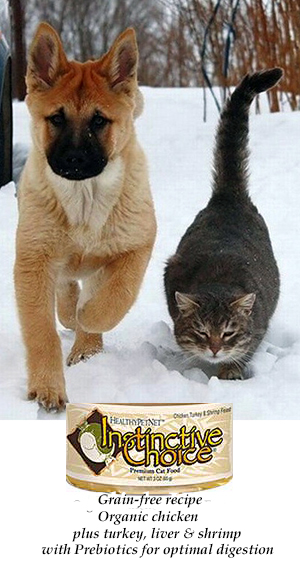
Instinctive Choice for felines contains fresh, highly digestible,
human-quality proteins from organic chicken, turkey, chicken liver
and shrimp. Instinctive Choice contains nutrient rich water or “biological
water,” which contains nutritional components found in meats and
chicken broth. This allows your cat to obtain moisture closer to
the way a cat in the wild would get it. It also contains added omega-3
and omega-6 fatty acids, chelated minerals, taurine, l-carnitine,
vitamin E and a superior blend of vitamins, minerals, and antioxidants
to help contribute to a healthy daily diet. (educational
info --
product)
When I am confronted with a dog or cat who has been diagnosed
with chronic renal (kidney) failure (CRF), I generally begin by
educating the animal's guardian about the
dangers of commercial foods
and the benefits of fresh-food feeding. Conventional veterinarians
are under the misunderstanding that low protein diets are the best
way to feed an animal with chronic renal failure. My experience
is that such an approach will lead to the death of the animal in
a few months (thus bringing their prognosis to fruition). I have
found that just the opposite approach is the most effective for
most animals. I suggest feeding a high protein,
raw-meat-based diet. I
have seen dramatic reductions in elevated kidney blood tests within
two weeks in some patients. Why does conventional medicine do the
opposite? Because all of the conventional nutrition research is
done with processed foods. I haven't seen any done with raw foods.
I believe this is the reason for the research data. Heat-treated
animal protein, as found in commercial foods, is more difficult
to digest. This results in more protein (nitrogen) waste, which
the kidneys must remove from the bloodstream. Blood urea nitrogen
(BUN) is a protein waste that is measured in a blood test. Therefore,
a diet that has high levels of cooked protein is more stressful
to the kidneys and results in higher toxicity (BUN) in the blood
if the kidneys are not functioning well. Raw protein, in comparison,
digests more completely with less waste. This results in more protein
for healing and rebuilding tissue without the renal stress. Remember,
by nature carnivores eat a very high protein diet. They should have
the ability to handle it. Another benefit of the raw foods is that
they contain much more water than dry foods. This helps the kidneys
discharge waste material. I would not be writing this information
if I had not seen many animals improve on such a regimen. Other
holistic vets are having the same results."
Diet in controlling Chronic Renal Failure (CRF)
In the past, it was believed that a low protein diet was essential
in controlling Chronic Renal Failure (CRF). The idea behind this
is to cut down on the kidneys' load. However, studies done on dogs
in renal failure, show that a low protein diet did not help the
GFR or BUN of said dogs. Since cats have an even higher protein
requirement than dogs, it seems unlikely that they could thrive
on low protein diets. As an obligate carnivore, they need the nutrients
only available from meat. So one has to walk a fine line between
making sure all the kitty's nutritional needs are met, and keeping
the stress on the kidneys as low as possible.
Testimonial of Feline with kidney (renal) failure: Full Recovery
Dr. Derek Duval, VMD - "Do high protein diets causes renal
failure? No. In dogs they have removed 7/8 of the renal mass and
then placed them on diets of various protein level and quality.
Dietary protein had no effect on the development of renal failure.
In cats similar studies suggest that dietary protein level is not
associated with renal failure."
"Very Important to Feed a ALL Natural Diet homeprepared
meals of cooked or raw chicken ot turkey meats ( any type of
artifical foods that come in
tin or wrappter are full of chemical/toxins which will only
continue to burden the kidneys and add more toxins in the body.
With more damage the toxins that are normally filtered by the kidney
begin to build up and can cause depression, decreased appetite,
a foul odor to the breath, oral ulceration, and vomiting. In the
end stage of renal failure, a low body temperature, seizures, and
severe depression and coma can result."
Diana
Hayes DIHom
T.J. Dunn D.V.M. - "The biggest and most common misconception
of all... the promotion of some low priced, grain-based foods as
being a Complete and Balanced diet for dogs and cats! Having done
physical exams on tens of thousands of dogs and cats and learning
from their owners what these pets are being fed has taught me that
dogs and cats look, feel, and perform better if they are fed a meat-based
diet rather than if fed a corn, wheat, soy or rice-based diet. This
does not mean that grains are bad for dogs and cats; they surely
can contribute certain limited nutrients to a good diet (mainly
calories in the form of carbohydrates). Nevertheless, many veterinarians
believe that grains should not be the foundation of a diet intended
for a dog or cat. If some pet food "expert" tells you that eating
animal fat is bad
for dogs and cats and that a plant source of fatty acids is much
better, your common sense should tell you that dogs and cats successfully
evolved over the eons by consuming animal fat in their diets. So
does it make sense to say that animal fat is bad for dogs and cats?
Another example is the common notion that lots of protein in a pet's
diet will cause kidney damage. Again, looking at the nature of the
dog and cat as primarily a meat-eating animal and having evolved
by capturing and consuming other animals, we know their diets have
always been high in protein. Think about what makes sense IN NATURE.
If you hear about a nutritional product that "just doesn't make
sense"... be cautious about it's factual basis."
In his book
Dr. Pitcairn's Complete Guide to Natural Health for Dogs and Cats
Dr. Pitcairn write: "...Chemicals in food (like preservatives, coloring
agents and artificial flavoring agents) and in the environment (contaminated
water, air and soil) are directly stressful to the kidneys and probably
play a role in the development of the condition. In addition, lack
of adequate exercise and diminished exposure to natural environments
compound the problem of inadequate elimination and a sluggish metabolism.
...Long-term skin irritation and eruption often seem to precede
eventual kidney failure in old age. If the skin disorder is repeatedly
suppressed with doses of cortisone or related corticosteroid drugs,
the relationship seems especially true." (danger
of cortisone)
Dr.Hamilton DVM
- "Diets that are low in potassium can cause renal failure.' In
general Commercial diets
are of poor quality protein and poorly formulated and may have led
to the development of renal disease.
Dr. Paula Terifaj DMV - "Research
conducted at the University of Georgia in the 1990s found that feeding
protein levels of 34% (higher than the recommended average of 22-26%)
to older dogs with kidney failure caused no ill effects at all...
The truth of the matter is this; Inferior sources of proteins, meat
by-products and grains (cheap sources of incomplete proteins that
pet food companies are allowed to factor in and measure as crude
protein) can make more work for the organs that are involved in
digesting food and eliminating waste, namely the kidney, liver and
pancreas."
Lisa A. Pierson, DVM -
"Kidney disease is probably the leading cause of mortality in the
cat. It is troubling to think about the role that chronic dehydration
may play in feline kidney failure. And remember, cats are chronically
dehydrated when they are on a diet of predominantly dry food. The
prescription dry 'renal diets' such as Science Diet k/d - which
is commonly prescribed by veterinarians - contain only a small amount
of moisture leaving your cat in a less than optimal state of water
balance. I must say that I find it truly amazing when I hear about
the very large numbers of cats receiving subcutaneous fluids while
being maintained on a diet of dry food. This is extremely illogical
and every attempt should be made to get these cats on a diet that
contains a higher moisture content. Please also note the following
list of the first four ingredients of Science Diet dry k/d after
reviewing this section on reading a pet food label - and bearing
in mind that your cat is a carnivore. The first three ingredients
are not even meat and the fourth ingredient is a by-product meal.
The purpose of this prescription diet is to restrict protein which
it certainly does. Unfortunately, it restricts it to the point that
the cat will often catabolize (use for fuel) his own muscle mass
which results in muscle wasting and weight loss. The level of protein
in this diet is not only at an extremely low level, it is in an
incomplete form for a carnivore. Note that it is made up mainly
of plant proteins - not meat proteins."
Ready-To-Eat Healthy
Raw and Canned Pet Food
GlucoBalance Natural pancreatic tonic keeps blood sugar & insulin
levels within normal range
Dr. Duval explains that the most common clinical signs of renal
(kidney) failure are vomiting, increased urination and increased
thirst. (Other disease share these same signs; such as diabetes,
hyperthyrioidism ...) Blood tests that are important are the BUN,
Creatinine and phosphorous. BUN or blood urea nitrogen is a chemical
that the liver makes from ammonia.
Dr. Will Falconer, DVM - "Most of the chronic diseases
we commonly see in animals (and humans) have an immune basis, e.g.
diabetes, allergies, asthma, thyroid disease, inflammatory bowel
diseases, repeated ear infections, cancer, etc. While they can be
cured through the careful use of homeopathy, the road to cure can
be a long one -- often years if the animal has had years of disease.
Transfer factors can significantly shorten the course, by giving
a much needed balancing effect to the immune system. If the immune
system is overactive as in allergies, ear infections, asthma, diabetes,
or hypothyroidism, Transfer Factor can balance this overactivity
so the system is not attacking its own organs, overreacting to things
that shouldnt be perceived as a threat. If, conversely, the immune
system is under-active as in mange, parasites, viral infections,
or cancer, Transfer Factor Plus can clearly stimulate it to better
meet the challenges it needs to be alert to."
Testimonials of Feline with kidney (renal) failure: Full Recovery
"I have a 15 year old turkish angora named Princess. In February
2009, she was very sick, not eating, and hiding under the bed. We
took her to the vet, and they said her kidneys were failing. They
did a blood test and her creatine was 7.2. The normal level for
cats is 0.8-2.4. She was hospitalized for a week with iv fluids.
My husband and I decided to take her home, and started her on transfer
factor feline. Three weeks later we took her back to the vet for
a checkup, and her creatine dropped to a 4.7. In October we took
her in again for a recheck, and she dropped to a 3.5. She still
continues to improve. Now she jumps 4 feet ledges, hardly sleeps,
and is very active."
Arlene Metke 1 206-600-6222
TERMINAL RENAL FAILURE DIAGNOSIS TIKKA - THE LOVE OF MY LIFE! -
"19 years ago I saw this adorable coy Calico kitten at the animal
shelter. And it was love at first sight. She was a bevy of colors
with random black, orange & white markings that came together
like a Picasso masterpiece. I called her TIKKA because she had a
little black dot on the side of her nose. Tikka in India means dot
on the forehead. She also had the cutest white tipped curly Q tail.
I fell in love with her when I saw her grooming all the other little
kitties like she was their mama! Alas, at age 19, my beloved Tikka
was diagnosed with advanced stages of renal disease. The vet pronounced
a death sentence saying that she had weeks or maybe months to live.
They said there was no hope for a cure. Tikka used to be so swift,
you could never catch her but in recent months she lay lifelessly
on her mat waiting for death to engulf her. She could hardly stand
up. She had lost her meow. Her curly Q tail now hung limply down.
Her coat was inextricably tangled. She was incontinent because she
was too weak to walk to the litter box. I have been a fan of Shirleys
Wellness Caf for many years. I contacted Shirley and started Tikka
on a comprehensive w-holistic program that included specific:
Transfer Factors &
Marine Phytoplankton
formulas.I also added wheatgrass, fluids &
other important healing techniques to her protocol. Tikkas has experienced
an amazing transformation, with no harmful side effects that accompany
aggressive therapies. At 20, she is fragile but is a determined
survivor. Tikkas mischief has returned. When I try to catch her,
she is nolonger stuck to her mat! She jumps down from the counter &
gives me the slip.When she is on her program, her Curly Q tail is
way up!!! She always had an inaudible meow; now her meow is more
audacious & assertive than ever! She used to live under the
bed & hated thunderstorms. Now she loved sitting by the window
during thunder & lightening. Her matted coat & incontinence
have vanished.I am so grateful to Shirley to have Tikka, the light
of my life back, that I now help Shirley spread the word about how
amazing the bodys healing capacities are. By cleansing the body &
providing it with ALL the 5 elements & essential nutrients it
needs, the bodys innate healing mechanism is enhanced & many
miracles manifest themselves! I have a plethora of testimonials
that I can send you, too many miracles to be ignored, which will
inspire you to create your own miracle too! And perhaps one day
you may also want to share this vital information to someone else
who is looking for a miracle too.
Do you have a question about holistic animal health or need assistance?
Contact Shirley
Call 323-522-4521 or 323-989-3372
"My beloved cat Tawny 16 years old was diagnosed with kidney
(renal) failure and there wasn't much the vet was offering to
do but to put my cat on a very low protein diet. Tawny didn't want
to eat it. He had lost a lot a weight when he got sick. Within 9
mo's he had gone from 8 lbs. to 6 lbs. I could see his bones in
his back. I had given him that tainted cat food unknowingly. I didn't
know which way to turn because I just knew I was losing him. Just
by luck I happened upon shirleyswellnesscafe and decided this is
the route I would try for him. I knew I had to do something because
he wasn't eating but very little. I ordered the
Transfer Factor tri factor and was assured that this could help
him. The price is reasonable for someone living on a fixed income.
The order came so fast that I could hardly believe the order was
already here. My cat is very hard to give medicine to. I put it

in a small amount of beef broth , mixed it and put it in a syringe
and he just sits there and doesn't seem to mind. I was about 3 or
4 days into the medicine, (they say it takes from 5 days to a week
to see an improvement) and I thought he was going to die that night,
he was still eating very little with me running out and trying to
daily find anything he would eat. The next day he started to eat
some by himself but still with a lot of coaxing all through the
day. As the days went by he would eat a little more until he was
eating totally on his own. He's never been a big eater so it will
take awhile to really see a weight gain but I notice the bones on
his back don't show anymore. It is now 19 days down the line and
for the first time today he came in to eat with us the food we eat
and he ate voraciously. I don't believe I'm going to lose him now
as I had thought I would but were it to happen I would feel I made
the right choice and did the best I could for him. As we all know
there is so much fraud out there and it seems you can't trust anyone
anymore because the bottom line is money. I really feel that ShirleysWellness
Cafe truly cares about people and pets, something that is so rare
to find anymore. Tawny has only been on this near 3 weeks and I'm
not stressed anymore about something happening to him. If you have
any doubts in your mind about trying Transfer Factor products, you'll
find it's the best choice you will have ever made. I just wish I
had known about Transfer Factor before my sons beautiful cat just
wasted away and died with no concern from the vet except money."

"My 19 year old cat Dexter had been diagnosed with Chronic Renal
Failure about 3 years ago. At the time his numbers were not too
bad so we were able to manage with diet for a while. Then last year
my mother had a brain bleed and brain surgery. Her recovery took
about a year and during that time we were able to take care of Dexter
but not like we had been. It was a very difficult time for us. Finally
mom was getting better (Thank God!!) but I noticed that Dexter was
very thin and while staying at my parents house(Dexter lives with
them and I live close to my parents) noticed that he had not had
a bowel movement in a while. He also stopped eating and was VERY
WOBBLY. We took him to the vet and they said that he was very close
to the end. We would be justified in letting him go. The doctor
wanted to give him a chance so they kept him for a few days, gave
him an enema and fluids. A few days later I was sent home with some
stool softener and potassium.They also told us that fluids under
the skin twice a week would also help. They said to keep him comfortable
and feed him anything that he wanted. I was so sad, I felt like
we had let him down. They were not giving him much time. At home
he acted okay but not very alert, not jumping on his favorite couch,
not doing much of anything. Then I stumbled across Shirley's Wellness
Cafe. The information about Transfer
Factors was very interesting and seemed like it could help out
kitty. I got on the phone and called the number on Shirley's website.
An amazing earth angel named Tamara answered and gave
me all of the info I needed. She said that the Transfer Factors
would make him feel better. She even helped me to order. I could
not have asked for a more helpful person.I ordered the Transfer
Factor Tri Factor which is almost tasteless and so easy to mask
in anything. Order came quick and started Dexter on one capsule
a day. It is SO EASY to give. I open the capsule put it with a little
butter and he licks it right off of my finger. About 4days after
starting he got a little more life into him. 2weeks later he started
taking his walks around the swimming pool out back and started jumping
on his couch again. He is eating like he never has before and has
regular bowel movements. It has been almost 2 months and he continues
to do well. We don't know how much time he has, after all he is
almost 20 and we have to be realistic. The main thing is that his
quality of life is so much better and Tamara was right, it did make
him feel better. Thank you to Shirley for this amazing website and
to Tamara for all of her help. We owe a huge thanks to you!!!!!!!!!!!!!"
Dc Batura
"I have had diabetes for 38 of my 49 years and I've had kidney
disease since1986. In August of 1999, I went for my quarterly
blood test for my kidneys. The physician called me after the test
was taken and said, "Not only are your kidneys functioning well,
after fourteen years, their function has improved dramatically."
My BUN (blood urea nitrogen) was near normal after fourteen years
of it being almost twice as high as it should be because my kidneys
weren't filtering well. The only supplemental change in my life
was Transfer Factor. Only once
in my life did I endorse a product. I've been on an insulin pump
for sevenyears, and I've allowed my name,
face, and testimony to be used nationally. This is the second time,
and it took alot to convince me. Not only did it reverse my kidney
disease, but this is the first year in sixteen years that I haven't
gotten a flu shot or gotten the flu or bronchitis" Marc H. Blatstein,
Former President, Philadelphia Chapter of the Juvenile Diabetes
Foundation
read other testimonials on Transfer Factor in veterinary medicine
Here's another testimonial:
Full recovery of a cat with chronic renal failure (CRF)
Chronic renal failure (CRF), also known as chronic kidney disease (CKD), is among the leading causes of death
among felines and is considered a serious threat to dogs as well. It is a degenerative condition that often goes undetected until
most of the damage has already been done. Kidney failure can come on acutely or occur gradually over weeks or months. Learn about the dangers of some of the popular CRF-related drugs on the market and the common seven mistakes pet owners make in treating animals with chronic renal failure.
Learn more...
Feline Diabetes
Sam Jones, DVM - "Two cats, both about 8 years old, had
severe diabetes. It was impossible to get the insulin requirements
adjusted. They had lost weight to a point that they were skin and
bones. Both cats had no quality of life left. The cats were given
Transfer Factor along with a
healthy diet to help support their immune system. A week later,
we were able to get their insulin requirements adjusted. It is now
6 months and they have regained their weight and have a great quality
of life and health."
Click here to read more natural animal healing testimonials
Read Ann's
testimonial how she saved her dog of kidney failure with raw food
Very sick cat recovers
his health with diet, acupuncture, homeopathy and lots of love
More about Transfer Factor in veterinary medicine
Other testimonials
of animal healing with transfer factors
Testimonials
of animals healing with marine phytoplankton
Do you have a question about holistic animal health or need assistance?
Contact Shirley
Call 323-522-4521 or 323-989-3372
Most Popular Natural Pet Products...
CHRONIC KIDNEY (RENAL) FAILURE the holistic
approach
UTI-Free is also a remedy intended to soothe, lubricate,
strengthen, and protect urinary tract tissues of dogs
and cats. Holistic vets use this herbal remedy and
Transfer Factor in the treatment of various forms of urinary
tract inflammation without irritating the kidneys. An antimicrobial,
anti inflammatory, soothing and tonifying designed to disinfect,
sooth and protect the urinary tract.
Dr. Pottenger discovered quite by accident that cats degenerated
unless they were fed raw food.
In his 10-year study of 900 cats, he found the optimal diet for
his cats was 2/3 raw meat and 1/3 raw milk plus a little cod liver
oil. If either the meat or the milk was cooked, the cats degenerated.
And if both were cooked, the degeneration was much worse, and the
cats could no longer reproduce by the third generation. Some of
the problems Pottenger found in the cats fed cooked food were:
heart problems; nearsightedness and farsightedness; underactivity
and inflammation of the thyroid; infections of the kidney, liver,
testes, ovaries and bladder; arthritis and inflammation of the joints;
inflammation of the nervous system with paralysis and meningitis.
And in the third generation, some of the cats' bones became as soft
as rubber. Lung problems, and bronchitis and pneumonia were also
frequent. Moreover, the females became irritable and even dangerous,
and the males became passive and lacked sex interest. Clearly, there
was a direct link between the cooking of meat and the resultant
evidence of malnutrition in Pottenger's cats.
Click here to learn
more
Raw
- Ready-To-Eat Safe, Healthy
RAW Pet Food
Scientists theorize that mineral deficiency subjects us, and
our animals, to more diseases, aging, sickness and destruction of
our physical well-being than any other factor in personal health.
A groundswell of nutrition conscious veterinarians are beginning
to recommend to their clients that they supplement their animals
diet with a daily dose of flaxseed oil and other nutrients for optimum
health and vitality. The food your animal eats should provide all
of the nutritional
components which are necessary for all organs and systems of a healthy
body to perform in harmonious unison. A properly functioning
body does an amazing job at preventing disease and healing itself,
and to do this it requires the energies and nutrients of a well-balanced
diet. In terms of finding the proper diet for our companions, this
means learning to look beyond our own needs, opinions, and agendas
to address the natural needs of the animals that we caretake.
click here to learn
more
Our
pets are prone to suffer from minerals and trace mineral deficiency.
For optimum health, I supplement
Shasta's diet (and my diet too) with the following:
fulvic minerals or
marine phytoplankton (consist of an immense
arsenal and array of naturally occuring powerful phytochemicals,
biochemicals, supercharged antioxidants, free-radical scavengers,
super oxide dismutases, nutrients, enzymes, hormones, amino acids,
antibiotics, antivirals, and antifungals),
bee pollen (rich in naturally
occuring vitamins), kelp (marine
plants), the right kind of salt (not
common table salt);
magnesium oil,(a
miracle mineral in its healing effect on a wide range of diseases
as well as in its ability to rejuvenate the aging body). and
clay (to promote healing and to detoxify)
and with flaxoil (also knows as linseed
oil - rich source of omega3 fatty acids). Shasta does not drink
tap water. I give her only
filtered water which
is free from toxic chlorine and fluoride. I support my immune system
and that of my animals with Transfer
Factor and by raising our
Glutathione level. . I never cook or warm up food in
a microwave oven. Please read about the
Hidden Hazards of Microwave
Cooking
I have witnessed the amazing healing power of
homeopathy,
herbal extracts,
Transfer Factor,
Glutathione/Immunocal, and
marine
phytoplankton in traumatic emergency situations and in acute
and chronic disease with my own health, that of my family and my
dogs: Nadja, Shasta and
Kuuma. Some of the healings were nothing
short of miraculous, including
my own
healing. When Nadja ate rat poison and was vomiting large amount
of green fluid, the vet said she didn't have a chance to survive.
I saved her life with the homeopathic remedy Arsenicum 10 M. If
I need guidance, I will get a phone consultation with a
holistic
veterinarian. I had been chronically sick for years, addicted
to prescription and over the counter drugs. Unfortunately, instead
of generating a cure, the medications (steroids, antibiotics, antihistamine,
etc.) merely temporarily suppressed my symptoms, weakened my immune
system, and in the long run made me sicker. I completely turned
my health around with the incredible healing power of homeopathy,
raw food diet,
herbs, and nutritional products
such as
flaxoil,
chia seeds or oil,
clay,
seaweed or plankton,
saccharides/glyconutrients, and
Transfer Factor. I'm not a doctor or a nurse, but when a member
of my family get sick or injured (including my animals) I immediately
use homeopathic medicine, herbs and nutritional supplements with
excellent results. Shirley
It has long been known that chronic renal failure (CRF) in cats
has an inflammatory component. Chronic low-grade inflammation causes
gradual destruction and scarring of the kidney, eventually resulting
in loss of function and failure of the organ. However, what was
not known was what caused the inflammation in the first place. Recent
research from Colorado State University suggests
a link between vaccination for feline distemper
(panleukopenia) and the development of chronic renal failure.
The distemper virus is grown in a feline kidney cell culture to
make the vaccine. Earlier research at Purdue University showed that
puppies given a vaccine grown in calf serum developed antibodies
to calf proteins that also reacted against the puppies' own cells.
These auto-antibodies (antibodies to self, or to one's own tissues)
may contribute to later development of
autoimmune diseases. Every subsequent vaccine caused the puppies
to form even more antibodies.
Feline Chronic Renal Failure (CRF)
In the Colorado State study, 75% of kittens given an injectable
distemper vaccine developed antibodies to kidney proteins. However,
kittens given the intranasal form of the vaccine did not produce
kidney antibodies.Ongoing work at Cornell University has demonstrated
that the immunity produced by the feline distemper vaccine lasts
for many years (the test cats have maintained their immunity to
destemper for more than 9 years without revaccination). Given the
long-lasting immunity provided by the distemper vaccine and the
risk of triggering a harmful inflammatory
reaction in the kidneys, it seems prudent to minimize the vaccines
a cat receives. The current recommendation is to vaccinate every
3 years. For indoor cats, it may be unnecessary to revaccinate at
all, once the kitten has had its distemper series. Some studies
suggest that a single distemper vaccine given after 16 weeks of
age, is fully protective and need not be repeated. The intranasal
vaccine appears to be much less likely to cause this adverse reaction.
Reference: Parenteral administration of FVRCP vaccines induces antibodies
against feline renal tissues." MR Lappin, WA Jensen, R Chandrashekar,
SD Kinney
Chronic renal failure is a common cause of death in cats. Lymphocytic/plasmacytic
interstitial nephritis is common histopathologically, suggesting
immune-mediated reactions may play a role. Feline herpesvirus 1,
calicivirus, and panleukopenia virus for use in feline vaccines
(FVRCP) are commonly grown in Crandall-Reese Feline Kidney (CRFK)
cells. As a consequence, commercially available FVRCP vaccines contain
CRFK proteins. The objectives of this study were to determine whether
cats inoculated with FVRCP vaccines develop antibodies against CRFK
cell extracts and if so, to determine if these antibodies reacted
with extracts of feline renal tissue (FRT).
Feline Distemper Vaccine Implicated in Development of Chronic Renal
Failure
Michael Richards, DVM - "Unfortunately, cats develop
vaccinerelated fibrosarcomas. This is a problem which has
come to light in the last few years and it is one for which there
is no clear consensus about the proper way to publicize and deal
with it among small animal veterinarians. I suspect that many cat
owners are unaware of this risk.. Most veterinarians are reluctant
to tell every cat owner about the risk of fibrosarcomas and to explain
the risk/benefit ratio of vaccination for each individual cat."
Fibrosarcoma in Cats
- Vaccine Related
Dr. Christina Chambreau, DVM - "Routine vaccinations are
probably the worst thing that we do for our animals. They cause
all types of illnesses but not directly to where we would relate
them definitely to be caused by the vaccine. Repeating vaccinations
on a yearly basis undermines the whole energetic well-being of our
animals. Animals do not seem to be decimated by one or two vaccines
when they are young and veterinary immunologists tell us that viral
vaccines need only be given once or twice in an animal's life. First,
there is no need for annual vaccinations and, second, they definitely
cause chronic disease. As a homoeopath, it is almost impossible
to cure an animal without first addressing the problems that vaccines
have caused to the animal, no matter what the species."
more on Health Hazard of Routine Vaccination
Steroids don't cure anything.
They are very powerful drugs and if used inappropriately, they can
mask symptoms of a serious illness and weaken the cats immune system.
These drugs have severe side effects and if used improperly, can
bring harm to the cat. Suppression of the cats immune system is
a side effect which must be seriously considered before long term
treatment is begun. Many cats placed on long term steroid therapy
are seriously ill. Some of the severe side effects take a long time
to develop. Learn more about the danger of overuse of
steroids and
antibiotic
Do you have a question about holistic animal health or need assistance?
Contact Shirley
Call 323-522-4521 or 323-989-3372
Cystitis (bladder inflammation) and Bladder/Kidney Stones
Lisa A. Pierson, DVM (links within Dr. Pierson's article are inserted by Shirley for information purpose)
Cystitis and stones are extremely common in the cat and can be very painful
and life-threatening. Cystitis can lead to inappropriate urination
(urinating outside of the litter box) and stones can cause a fatal
rupture of the bladder by blocking the outflow of urine. Any cat
that is repeatedly entering the litter box but not voiding any urine
is in need of IMMEDIATE medical attention! It is important to note,
however, that "crystals" are not the same thing as stones. Crystals
are often a normal finding in a cat's urine and it is not appropriate
to put the cat on a "special urinary tract" formula when these are found in the urine.
Important: I often see too much clinical significance
placed on the identification of crystals in the urine without regard
to how the urine sample was handled. It is very important to understand
that crystals will often form once outside of the body within a
very short (one hour) period of time. If the veterinarian does not
examine the urine right away and either sends it to an outside laboratory
or uses a free-catch sample that the owner brought from home, an
erroneous diagnosis of crystals may be made. This is called a "false
positive" report and results in unnecessary worry on the part of
the owner and often leads to the cat being placed on an inappropriate
diet.
With regard to overall kidney and bladder health, I cannot stress
strongly enough how important WATER, WATER, WATER
is in both the prevention and treatment of diseases involving this
organ system. When a cat is on a diet of water-depleted dry food,
they produce a more highly concentrated urine (higher urine specific
gravity - USG) and they produce a lower volume of urine which means
that a higher concentration of crystals will be present in the urine.
This increases the chance of these crystals forming life-threatening
stones. The concentrated urine and the lack of volume production
can also be very irritating to the lining of the bladder wall predisposing
them to painful cystitis. Please keep in mind that a cat has a very
low thirst drive and is designed to get water with their food. A
diet of canned food will keep a proper amount of water flowing through
the urinary tract system and help maintain its health.
Urine pH is also often considered when discussing urinary tract
problems but we really need to stop focusing on pH. Again, a proper
amount of water in the diet is the important issue here - not urine
pH. Many of the so-called feline lower urinary tract diets are formulated
to make the urine acidic but it is thought that these low magnesium,
acidifying diets may actually exacerbate painful cystitis. Also,
these acidifying diets, which are so often prescribed, may end up
promoting calcium oxylate stones and hypokalemia (low potassium
in the blood). It is also important to note - for those people still
stuck on worrying about the urine pH - that there are many factors
which determine the pH of urine and only one of them is diet.
With regard to dry food and urinary tract health, aside from
the lack of water in this type of diet, there is also a correlation
between the consumption of a
high carbohydrate diet
and the formation of struvite crystals as shown by this study. Veterinarians
often prescribe Science Diet dry c/d and x/d for urinary tract problems
but again, these diets are only ten percent water and contain a
high level of species-inappropriate
ingredients and questionable preservatives. They are also very
high in carbohydrates with dry c/d containing 42 percent of its
weight as carbohydrates. Please note the first few ingredients in
c/d while remembering that your cat is a carnivore.
Ready-To-Eat Healthy Raw
and Canned Pet Food
Diet is not the only issue involved with cystitis but it is an
important one and one that we can control.
Stress is also thought
to play a very significant role in cystitis and even cats that are
fed a 100 percent
canned food diet may experience bouts of cystitis. This is a
very frustrating disease to deal with and one that the veterinary
community does not have all the answers for. What we do know is
that decreasing stress and increasing the water content of the diet
are the most important management issues to address. The water content
of the diet is easy to control. The stress issue is another matter
and is not always easy to address since cats can be very sensitive
and are often 'silent' in their stress.
Cystitis can be extremely painful and it is very important to
address pain management in these cats. Remember: pain = stress and
we are trying to minimize the stress in these patients. Buprinex
is a good choice for a pain medication. This is superior to Torbugesic
which has been used for pain management in the cat in the past.
(Burprinex is a prescription medication that you must get from your
veterinarian.) Unfortunately, many veterinarians overlook pain medications
as a very important part of the treatment of this common feline
problem.
A note on antibiotic
usage in these cases. Most cases of cystitis are sterile. In
other words, they are not the result of an infection and should
not be placed on antibiotics. Only ~1% of cats with cystitis that
are under 10 years of age have a urinary tract infection, yet many
veterinarians place these patients on antibiotics when these drugs
are not warranted. Most cats under 10 years of age produce a very
concentrated urine (USG greater than 1.030) and bacteria do not
grow well in concentrated urine. In cats over 10 years of age, infections
are more common but that still does not mean that older cats with
cystitis should automatically be put on antibiotics. The reason
that an older cat is more prone to urinary tract infections is because
kidney disease is more common in this age group and so these cats
will have a more dilute urine which is not as hostile to bacterial
growth. Learn more.

Dr. Will Falconer, DVM - "Most of the chronic diseases
we commonly see in animals (and humans) have an immune basis, e.g.
diabetes, allergies, asthma, thyroid disease, inflammatory bowel
diseases, repeated ear infections, cancer, etc. While they can be
cured through the careful use of homeopathy, the road to cure can
be a long one -- often years if the animal has had years of disease.
Transfer factors can significantly shorten the course, by giving
a much needed balancing effect to the immune system. If the immune
system is overactive as in allergies, ear infections, asthma, diabetes,
or hypothyroidism, Transfer Factor can balance this overactivity
so the system is not attacking its own organs, overreacting to things
that shouldnt be perceived as a threat. If, conversely, the immune
system is under-active as in mange, parasites, viral infections,
or cancer, Transfer Factor Plus can clearly stimulate it to better
meet the challenges it needs to be alert to."
Learn how veterinarians and others use Transfer Factors for animal
health.
Richard H. Bennett, Ph.D - "For decades, the approach
to maintaining healthy animals was to wait for signs and symptoms
of disease to occur and to counter the challenge with an array of
drugs which were toxic for the disease causing agent. This approach
is now being questioned as the armada of drugs is diminishing due
to multiple drug resistant pathogens. Compounding this alarming
trend is the current approach to health maintenance which assumes
that "all is well" until actual disease processes begin. By this
time, the disease is established, sometimes irreversibly, and the
damage has occurred. So the questions arises...What if a new paradigm
existed? Could it be possible to optimize the immune status of animals
so that (1) disease is much less likely to occur and (2) if disease
does occur, it's severity and duration is minimized? The answer
is YES and this paradigm shift is being engineered by small, naturally
occuring protein-like molecules called
Transfer Factors."Dr. Richard
Bennett holds a doctorate in Comparatie Pathology from the University
of California, Davis. His work in this area includes basic and applied
research in infectious disease microbiology and immunology.
Testimonials of animals healing with Transfer Factor
CHLORINATED and FLUORIDATED
WATER.... A BIG NO-NO !!! There is a perception among many people
that bottled water is somehow more healthy or pure than water from
their tap. This is simply an illusion of marketing. A four-year
study by the National Resources Defense Council (NRDC), released
in 1999, found that one-fifth of the sampled bottled waters contained
known neurotoxins and carcinogens such as styrene, toluene and xylene.
Another NRDC study found that, out of 103 brands of bottled water,
one-third contained traces of arsenic and E. coli. This means that
out of a sample of 1,000 bottles sold in the U.S., at least 300
would have some level of chemical contamination. It is well known
that the average city water today contains over 500 chemicals that
do not belong in it. Part of this is due to the fact that most delivery
systems in the U.S. include cement, asbestos pipes, cast iron, PVC
(porous to certain solvents, herbicides and pesticides) and that
lead, cadmium and other toxic metals leach out of valves and couplings
of pipes between a water treatment plant and a faucet in the home.
Why Purified and Distilled
Bottled Water are Bad For You and Your Animals
Do
you have a question about holistic animal health or need assistance?
contact Shirley or call 323-522-4521 or 323-989-3372
Most Popular Natural Pet Products...
Feline with severe liver failure
"Last
fall my cat became really sick with severe liver failure, she actually
went down to being just skin and bones. A friend of mine, a veterinary
assistant and nutritionist of many years, told me that the only
way I could possibly save my cat was by force feeding her a high
protein diet every two hours. I had read years ago that it is actually
the wrong approach to feed an ill person protein since it takes
too much energy to digest, so when my cat declined cat food and
tuna I decided to follow the wisdom of her body. The only thing
I ever forced her to take was marine phytoplankton (Frequen~Sea)
(1/2 to 1 teaspoon a day) and filtered water and Pedialyte for hydration.
I also did energy healing on her and prayed for her. could notice
a small improvement in my cat after a few days of Frequen~Sea and
energy healing combined. My rationale was to help her detoxify and
clean out the liver, and the Frequen~Sea would be giving her the
energy to stay alive and work through this phase. With her weight
loss I decided to deal later. Over the course of several weeks with
these "treatments" my cat slowly got a little strength back, also
gained a little bit of weight. I would put pureed tuna and tuna
water on my hand and entice her to take some all the time, but never
forced her. The first thing that she decided to eat on her own again
was the seed part of cantaloupe, one of her favorites. I decided
to keep trusting her body - it actually made perfect sense that
she would eat this first since it cleans the body because of the
high water content. From here she progressed to pieces of cantaloupe,
then some tuna and some kitten food (only out of my hand), all the
while I kept giving her the Frequen~Sea once or twice a day which
I squirted into her mouth with a syringe without a needle. After
about 5 months my cat became healthy again and gained her normal
strength and weight back. Her fur is actually more silky and beautiful
now than it ever was before. I put a few drops of FrequenSea into
the water bowls for all of my cats every day now - their furs have
also become softer and shinier, they throw up hairballs less frequently.
In my opinion the combination of FrequenSea and energy healing is
almost foolproof, an opinion that was also supported by Dr. Rodier."
Annette K.
Feeding marine phytoplankton and other sea plant algae to
your pet promotes: Shiny hair coat and supple skin - Healthier
and stronger newborns - Improved milk production in lactating bitches
and queens - Improved reproductive performance both for male and
female - Aids in the healing process by offering the vitamins and
minerals necessary for tissue repair - Better utilization and absorption
of nutrients from foods ingested.
Do
you have a question about holistic animal health or need assistance?
contact Shirley or call 323-522-4521 or 323-989-3372
Most Popular Natural Pet Products...
Feline urological syndrome, a chronic condition similar to cystitis
in humans (characterized by frequent urination with blood in the
urine), is an increasingly common and potentially fatal illness
in cats. It has been linked to elevated levels of ash and phosphorus,
two substances commonly found in commercial pet foods. High iodine
levels are seen as a contributing factor for thyroid tumors in cats.
"New diseases are being discovered that are linked to 100% complete
diets," states Dr Wysong. These include "polymyopathy (a muscle
disorder) from low potassium levels, dilated cardiomyopathy (heart
muscle disorder) from low taurine levels, arthritic and skin diseases
from acid/base and zinc malnutrition and chronic eczema from
essential fatty acid malnutrition," he
reports. Given the high possibility that your favorite pet foods
may be slowly poisoning your cat or dog, its crucial that you find
brands you can trust to be animal friendly.
Urinary tract infections (UTIs) are uncomfortable and
extremely painful. They tend to be more common in cats than dogs
and can be caused by bacterial infection, bladder stones or urolithiasis
(stones in the urinary tract). UTIs often recur and can lead to
more serious kidney infections if left untreated. Symptoms may include:
- Straining to urinate
- Obvious pain or discomfort when urinating
- Constantly licking their genitals
- Frequent urination without passing much urine
- Urinating in unusual places
- Cloudy or bloody urine
- Fever and loss of condition
UTI-Free is another remedy intended to soothe, lubricate,
strengthen, and protect urinary tract tissues of dogs
and cats. Holistic vets use this herbal remedy and
Transfer Factor in the treatment of various forms of urinary
tract inflammation without irritating the kidneys. An antimicrobial,
anti inflammatory, soothing and tonifying designed to disinfect,
sooth and protect the urinary tract.
Learn about
essential fatty acid malnutrition and the healing properties of
flaxoil and fish oil for animals
Learn about The Poisons in Pet
Food
William Winter DVM - "...Another sort of miracle that
occurred from my exposure to this work was my conversion to using
herbs instead of steroids, antibiotics and other drugs when treating
the very common ailment, FELINE UROLOGICAL SYNDROME (I refuse to
use any newer acronyms because the current thinking doesn't seem
to have evolved any more since the old acronym was in vogue). I
began exploring the simple herbs listed by Ms. Levy to great effect,
then I discovered a commercial product of a similar nature HERBAL
DIURETIC. It is produced for humans with cystitis/vaginitis. When
I first started using the product it was called "URINARY ANTISEPTIC"
for it really is, but the F.D.A. did not want people to be curing
themselves so they made them change the name. It still works very
nicely."
FELINE URETHRAL OBSTRUCTION (FUS)
Urethral obstruction by crystals in the urine is one of the most
common problems of neutered male cats.
Excerpt from felinefuture.com's website
Magnesium and Feline
Urological Syndrome
(FUS): ( also know as Feline Lower Urinary Tract Disease - FLUTD)
The absolute level of magnesium in the feline diet by itself
does not contribute to the formation of urinary struvite crystals,
provided that it is present in the proper ratio to other minerals
in the diet, and that other dietary factors support the maintenance
of an acidic urinary pH. Experiments using supplemental magnesium
chloride in the diet of cats have shown that, a high dietary magnesium
intake does not result in any signs of FUS if an acidic urine is
produced. However, if the urine pH is 7.5 or higher struvite crystals
will form even in cats fed a diet low in magnesium. These facts
emphasise the role of urinary pH in the development of FUS in the
cat, who has been evolutionary adapted to produce acidic urine,
and not total magnesium content.
Toxic Alert!
Hartz
Flea and Tick Products - Dangerous for Pets
Despite multitudes of well-documented cases of Hartz Flea and Tick
Products causing injury and death to many innocent pets, Hartz Mountain
Corp. continues to deny any wrongdoing and insists that its products
are safe
Insecticides and Feline Hyperthyroidism
Since the early 1980s, increasing numbers of cats have been found
with
hyperthyroidism, enlarged thyroid glands and high levels of
thyroid hormone in the blood. Cats which were regularly treated
with flea powders and sprays, and were also exposed to lawn pesticides,
have been found more likely to have hyperthyroidism. A higher level
of canned cat food in the diet was also an increased risk factor
(Preventive Veterinary Medicine, 1988(6): 295-309). Thyroid enlargement
has been seen in Great Lakes fish and in rodents fed on these fish.
This has been attributed to pesticides and other contaminants in
the lake water (Advances in Modern Toxicology, 1992(XXl): 129-145).
more on Toxic shampoos, toxic
drugs, toxic environment affecting pet's health
Feline Hyperthyroidism
Frequently Asked Questions, Information About Overactive Thyroid
Conditions in Cats.
Because of the potential seriousness of
hyperthyroidism, it's recommended that you work with a
good holistic veterinarian or naturopath
who specializes in pets to determine an effective treatment regimen
for your cat. In
Feline Hyperthyroidism's article, the author lists a
raw food diet,
homeopathy, massage,
flower essences,
and acupuncture as holistic options; herbs and supplements which
may be useful for
hyperthyroidism:
Liquid trace minerals,
Essential Fatty
acids, Digestive
enzymes,Hawthorne (for the associated heart problems), and vitamin
C, E, B complex.
Hyperthyroid occurs when tyroid gland produces too much
hormone.Speeds up body processes (esp. digestion). Thyroid functions
influence pituitary, parathyroid, and sex glands. All may be affected.,
Results: overactive metabolic state, malabsorbtion of food, increased
fa breakdown and cholesterol excretion, increased use of glucose,
over stimulation of protein synthesis., Symptoms: Nervousness, irritability,
increased perspiration, insomnia and fatigue, weakness, hair loss,
seperation of the nails, hand tremors, intolerance of heat, rapid
heartbeat, and sometimes protuding eyeballs., The condition is sometimes
called thyrotoxicosis, or Grave's disease.
More information and Available Supplements
FELINE INFECTIOUS PERITONITIS
FIP is a viral disease of cats that can affect many systems of
the body. It is a progressive disease and almost always fatal. It
is found worldwide and affects not only domestic cats, but many
wild ones as well, including cougars, bobcats, lynx, lions, and
cheetahs. FIP is caused by a virus the F.CoV feline corona virus
which is found in the saliva and faeces of infected cats. Risk of
exposure is, nevertheless, greatest in enclosed multi-cat facilities
and much less via casual contact with neighbouring cats. The least
risk is in the single, indoor-only cat. Therefore, cat-to-cat contact
and exposure to faeces in litter boxes are the most common modes
of infection. Contaminated food or water dishes, bedding, and personal
clothing may also serve as sources of infection. The virus is easily
killed by antiseptics..
more...
The so-called FIP vaccine that is currently available is not
used by any vet who understands this mode of death of FIP. The theory
behind the vaccine, is that it is a non-virulent temperature-sensitive
form of FIP, which they HOPE will only get to the cellular response
system, and not through to the antibody system - they hope this
from the perspective that the virus gets into the nose where it
is cool, and that the temperature-sensitive virus will die before
it gets further into the body where it can trigger antibody manufacture
(and thus death.) Most vets consider that
playing with fire. I think the homeopathic
nosode's approach of strengthening cellular immunity and prevention
of infection this way, without any fear of a virus getting in there
to be able to trigger an antibody response (since there is no virus
in the nosode), is the way to go.
Not all cats that are exposed to the FIP coronavirus will develop
the disease. In colonies of cats in which this disease is known
to be present, estimates are that 8 to 20% of cats exposed to the
virus will develop clinical signs of FIP. The rest of the cats may
become immune to the disease or may simply not react to it. The
reason that only a relatively small number of cats exposed to the
virus develop the disease is unclear. It is known that the
cell mediated immune response is the primary protection for the
cat's body in the case of FIP. Cats that do not have a good
cell mediated response may be more susceptible to the disease. The
humoral (antibody) defense system actually enhances the damage caused
by FIP virus and seems to be partly the culprit in the death of
affected cats.
The "war" with the FIP virus is won or lost at the places it
seeks to gain access to the body. The cellular immune system consists
of the white blood cells that find and destroy pathogens. If a cat
has a
competent cellular immune system, it has a good chance of becoming
immune or of becoming a carrier of FIP with no apparent symptoms.
If the white blood cells fail to find and kill the virus where it
seeks to enter the body through the nasal passages and oral tissue,
then the humoral (antibody) immune system takes over. Unfortunately,
it appears that the complexes of antibody and virus (antigen) that
develop are very harmful to the body. The immune response appears
to be the cause of death in FIP cats since cats that can not mount
an effective antibody response are not affected by this virus.

Toby was
diagnosed with FIP in February 1998, just two weeks after he was
given 3 vaccinations in one day. I thought it was too much to give
to a 4 lbs kitten. But I did not say anything to the veterinarian.
Now I strongly believe that the vaccination
messed up his immune system. Toby had the wet type of FIP and
had fluid accumulation in his chest. Shelley believes that a change
of her cat's diet from commercial kibbles and canned food to
wholesome raw food helped saved her cat.
"My introduction to homeopathy
came about because my feline who had FIP, Aids and Leukemia was
dying. The following remedy brought him back in 12 hours. NO JOKE.
He was choking on his fluids before that and the antibiotics were
useless. Haven't had much use for conventional medicine since. Anyway,
if you can get a vet to order the glandulars for you, here it is:
Pulsatilla, Ars. alb., Calc. flour, Silicia, Rhus tox., Flour ac.,
Cantharis, Carduus mar, Hepar sulph, Cell salts, Lymph, Liver, Argent.
nit. - all 10x potency, 15x will do. I realize the classical homeopaths
will have a fit over this. I'm sorry, this is beyond chronic and
these remedies work on many different area's of the body and quickly."
Lita
Article
on current knowledge on FIP
List of homeopathic veterinarians who offer
phone consultation
More on the danger of routine pet vaccination
More on herbs
and other natural remedies in veterinary medicine
Inflamatory Bowel Disease (IBD)
Don Hamilton, DVM - "The panleukopenia virus of cats induces
an intense, rapidly progressive malfunction in the digestive tract,
leading to vomiting and/or diarrhea. In adult vaccinated animals
this translates into a chronic state of diarrhea and sometimes vomiting.
This disease is known as inflammatory bowel disease (IBD), an autoimmune
disease of the intestines. IBD has been occurring at near epidemic
levels over the past several years; no other reasonable explanation
has been proposed for the proliferation of cases of the disease."
more on inflammatory bowel
disease and (IBD)
"After six years of escalating misery, all of my cats inflammatory
bowel disease (IBD) symptoms disappeared—quite literally—within
24 hours of making the complete transition to
a raw, grainless diet. That was
nearly three years ago and the symptoms have not returned. Ultimately,
I came to the realization that I was putting my IBD cat at much
greater risk by feeding species-inappropriate commercial foods than
by feeding him a carefully-prepared, balanced, grain-free, raw meat
based diet. Interestingly, plenty of other folks I know with cats
that have digestive troubles report this same experience. A grain-free
diet “does the trick” for these IBD cats, but a raw diet with grains
does not. Why is that? They're carnivores."
Anne Jablonski On Balanced Homemade Diets and Feline IBD
Hamilton's article
More on the danger of vaccines
Emotional Healing for Cats by Stefan Ball
Anyone wanting to improve the quality and increase the longevity
of their feline companion's life should own this reference book.
Based on the teachings of Dr. Edward Bach, a prominent physician
in the early 1900s, who was concerned not only with the physical
problems of his patients, but with their emotional outlook as well.
This book reminds us that cats are as individual as humans--each
with their own set of emotional and health issues. The 38 Bach Flower
Essences are listed alphabetically, with a general description as
well as specific behavioral traits exhibited by cats that each remedy
could correct. Suggested remedies for humans having difficulty dealing
with injured or ailing cats are also given. No previous knowledge
or experience with flower essences is needed to start using this
information immediately.
Learn more about Bach
Flower Remedies for Animals
Do you have a question about holistic animal health or need assistance?
Contact Shirley
Call 323-522-4521 or 323-989-3372
Most Popular Natural Pet Products...
Cat Massage : A Whiskers-To-Tail Guide to Your Cat's Ultimate Petting Experience
by Maryjean Ballner
Amazon.com reviewers:
"This is a great book becasue it is a joy to follow, is illustrated
to follow easily, and works! My four cats, Maui, Shima, Gumpy, and
ChiChi, all love me more because of what this book has allowed me
to do - how about a book on dogs - my new lab is feeling left out
- GREAT book, if you have a cat - this is the message manual!"
"This author captures the essence of bonding with your cat
through affectionate touch. Feline photographs are great and layout
imaginative. Cat Massage is a book you will keep and refer to for
years"
Excerpt from the catfaeries.com website In this article, Gail Colombo quotes Juliette de Baircli Levy exclusively
The pros and cons of giving garlic to dogs and cats Adding Garlic to your Feline's Diet: a Bad Idea?
The Medicines of Our Grandmothers
by Gail Colombo
"Rather than resort to vaccines as a prevention of diseases or
a way to rid a cat of worms Juliette de Bairacli Levy believes in
a strict healthy diet and herbs. This she refers to as "natural
rearing." "Do you know that once Pasteur started his vaccinations
rabies spread? Elecampane cures rabies very well. Common broom makes
a wonderful champagne (for humans!) and is the specific for rabies
given as a tea. Garlic will prevent rabies, common broom will cure."
"Garlic is almost all you need to be healthy, the Gypsies always
have their garlic and they have it raw. Did you know the FDA wants
to go after Garlic?" Juliette strongly believes, and has seen firsthand
that a cat with any form of cancer treated with garlic will live
many long years. "Surgery to me is the last thing to do for cancer.
Once air gets to it the end is in sight. I would never consider
an operation for myself. I would take lots of honey and garlic,
all the berries, and beets. It is widely held by Juliette and other
that all the burning and bitter things are good against cancer,
such as horseradish, garlic, turnips, ginger and sheep sorrel."
Fleas: "The main problem people have with their cats, in England
anyway, seems to be with fleas in the warmer weather. They are also
, of course prone to get worms from the fleas they eat whilst grooming,
supposedly. One neat solution to both these problems was passed
on to us by our local pet store. They give a garlic capsule to their
cats - and dogs too, I think, once or twice each week. It kills
the worms in the gut, and the fleas won't come or stay on the animals
with garlic in their system. Frequency of dosage is worthy of some
experiment"Jack
Dempsey. (make sure to read below the warning
on garlic usage )
Excerpt from
Feline Future's website
Adding Garlic to your Feline's Diet: a Bad Idea?
Many natural substances which aid human ailments may have an
equally beneficial outcome on the cat, but equally many can also
have a detrimental effects on the cat and her health. The following
is a summery of supplements often well meaningly added to cats'
diet, under the misconception that their benefits for human wellbeing
can also be applied to feline health.
Feline Future website warns against using garlic for cats and
dogs "The use of garlic and other members of the Lily family such
as onions, shallots, and chives in the cat's diet is not advised.
Ingestion of these plants in a raw, cooked, or dried form can lead
to damage of the red blood cells, which are rejected by the body
from the bloodstream, and a continued use of garlic or onions can
eventually result in hemolytic anemia. If the anemia is not controlled
by discontinuing the use of the plants, it can potentially lead
to death. Less significant but important is that raw garlic and
onions irritate the mouth, esophagus, and stomach and can cause
or exacerbate ulcers.
"Onion poisoning has been described in the cat by Kobayaschi
(1981) who reported a hemolytic anemia and increase in Heinz bodies
in cats that had consumed onion soup. (...)" Excerpt from Nutrient
Requirements of Cats, Revised edition by the National Research Council.
Ref.: Kobayaschi, K. 1981. Onion poisoning in the cat.Feline
Pract. 11:22.
"Cats or Dogs should never be given raw, un-aged garlic because
it is very irritating to the mouth, esophagus, and stomach and can
cause or exacerbate ulcers." The Garlic Information Center hotline,
1-800-330-5922 at Cornell University Medical College.
learn more about: Alfalfa powder, alfalfa sprouts, Sprouts,
other raw vegetables, and barley grass powder, cat's compulsion
to eat grass, Garlic, Yeast - brewers yeast, baker's yeast, nutritional
yeast, and Vitamin C.
WORMS AND DISEASES OFTEN AFFECTING CATS
"Using her years of learning and successful working with herbs Juliette
has created an Herbal Compound Formula which you can easily make
yourself. This garlic and wormwood based compound has been used
by Juliette most of her life and by the gypsies forever as a cure-all
and preventative for just about anything. With pills of this compound,
and grated or ground almonds, Juliette has kept all her animals
free from illness such as rabies, all forms of cancer including
Feline Leukemia and Feline AIDS. "When I went to the Balearic Islands
to the farms I found they used the same extract I use. These herbs
are the great protectors of the human race and animals. The wise
animals go for bitters and wild garlic, and are never ill." With
this formula you can safely and easily worm your cat.
A note about Yeast
Gail Colombo, Juliette de Bairacli Levy and The Backyard Predator
Website also warns against adding yeast to a cat's
diet "Yeast - brewers yeast, baker's yeast, nutritional yeast Ones
ingested, yeast will start to ferment in the warm, moist, nutrient
rich environment of the stomach, and cats frequently suffer of bloating
when given yeast. In the health-compromised domestic cat population
it can also cause severe allergies in individuals. All the nutrients,
which make yeast acclaimed as a nutritional supplement, are readily
available in meats, organs, and eggs of a normal feline diet.
Soybeans in our pet's food
Cheetahs and Soybeans from the Alaska Science Forum
A quick scan of supermarket dog and cat food labels indicates
that about half of the commercial dry pet foods have soy as the
main protein source, with soy appearing as the first ingredient
after corn or (in some very high protein products such as kitten
food) as the first ingredient. In 1985, 29 American zoo cheetahs
died and only 18 were born, and 7 of the 18 died before adulthood.
Only about 10% of North American adult female cheetahs have been
producing live cubs in the last 5 years, compared with 60 to 80
% in other countries. Since North American cheetahs mostly eat a
commercial feline diet based on horsemeat and soy, while the cheetahs
living and breeding more successfully elsewhere are being fed whole
carcasses, a group of researchers in Ohio decided to look at the
zoo cheetah's food. They found that the soybean part of the diet
(the same textured soy protein and soy flakes used increasingly
as a meat extender in human diets) contained natural plant estrogens,
chemicals akin to mammalian female hormones and having some of the
same effects. Experiments were carried out at the zoo as well as
in the lab. When four cheetahs in the Cincinnati Zoo were switched
to a diet based on chicken meat without soy, their liver function
improved. How about
the human consumption of soy?
Uncovering the truth
about soy
The
Poisons in Pet Food
Recent studies have shown processed foods to be a factor in increasing
numbers of pets suffering from cancer, arthritis, obesity, dental
disease and heart disease, comments Dr Wysong. Dull or unhealthy
coats are a common problem with cats and dogs and poor diet is usually
the cause, according to many veterinarians and breeders.
A MUST READ for all veterinarians, and for all pet owners! "We
need to pay attention to what we are feeding our animals. Not only
as this book says, with the food, but also we need to support their
immune systems. In Super Nutrition for Dogs n' Cats extra information
is provided on all the illness caused by malnutrition, mineral and
enzyme deficiencies that we normally don't think of. Ever wonder
why there are so many vets?...too many sick pets because of the
food and lack of proper nutrients. Everyone ought to pay attention!"
An amazon.com reviewer.
read an excerpt
More books listed at Shirley's
Wellness Cafe Animal Health Library
- Is Your Pet Deficient In A Key Nutrient?
- The incredible healing properties of flaxsee oil
- The Miracle of MSM : The Natural Solution for Pain
- Adding Kelp meal to your pet's diet to promote optimum
health
- Ready to Eat Health-Food For Your Pet
Do you have a question about holistic animal health or need assistance?
Contact Shirley
Call 323-522-4521 or 323-989-3372