Honey is one of those special foods that
is not only delicious, but good for you with its multiple healing properties.
Honey and other bee hive products are nutritional and medicinal powerhouses, the ultimate nutraceuticals
which are effectively used for hundreds of reasons from helping to alleviate allergies,
fatigue, and impotence to recovery from illness and surgery.
Honey has the ability to kill bacteria. You will notice that no matter how long you keep honey on the shelf,
it doesn't change consistency, and doesn't go bad. The Agriculture College in Colorado tried several experiments
with honey in which a bacteriologist tried to grow certain diseases in honey. The honey killed all of the microorganisms....
and Honey is a must in dog rearing. If a dog goes into shock for whatever reason about a tablespoon
brings around an 80lb (36kg) dog immediately and the color comes back into the dog's gums.
Scientists have identified a secret ingredient in honey that kills bacteria.
They have found that bees make a protein that they add to the honey, called
defensin-1, which could one day be used to treat burns and skin infections and
to develop new drugs that could combat antibiotic-resistant infections.
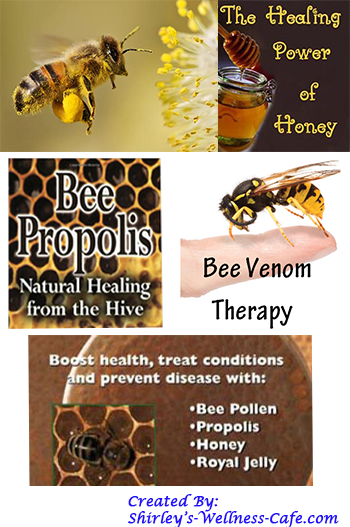 "We have completely elucidated the molecular basis of the antibacterial activity
of a single medical-grade honey, which contributes to the applicability of honey
in medicine," said Sebastian A.J. Zaat, a researcher involved in the work from
the Department of Medical Microbiology at the Academic Medical Center in Amsterdam.
"We have completely elucidated the molecular basis of the antibacterial activity
of a single medical-grade honey, which contributes to the applicability of honey
in medicine," said Sebastian A.J. Zaat, a researcher involved in the work from
the Department of Medical Microbiology at the Academic Medical Center in Amsterdam.
Honey or isolated honey-derived components might be of great value for prevention
and treatment of infections caused by
antibiotic resistant bacteria. To make the discovery, Zaat and colleagues investigated the antibacterial
activity of medical-grade honey in test tubes against a panel of antibiotic-resistant,
disease-causing bacteria. They developed a method to selectively neutralize
the known antibacterial factors in honey and determine their individual antibacterial
contributions.
Ultimately, researchers isolated the defensin-1 protein, which
is part of the honeybee immune system and is added by bees to honey. After analysis,
the scientists concluded that the vast majority of honey's antibacterial properties
come from that protein. This information also sheds light on the inner workings
of honey bee immune systems, which may one day help breeders create healthier
and heartier honey bees.
Wound Healing with Honey
Honey can assist wound healing because:
- It is Antibacterial and rapidly clears infecting bacteria, including antibiotic-resistant strains.
- Honey's antibacterial property can diffuse deeply into skin tissues, so that it can reach deep-seated infections.
- Cleans wounds. Honey has a debriding effect.
- The osmotic effect of honey lifts dirt out of the wound bed.
- Dressings do not stick to the surface of the wound allowing easy removal of dressings.
The osmotic effect of the honey keeps the wound moist, clean and
prevents the dressing sticking to the wound. Tissue damage and pain are reduced
when dressings are changed as there is no tearing away of newly formed tissue. Healing is more rapid.
-
Reduces scarring. The honey draws body fluids and nutrients to the wound area and so assists cell growth and prevents a scar forming as the wound is
kept moist. Honey provides nutrients (vitamins, minerals and amino acids) to tissues
- Promotes more rapid healing because the honey stimulates tissue regeneration.
- Acidity of honey releases oxygen from hemoglobin new growing cells need oxygen. Honey stimulates the white blood cells.
- Hydrogen peroxide in honey has an insulin-like effect and promotes wound healing. Insulin is a growth hormone
- Anti-inflammatory action of honey soothes and promotes healing, reduces pain and swelling
- Honey forms a protective barrier to prevent cross-infection of wounds.
- Honey removes malodor from wounds by killing the bacteria which produce ammonia
- Honey does not damage the surrounding tissue
- Honey minimizes the need for grafting

Bee Venom Therapy
 Bee venom therapy, or apitherapy, uses the stings of live bees to relieve
symptoms of MS such as pain, loss of coordination, and muscle weakness. Stinging
is not limited to any specific area of the body, as stings in different places
seem to produce different results. Apitherapy researchers suggest that certain
compounds in bee venom, namely melittin and adolapin, help reduce inflammation
and pain, and that the combination of all the "ingredients" in
bee venom somehow
helps the body to release natural healing compounds in its own defense.
Bee venom therapy, or apitherapy, uses the stings of live bees to relieve
symptoms of MS such as pain, loss of coordination, and muscle weakness. Stinging
is not limited to any specific area of the body, as stings in different places
seem to produce different results. Apitherapy researchers suggest that certain
compounds in bee venom, namely melittin and adolapin, help reduce inflammation
and pain, and that the combination of all the "ingredients" in
bee venom somehow
helps the body to release natural healing compounds in its own defense.
Apitherapy, the medicinal use of honey bee products, has been practiced since
ancient times. In the modern world honey bee venom has found wide uses in treating
arthritis and other inflammatory and degenerative diseases. The world scientific
literature contains more than 1500 articles on bee venom. The French and Russian
equivalents of the N.I.H. have been involved in clinical studies of honey bee
venom, and in the U.S. the Army has looked extensively at the chemical compounds
in bee venom.
Other substances, such as Compound X, Hyaluronidase, Phospholipase A2, Histamine,
and Mast Cell Degranulating Protein (MSDP), are involved in the inflammatory
response of venom, with the softening of tissue and the facilitation of flow
of the other substances. Finally, there are measurable amounts of the neurotransmitters
Dopamine, Norepinephrine and Seratonin.
Honey bee venom contains at least 18 active substances. Melittin,
the most prevalent substance, is one of the most potent anti-inflammatory
agents known (100 times more potent than hydrocortisol). Adolapin is
another strong anti-inflammatory substance, and inhibits cyclooxygenase;
it thus has analgesic activity as well. Apamin inhibits complement C3 activity,
and blocks calcium-dependent potassium channels, thus enhancing nerve transmission.
Bee Venom therapy can be useful in a wide variety of medical situations. Charles
Mraz, a beekeeper in Middlebury, Vermont who has popularized bee venom therapy
for the past 60 years, says that it is reasonable to try bee venom therapy in
any clinical situation where nothing else works. However, there are four situations which are most frequent:
- Arthritis and other systemic inflammations
Bee venom therapy can be useful in both rheumatoid and osteoarthritis, helping with
both pain and swelling. In the case of
rheumatoid arthritis, rheumatoid nodules
can lessen in size. Other connective tissue diseases such as scleroderma have
been (anecdotally) helped by BVT. Even systemic inflammations not related to
joints, such as ulcerative colitis or even asthma, may warrant a trial of bee
venom. This is presumably due to stimulation of endogenous cortisol through
the hypothalamus-pituitary-adrenal axis.
- Acute and chronic injuries. Bursitis, tendinitis and other areas of injury
respond well to bee venom therapy. In this case, the effect is probably a local
anti- inflammatory effect, involving the humoral and cellular immune responses
to a foreign protein. Chronic back and neck pain may respond, as can other aches
and pains.
- Scar tissue Keloids and other scar tissue are broken down and softened
by the substances in the venom, and can flatten out and fade in color. Internal scar
tissue, such as adhesions from previous surgery, may respond to treatment over
the area.
- Multiple Sclerosis This use of bee venom is poorly understood, and needs
to be studied further. Recently, the MS Associat ion of America awarded a grant
to an immunologist, Dr. John Santilli, to prepare the venom in extract form
to study its effect on MS patients. Hundreds of patients with MS currently seek
out bee venom therapists and beekeepers. The treatment is prolongued and not
for the squeamish, but the common responses are increased stability, less fatigue,
and less spasm. Given the fact that no major studies on BVT have been done so
far, it is estimated that only about 50 U.S. physicians use it to treat MS or
other diseases. And the evidence that BVT helps MS patients, although encouraging,
remains anecdotal.
Despite this, of the more than 250,000 cases of multiple
sclerosis nationwide, thousands of patients are said to use bee venom as an
alternative approach to the interferon, corticosteroids, and other drugs typically
used. Word on BVT has spread to where the American Apitherapy Society says there
are about 10,000 people providing this therapy — apitherapists, beekeepers,
and acupuncturists, as well as those with no health background. Some patients
even treat themselves. But the lack of medical training among most practitioners
and the risk of dangerous allergic reactions to the treatment have raised concerns
about BVT among the medical establishment.
Nonetheless, bee venom therapy has generated enough "buzz" that Georgetown
University in Washington, D.C., has begun a one-year preliminary study, funded
by the Multiple Sclerosis Association of America, to research apitherapy as
a potential treatment. In the end, researchers hope to settle the debate whether
bee venom should be considered a serious treatment for MS.
Bee Propolis: Natural Healing from the Hive
 Propolis has been used in
traditional medicines for thousands of years. Bee Propolis, which bees process from
the plant and tree resin they gather and use to protect the health of their
hives, has also been shown to have powerful antibacterial and anti-inflammatory
effects in humans. Dr. Seema Patel of the Bioinformatics and Medical Informatics Research Center, San Diego State University
conducted a comprehensive review of the literature on propolis'
efficacy against cancers. In addition, propolis was found to mitigate the side effects or
toxicity of chemotherapy drugs used in the treatment of cancer.
Propolis has been used in
traditional medicines for thousands of years. Bee Propolis, which bees process from
the plant and tree resin they gather and use to protect the health of their
hives, has also been shown to have powerful antibacterial and anti-inflammatory
effects in humans. Dr. Seema Patel of the Bioinformatics and Medical Informatics Research Center, San Diego State University
conducted a comprehensive review of the literature on propolis'
efficacy against cancers. In addition, propolis was found to mitigate the side effects or
toxicity of chemotherapy drugs used in the treatment of cancer.
The National Institutes of Health rates propolis as "possibly effective" for treating
cold sores, genital herpes, and post-surgery mouth pain. Propolis is also used to make
cough drops for cough and throat irritation. It has been proven
effective in treating skin conditions,
wounds, burns, and in the treatment of respiratory problems such as asthma and
bronchitis.
The composition of propolis varies from hive to hive, from district to district, and from season to season.
Normally, it is dark brown in color, but it can be found in green, red, black, and white hues, depending on
the sources of resin found in the particular hive area.
Honey bees are opportunists, gathering what they
need from available sources, and detailed analyses show that the chemical composition of propolis varies
considerably from region to region, along with the vegetation. In northern temperate climates, for example,
bees collect resins from trees, such as poplars and conifers (the biological role of resin in trees is to seal
wounds and defend against bacteria, fungi and insects).
This guide explains how to use propolis as a part of an everyday
health routine to boost the immune system and as a possible substitute for antibiotics.
Also included is a list of propolis products that are on the market and instructions
for consumers to make their own propolis remedies.
Bee Pollen is a Complete Nutrition
Bee pollen is the food of the young bee and it is approximately 40% protein.
It is considered one of nature's most completely nourishing foods. It contains
nearly all nutrients required by humans. The percentage
of rejuvenating elements in bee pollen remarkably exceeds those present in brewer's
yeast and wheat germ. Bee pollen corrects the deficient or unbalanced nutrition,
common in the customs of our present-day civilization of
consuming incomplete foods, often with added chemical ingredients, which expose
us to physiological problems as various as they are numerous.
Pollen is considered an energy and nutritive tonic in Chinese medicine. Cultures
throughout the world use it in a surprising number of applications: for improving
endurance and vitality, extending longevity, aiding recovery from chronic illness,
adding weight during convalescence, reducing cravings and addictions, regulating
the intestines, building new blood, preventing infectious diseases such as the
cold and flue (it has antibiotic type properties), and helping overcome retardation
and other developmental problems in children. It is thought to protect against
radiation and to have anti-cancer qualities. NOTE: Babies under
18 months should not be given raw honey or raw bee pollen.
 Nutrient deficiencies and all the health problems they cause are recognized
worldwide as a growing problem. Because bee pollen contains all the nutrients
needed to sustain life, it is being used on an ever larger scale for human nourishment
and health. Science teaches that bee pollen contains many substances that combine
to make it a healthy, nutritious, complete food. There are numerous reports
from medical experience that conclusively show the benefits of bee pollen exceed
that of a simple food item. And the bees do most of the work. Bee-gathered pollens are rich in proteins, free amino acids, vitamins, including
B-complex, and folic acid.
Nutrient deficiencies and all the health problems they cause are recognized
worldwide as a growing problem. Because bee pollen contains all the nutrients
needed to sustain life, it is being used on an ever larger scale for human nourishment
and health. Science teaches that bee pollen contains many substances that combine
to make it a healthy, nutritious, complete food. There are numerous reports
from medical experience that conclusively show the benefits of bee pollen exceed
that of a simple food item. And the bees do most of the work. Bee-gathered pollens are rich in proteins, free amino acids, vitamins, including
B-complex, and folic acid.
According to researchers at the Institute of Apiculture, Taranov, Russia,
"Honeybee pollen is the richest source of vitamins found in Nature in a single
food. Even if bee pollen had none of its other vital ingredients, its content
of rutin alone would justify taking at least a teaspoon daily, if for no other
reason than strengthening the capillaries. Pollen is extremely rich in rutin
and may have the highest content of any source, plus it provides a
high content of the nucleics RNA [ribonucleic acid] and DNA [deoxyribonucleic acid]."
Bee pollen is a complete food and contains many elements that products of
animal origin do not possess. Bee pollen is more rich in proteins than any animal
source. It contains more amino acids than beef, eggs, or cheese of equal weight.
Bee pollen is particularly concentrated in all elements necessary for life.
Researchers have demonstrated that there is a substance in bee pollen that
inhibits the development of numerous harmful bacteria. Experiments have shown
bee pollen contains an antibiotic factor effective against salmonella and some
strains of bacteria. On the clinical level, studies have shown that a regulatory
effect on intestinal function can be attributed to bee pollen. The presence
of a high proportion of cellulose and fiber in pollen, as well as the existence
of antibiotic factors, all contribute to an explanation for this efficacious effect.
Working with lab animals has demonstrated that the ingestion of bee pollen
has a good effect on the composition of blood. A considerable and simultaneous
increase of both white and red blood cells is observed. When bee pollen is given
to anemic patients, their levels of hemoglobin [oxygen-carrying red blood cells]
increase considerably.
It is reported that bee pollen in the diet acts to normalize cholesterol
and triglyceride levels in the blood: Upon the regular ingestion of bee pollen,
a reduction of cholesterol and triglycerides was observed. High-density lipoproteins
(HDL) increased, while low-density lipoproteins (LDL) decreased. A normalization
of blood serum cholesterol levels is also seen.
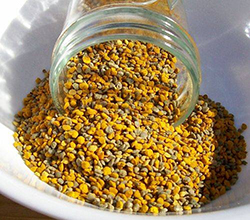 The pollen used in this study was supplied by the Division of Bee Culture and, according
to the report, "was the bee-gathered type." One group of mice was fed mice chow
only; another group was fed mice chow with the addition of bee pollen at a ratio
of 1 part bee pollen to 10,000 parts food. Dr. Robinson's article states, "Particular
attention was given to the weight of the treated animals, since underweight
can in itself bring about a delay in tumor development.
The pollen used in this study was supplied by the Division of Bee Culture and, according
to the report, "was the bee-gathered type." One group of mice was fed mice chow
only; another group was fed mice chow with the addition of bee pollen at a ratio
of 1 part bee pollen to 10,000 parts food. Dr. Robinson's article states, "Particular
attention was given to the weight of the treated animals, since underweight
can in itself bring about a delay in tumor development.
No decrease in weight occurred in the animals receiving the pollenized food. Instead, a slight but
fairly uniform increase was noted, possibly due to a nutritional factor in pollen."
In his summary, Dr. Robinson reveals the dramatic results: "In the untreated
mice [the mice not given bee pollen], mammary tumors appeared as expected at
an average of 31.3 weeks. Tumor incidence was 100 percent. In the postponement
series, [the mice given bee pollen], the average [onset of tumors] was 41.1
weeks, a delay of 9.8 weeks being obtained. Seven mice in this series were still
tumor-free at 56 to 62 weeks of age, when the tests were terminated. I would
like to emphasize that these mice were especially bred to die from cancerous
tumors. Without the protection of bee pollen in their food, the mice developed
tumors and died right on schedule.
More good news comes from the University of Vienna, where Dr. Peter Hernuss
and colleagues conducted a study of twenty-five women suffering from inoperable
uterine cancer. Because surgery was impossible, the women were treated with
chemotherapy. The lucky women given bee pollen with their food quickly exhibited
a higher concentration of cancer-fighting immune-system cells, increased antibody
production, and a markedly improved level of infection-fighting and oxygen carrying
red blood cells (hemoglobin). These women suffered less from the awful side
effects of chemotherapy as well. Bee pollen lessened the terrible nausea that
commonly accompanies the treatment and helped keep hair loss to a minimum. The
women also slept better at night. The control group receiving a placebo did
not experience comparable relief.
 A report from the Agronomic Institute, Faculty of Zootechnics, Romania, showed
the immune-strengthening effects of bee pollen. According to the report, "Comparative
Studies Concerning Biochemical Characteristics of Beebread as Related to the
Pollen Preserved in Honey" by Dr's. E. Palos, Z. Voiculescu, and C. Andrei, "An
increase has been recorded in the level of blood lymphocytes, gamma globulins,
and proteins in those subjects given pollen in comparison with control groups.
The most significant difference occurred in lymphocytes. These results thus
signify a strengthening in the resistance of the organic system."
A report from the Agronomic Institute, Faculty of Zootechnics, Romania, showed
the immune-strengthening effects of bee pollen. According to the report, "Comparative
Studies Concerning Biochemical Characteristics of Beebread as Related to the
Pollen Preserved in Honey" by Dr's. E. Palos, Z. Voiculescu, and C. Andrei, "An
increase has been recorded in the level of blood lymphocytes, gamma globulins,
and proteins in those subjects given pollen in comparison with control groups.
The most significant difference occurred in lymphocytes. These results thus
signify a strengthening in the resistance of the organic system."
Lymphocytes are the white blood cells that are the "soldiers" of the immune
system. They are responsible for ridding the body of injurious and harmful substances,
including infected or diseased cells, mutant and cancerous cells, viruses, metabolic
trash, and so on. Gamma globulin is a protein formed in the blood, and our ability
to resist infection is closely related to this protein's activity.
Bee Pollen Can Treat Allergies!
Pollen is also a remedy for hay fever and allergies. However it must be taken
at least six weeks before the season begins and then continued throughout the
season if it going to work.
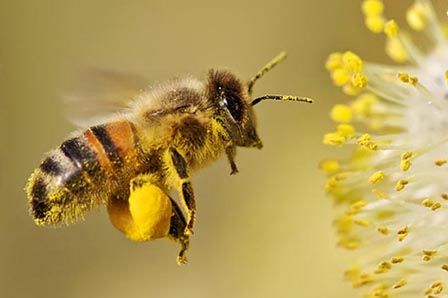 Bee pollen has been
effectively used down through the ages to rid allergy
sufferers of their afflictions. This technique, called desensitization, was
developed at St. Mary's Hospital Medical School in London soon after the turn
of the century.
Bee pollen has been
effectively used down through the ages to rid allergy
sufferers of their afflictions. This technique, called desensitization, was
developed at St. Mary's Hospital Medical School in London soon after the turn
of the century.
The treatment consists of administering small amounts of the
allergen to stimulate the patient's own immune system to produce antibodies
that will eliminate the allergic reaction. It works rather like a vaccination
does against childhood diseases. Desensitization is based on the premise that
the administration of the allergen will cause the body to produce antibodies
that will cancel out the effects of the offending substance when the patient
is again exposed to it.
Leo Conway, M.D., of Denver Colorado, treated his patients with pollen. Dr.
Conway reported: "All patients who had taken the antigen [pollen] for three
years remained free from all allergy symptoms, no matter where they lived and
regardless of diet. Control has been achieved in 100 percent of my earlier cases
and the field is ever-expanding. Since oral feeding of pollen for this use was
first perfected in his laboratory, astounding results were obtained. No ill
consequences have resulted. Ninety-four percent of all his patients were completely
free from allergy symptoms. Of the other six percent, not one followed directions,
but even this small percentage were nonetheless partially relieved".
Relief of hay fever, pollen-induced asthma, with ever increasing control
of bronchitis, ulcers of the digestive tract, colitis, migraine headaches, and
urinary disorders were all totally successful. Unfortunately, Dr. Conway, an
early pioneer in the field of allergies, is now deceased. What we did not know
was just how lightning-fast it could bring relief. It actually eliminated long-standing
symptoms in minutes. Everything from asthma to allergies to sinus problems cleared.
These trials confirmed that bee pollen is wonderfully effective against a very
wide range of respiratory distress.
Bee Products and Physical Activity
 The British Sports Council recorded increases in strength of as high as 40
to 50 percent in those taking bee pollen regularly. Even more astounding, the
British Royal Society has reported height increases in adults who take pollen.
Antii Lananaki, coach of the Finnish track team that swept the Olympics in 1972,
revealed, "Most of our athletes take pollen food supplements. Our studies show
it significantly improves their performance. There have been no negative results
since we have been supplying pollen to our athletes."
The British Sports Council recorded increases in strength of as high as 40
to 50 percent in those taking bee pollen regularly. Even more astounding, the
British Royal Society has reported height increases in adults who take pollen.
Antii Lananaki, coach of the Finnish track team that swept the Olympics in 1972,
revealed, "Most of our athletes take pollen food supplements. Our studies show
it significantly improves their performance. There have been no negative results
since we have been supplying pollen to our athletes."
Alex Woodly, then executive director of the prestigious Education Athletic
Club in Philadelphia, said, "Bee pollen works, and it works perfectly. Pollen
allows super-stars to increase their strength and stamina up to 25 percent.
This increase in strength and endurance may be the key to the secret regenerative
power of bee pollen. Bee pollen causes a definite decrease in pulse rate. The
whole beauty of bee pollen is that it's as natural as you can get. No chemicals.
No steroids." Renowned German naturalist Francis Huber was a great proponent
of this miraculous food from the hive. Huber called bee pollen "the greatest
body builder on Earth."
Bee Pollen and Weight Control
Bee pollen works wonders in a weight-control or weight-stabilization regimen
by correcting a possible chemical imbalance in body metabolism that may be involved
in either abnormal weight gain or loss. The normalizing and stabilizing effects
of this perfect food from the bees are phenomenal.
In weight-loss programs, bee pollen stimulates the metabolic processes. It
speeds caloric burn by lighting and stoking the metabolic fires. Honeybee pollen
is coming to be recognized as Nature's true weight-loss food. Bee pollen is
a low-calorie food. It contains only ninety calories per ounce. (An ounce is
about two heaping tablespoons.) It offers 15 percent lecithin by volume. Lecithin
is a substance that helps dissolve and flush fat from the body. This is one
reason why bee pollen lowers low-density lipoproteins (LDL) surer and faster
than any other food while helping increase the helpful high-density lipoproteins
(HDL), which science says protect against cholesterol and heart disease.
 By boosting the value of each nutrient present in the food you eat, bee pollen
also eliminates cravings. Its natural phenylalanine content acts as an appetite
suppressant. Phenylalanine is a natural amino acid that the body requires. It
acts on your appestat, the control center that signals fullness and hunger.
Mother Nature knows what she's about. You just plain won't want to eat as much
when you take bee pollen regularly. When you are overweight, phenylalanine exerts
a natural appetite suppressant effect. When you need to gain weight, the phenylalanine
in bee pollen works in reverse.
By boosting the value of each nutrient present in the food you eat, bee pollen
also eliminates cravings. Its natural phenylalanine content acts as an appetite
suppressant. Phenylalanine is a natural amino acid that the body requires. It
acts on your appestat, the control center that signals fullness and hunger.
Mother Nature knows what she's about. You just plain won't want to eat as much
when you take bee pollen regularly. When you are overweight, phenylalanine exerts
a natural appetite suppressant effect. When you need to gain weight, the phenylalanine
in bee pollen works in reverse.
The chemical drug in over-the-counter weight-loss products is a man made cousin
of phenylalanine called phenylpropanolamine, which chemically depresses the
appetite whether you are fat, thin, or just right. It can also give you the
jitters and leave you with a drug-induced "hangover" and can be addictive. Phenylpropanolamine
is a common ingredient in many decongestants, explaining why one of the side
effects of these products is loss of appetite. Products that include phenylpropanolamine
as an ingredient must by law carry a warning that they should not be taken by
persons with certain conditions, including thyroid problems and high blood pressure.
Bee Pollen contains all the Essential Components of Life
Bee pollen is often referred to as nature's most complete food. Human
consumption of bee pollen is praised in the Bible, other religious books, and ancient Chinese and Egyptian texts. It has long been prescribed by
traditional health practitioners-including the fathers of Western medicine Hippocrates, Pliny the Elder, and Pythagoras-for its healing properties.
Bee pollen rejuvenates your body, stimulates organs and glands, enhances vitality, and brings about a longer life span. Bee pollen's ability to
consistently and noticeably increase energy levels makes it a favorite substance among many world class athletes and those interested in sustaining
and enhancing quality performance." Steve Schecter N.D.
Bee pollen contains all the essential components of life. The percentage
of rejuvenating elements in bee pollen remarkably exceeds those present in brewer's
yeast and wheat germ. Bee pollen corrects the deficient or unbalanced nutrition,
common in the customs of our present-day civilization of consuming incomplete
foods, often with added chemical ingredients, which expose us to physiological
problems as various as they are numerous.
Alicia McWatters, Ph.D - " Bee pollen’s popularity is increasing
as more and more dog owners and breeders are recognizing its great potential.
Bee pollen contains many healing components and has been used for centuries
as a source of nourishment. Today it is used not only for achieving better human
health, but also to improve the health of our canine friends."
Longevity and the Aging Process
According to G. Liebold, a holistic physician and psychologist of Karlsruhe,
Germany, "Bee pollen is an excellent prophylaxis and therapeutic treatment against
all the precocious symptoms of old age. It should be considered a universal
geriatric treatment in the form of a natural remedy.
"Bee pollen causes an increase in physical and mental abilities, especially
of concentration and memory ability, activates sluggish metabolic functions,
and strengthens the cardiovascular and respiratory systems. This natural nutriment
from the bees removes the causes of cardiovascular symptoms, such as arteriosclerosis,
cerebral insufficiency, and other sequelae. It prevents nutrient deficiency
during old age, gravidity [pregnancy], and the lactation [nursing] period. Bee
pollen accelerates convalescence after serious illness and/or an operation,
increases the body's physical defensive powers of the immune system stimulates
mental and psychological resistance to stress, and creates a harmonizing of
vegetative and hormonal disorders."
Dr. Nicolai Vasilievich Tsitsin, the USSR's chief biologist (and botanist)
and an acknowledged expert on geriatrics, spent quite a few years pursuing the
secrets of the many in what was the Soviet Union who live extraordinarily long
lives. He visited the numerous small villages that dot the landscape high up
in the Caucasus mountains, where the air is always clear and sweet. In summer,
the breezes there are perfumed with the scent of thousands of wild flowers.
The villagers work their small farms and tend their kitchen gardens without
the dubious "benefits" of the space-age technologies employed by agri-biz conglomerates.
This is one of the few areas left in the world where the old ways still prevail.
The stalwart families who make their homes in the mountainous regions of
the former Soviet Union are some of the most long-lived people in the world.
On examination, many exhibit signs of "silent" heart disease, scars of "silent"
heart attacks that would have almost certainly been lethal to a modern man or
woman. The hard physical work they do every day well into what some of us in
the so-called civilized world consider old age plays a part in their remarkably
healthy lifestyle.
Dr. Tsitsin was amazed to find more than 200 individuals over 125 years of
age, all still working every day and participating actively in village life.
The hard facts of their daily existence partially explained the extended life
span they achieved, but Dr. Tsitsin remained puzzled. He knew there had to be
some other factor entering into the equation. He set himself the task of finding
the common denominator. Then he stumbled upon it.
These people kept bees. Beekeeping is a profession that in itself a historically
confers some sort of "magical" life protection on its members, a fact validated
by today's scientific research. Still, only very well informed, modern beekeepers
are knowledgeable about the many health-promoting benefits of bee pollen and
regularly serve it at table. The villagers didn't fit the profile. Dr. Tsitsin
dug deeper.
He found the answer. These beekeepers, happy and fulfilled though they were
with their almost idyllic pastoral existence, were very poor. Bartering among
themselves to exchange homegrown or handmade products for services was the accepted
way of life. They had little cash available to them, so they regularly harvested-and
either sold or bartered away the pure, clear honey from the combs of their beehives.
What they kept for themselves and ate regularly was the thick residue that accumulated
on the bottoms of their hives.
When he was served some of the sweet, sticky stuff in the home of one of
the villagers, Dr. Tsitsin realized that this was the magic elixir that contributed
to the remarkable longevity. The tasty but unattractive glob was rich with golden
granules of bee pollen. Dr. Tsitsin attributed the remarkable health and extended
life spans of these particular Russians to the scientifically documented action
of bee pollen. He concluded his report by saying, "Taken regularly and in sufficient
amounts, bee pollen will prolong the life span of man for many years."
Another Russian scientist, Naum Petrovich Ioyrish, chief of the Academy of
July 26, 1997Vladivostok and author of Bees and People, agrees. In 1975, Dr.
Ioyrish reported without any qualification, "Long lives are attained by bee
pollen users. It is one of the original treasure houses of nutrition and medicine.
Each grain contains every important substance necessary to life."
The Evolution of Bee Pollen
Gathering pollen is not as easy as it sounds. Once a honeybee arrives at
a flower, she settles herself in and nimbly scrapes off the powdery loose pollen
from the stamen with her jaws and front legs, moistening it with a dab of the
honey she brought with her from the hive. The enlarged and broadened tarsal
segments of her legs have a thick trimming of bristles, called pollen combs.
The bee uses these combs to brush the gold powder from her coat and legs in
mid-flight. With a skillful pressing movement of her auricle, which is used
as a hammer, she pushes the gathered gold into her baskets. Her pollen baskets,
surrounded by a fringe of long hairs, are simply concave areas located on the
outside of her tibia's. When the bee's baskets are fully loaded, the microscopic
golden dust has been tamped down into a single golden grain, or granule.
Honeybees do double duty. They are programmed to gather pollen and carry
it back to the hive as food for the colony. However, even more important as
far as humans are concerned, they are also responsible for the pollination of
more than 80 percent of green growing things. As bees buzz from blossom to blossom,
microscopic pollen particles coat their stubby little bodies so densely that
they sometimes look like little yellow fuzz balls. When they arrive at the next
flower, a portion of the live golden dust is transferred to that blossom and
pollination is accomplished.
The development of every plant and animal on the planet was shaped by evolution.
Evolution is driven by gene mutations, or genetic accidents. Most mutations
cause detrimental changes that cause the plant or animal to die. However, on
very rare occasions, beneficial mutations occur, and these are passed on to
successive generations-as Nature selects for stronger, more optimal individuals?or
in popular terms 'survival of the fittest'. Beneficial mutations allow plant
and animals to develop a competitive edge over similar plants in the battle
for reproduction and survival.
Here's an example: in the rain forest, there is a huge variety of plants.
In fact, there are so many plants that they battle each other for space and
sunlight. The trees that have evolved to grow the tallest, and the fastest,
out-compete the other trees in the race for sunlight. They are the plants that
win the battle for survival. However, this may be temporary, because other plants
are evolving to become more competitive with the leaders. Evolution is an on-going
competition.
In much the same way that rain forest trees compete for sunlight, flowering
plants compete with each other for the bees services. The ability of a flowering
plant to attract bees translates directly into their reproductive success. If
bees give a greater share of attention to a certain species of plant, then that
plant will propagate more and will become the dominant plant in the area. While
bees collect pollen from all types of plants, they show preferences for certain
types of pollen. The pollen that is most attractive to bees, naturally, is pollen
that provides the best nutrients for their health. In this plant competition,
reproductive success is driven by the ability to evolve the most nutritious
pollen that will attract the most bees. Plants with lower quality pollen are
then driven to evolve higher quality pollen in order to become more competitive
for the bees attention.
150 million years of this evolutionary pressure has driven bee pollen to
become more and more nutritionally superior. The end product of this process
of natural selection is bee pollen with high intensity nutrition.
Mysterious, Massive Death of Bees
Honeybees from the beginning have played a key role in human survival. Most fruit trees
and vegetable species are entirely dependent on bees to produce, and there's
no artificial replacement for natural pollination. But the bees are disappearing.
Massive die-offs, first reported in November 2006, are now the subject of international
emergency research as scientists race to discover the cause of this ecological
disaster. Could it be a disease? Is it caused by pesticides, genetically modified
foods or radiation from cell phone towers? Whatever is happening, we must solve
the mystery and correct the problem soon or face unimaginable consequences.
In the US, bee keepers are experiencing unprecedented die offs of bees some
losing as much as 80% of their colonies. Commercial beekeepers in 22 states
have reported deaths of tens of thousands of honeybee colonies. So far the cause
remains unexplained and somewhat mysterious. It is being called Colony Collapse
Disorder (CCD) and is causing agricultural honeybees nationwide to abandon their
hives and disappear and raising worries about crops that need bees for pollination.
It's a kind of mass suicide in the bee world. "There have been cases where there
have been these die-offs of bees before, but we have never seen it to this level,"
said Maryann Frazier, a Pennsylvania State University entomologist. "One operation
after another is collapsing."