Reversing Dehydration, and Drinking Adequate Amounts of Water
F. Batmanghelidj, M.D.
"I have used water to cure people who were suffering from "incurable"
diseases. I have cured people who suffered for 10 years, 20 years,
even 30 years from painful conditions produced by dehydration."
It is easy to understand what water does in your body,
but bear in mind there is more to it than just simply drinking water.
You must learn to rehydrate your body gradually and carefully. You
need to recognize your own particular early indicators of thirst.
Not everyone is the same. You must learn what can happen to your
own body when it becomes dehydrated. Not every body registers drought in the same way.
Every function inside the body is regulated by and depends on
water. Water must be available to carry vital elements, oxygen,
hormones, and chemical messengers to all parts of the body. Without
sufficient water to wet all parts equally, some more remote parts
of the body will not receive the vital elements that water supplies.
Water is also needed to carry toxic waste away from the cells.
In fact, there are at least 50 reasons why the body needs sufficient
water on a regular, everyday basis. Without sufficient water to
constantly wet all parts, your body's drought-management system
kicks into action. The histamine-directed chemical messenger systems
are activated to arrange a new, lower quota of water for the drought-stricken
areas. When histamine and its subordinate "drought managers" come across
pain-sensing nerves, they cause pain. This is what I discovered
in my research that I mentioned earlier.
This is why dehydration produces pain as its first alarm signal.
If the dehydration persists and is not corrected naturally with
water, it becomes symptom-producing and, in time, develops into
a disease condition. This is why people who take antacids to silence
their bodies thirst pain become more vulnerable and eventually
develop other serious complications of dehydration.
Medical professionals have been educated to treat pain and disease with
medications. They do not understand the problems associated with
dehydration. Nowhere in their training as doctors are they taught
what happens if one does not drink an adequate amount of water every day.
The Role of Clean Water in Detoxification
 What you take out of your body is just as important for your health as what you put into it. With todays
chemical laden water and food production techniques and our sedentary, over indulgent lifestyles, our bodies
are, more than any generation before us, likely to be saturated
with toxins that are ingested from what we eat and drink and also
generated by our own bodies.
What you take out of your body is just as important for your health as what you put into it. With todays
chemical laden water and food production techniques and our sedentary, over indulgent lifestyles, our bodies
are, more than any generation before us, likely to be saturated
with toxins that are ingested from what we eat and drink and also
generated by our own bodies.
The role of heavy metals and xenobiotics
(pesticides, herbicides, and industrial wastes) are responsible
for a wide variety of adverse health effects. These accumulating
toxins are insidious and prevalent agents capable of interfering
with physiologic functions of all human systems. One cannot expect
the normal detoxification systems of the body to function optimally
when these substances are constantly present. There are more than
3,800 chemicals in daily use, many of which make their way into
our drinking water.
It is essential to drink plenty of pure water to detoxify. Many
health care professionals are encouraging patients to undergo detoxification
regimes. These programs encourage the body to
unload its stores
of accumulated environmental toxins. As the body ingests foods,
water contributes in the breakdown and absorption of nutrients and
is a key element in the removal of wastes. During detoxification,
wastes that have been stored in adipose tissues are dumped into
the bloodstream and lymph, and then sent to the liver and kidneys
for processing and elimination.
 Here is where water’s fifth function,
that of electronegative enhancer, comes into play: by optimizing
the natural space between red blood cells, which reduces the risk
of heart
disease by helping to avoid clotting; and by allowing the
fat cell to detox by off-loading metabolic wastes and environmental
toxins into the bloodstream for elimination. This also assists in
weight loss and reduces water retention.
Here is where water’s fifth function,
that of electronegative enhancer, comes into play: by optimizing
the natural space between red blood cells, which reduces the risk
of heart
disease by helping to avoid clotting; and by allowing the
fat cell to detox by off-loading metabolic wastes and environmental
toxins into the bloodstream for elimination. This also assists in
weight loss and reduces water retention.
Drinking sufficient quantities of water is a necessity for optimal physical
functioning, but it can also play a major role in the prevention
and treatment of many diseases. Chronic fatigue, depression, eczema,
rheumatism, gastric disorders, high or low blood pressure, high
cholesterol, obesity, and urinary infections are but a few of the
many disorders that can result from not drinking enough water, and
which can be treated by raising our intake of this vital liquid.

Sometimes Bottled water is Tap Water
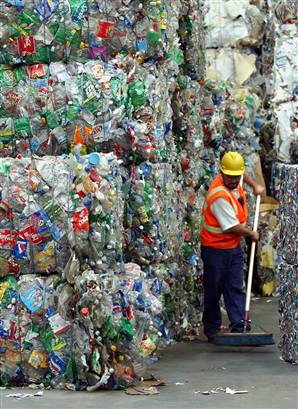 In spite of the springs, mountains, and other bucolic scenes depicted on labels, some bottled water is nothing more than tap water,
NRDC and Consumer Reports have found. The Aquafina brand, for example, is drawn
from the municipal water supplies of Detroit, Fresno, and other cities. Coke
and Pepsi - the main producers of bottled water (under different brand names)
also use tap, not spring water.
In spite of the springs, mountains, and other bucolic scenes depicted on labels, some bottled water is nothing more than tap water,
NRDC and Consumer Reports have found. The Aquafina brand, for example, is drawn
from the municipal water supplies of Detroit, Fresno, and other cities. Coke
and Pepsi - the main producers of bottled water (under different brand names)
also use tap, not spring water.
The most common plastic used in water bottle manufacturing is PET
(polyethylene terephthalate),
an environmentally unfriendly substance that actually requires
17.5 kilograms of water to produce only 1 kilogram of PET. In fact, more water
is used to make PET bottles than is actually put into them. The production of
the plastic also produces numerous byproducts that are extremely harmful to
the environment. The Container Recycling Institute reported that 14 billion
water bottles were sold in the U.S. in 2002, yet only 10 percent of these bottles
were recycled - 90 percent ended up in the trash. That's an extra 12.6 billion
plastic bottles for the landfills; bottles that contained water that was no
more - and often less - healthy than tap water.
There is a correlation between the consumption of soft water (purified water
is extremely soft) and the incidence of cardiovascular disease. Cells, tissues
and organs do not like to be dipped in acid and will do anything to buffer this
acidity including the removal of minerals from the skeleton and the manufacture
of bicarbonate in the blood. The longer one drinks distilled water, the more
likely the development of mineral deficiencies and an acid state. I have done
well over 3000 mineral evaluations using a combination of blood, urine and hair
tests in my practice. Almost without exception, people who consume purified
water exclusively, eventually develop multiple mineral deficiencies. Those who
supplement their purified or distilled water intake with trace minerals are
not as deficient but still not as adequately nourished in minerals as their
non-purified water drinking counterparts even after several years of mineral
supplementation.
Purified water tends to be acidic and can only be recommended as a way of drawing poisons
out of the body. Once this is accomplished, the continued drinking of purified
water is a bad idea. People in Canada and the USA are consuming more bottled
water than coffee, tea, apple juice or even milk. But are they being duped by
misleading promises that bottled water is healthier, purer and fresher than
tap water?
Pharmaceuticals found in drinking water
 "A vast array of pharmaceuticals, including antibiotics, anti-convulsants,
mood stabilizers, and sex hormones, have been found in the drinking water supplies
of at least 41 million Americans, an Associated Press investigation shows. The
presence of so many prescription drugs, and over-the-counter medicines like
acetaminophen and ibuprofen — in so much of our drinking water is heightening
worries among scientists of long-term consequences to human health. In the course
of a five-month inquiry, the AP discovered that
drugs have been detected in the drinking water supplies of 24 major metropolitan areas — from Southern California
to Northern New Jersey, from Detroit to Louisville, Ky."
"A vast array of pharmaceuticals, including antibiotics, anti-convulsants,
mood stabilizers, and sex hormones, have been found in the drinking water supplies
of at least 41 million Americans, an Associated Press investigation shows. The
presence of so many prescription drugs, and over-the-counter medicines like
acetaminophen and ibuprofen — in so much of our drinking water is heightening
worries among scientists of long-term consequences to human health. In the course
of a five-month inquiry, the AP discovered that
drugs have been detected in the drinking water supplies of 24 major metropolitan areas — from Southern California
to Northern New Jersey, from Detroit to Louisville, Ky."
How do the drugs get into the water? People take pills. Their bodies absorb
some of the medication, but the rest of it passes through and is flushed down
the toilet. The wastewater is treated before it is discharged into reservoirs,
rivers or lakes. Then, some of the water is cleansed again at drinking water
treatment plants and piped to consumers. But most treatments do not remove all
drug residue. And while researchers do not yet understand the exact risks from
decades of persistent exposure to random combinations of low levels of pharmaceuticals,
recent studies which have gone virtually unnoticed by the general public,
have found alarming effects on human cells and wildlife.
The federal government doesn't require any testing and hasn't set safety
limits for drugs in water. Of the 62 major water providers contacted, the drinking
water for only 28 was tested. Among the 34 that haven't: Houston, Chicago, Miami,
Baltimore, Phoenix, Boston and New York City's Department of Environmental Protection,
which delivers water to 9 million people.
IntroduciIntroducing a Highly Effective Water Filtration System
This water filtration system is everything you would expect from quality, ease of use,
and the removal of contaminants. You can have confidence that this is the very best water available,
and if you are buying bottled water, you will save money!
Enjoy great tasting, alkaline, ionized, mineralized and antioxidant rich water!
The UltraWater filtration technology in the ēlita non-electric counter top or under sink gives you the cleanest
and healthiest water from any counter top or under sink filter - guaranteed!>Independent, EPA certified, laboratory testing in the USA,
confirms that 99.9% of
virtually all tap water contaminants are removed. This next generation in filtration technology
removes pharmaceuticals, heavy metals, pesticides, chlorine, chloramines, fluoride, and other chemicals.
UltraWater has up to 1000 times more acid neutralizing power than tap or bottled water, and more antioxidant potential.
Plus, it's a delicious way to stay hydrated and more pH balanced. (Rated for 700 Gal per filter)
You're Not Demented, Just Dehydrated
Peter Ragnar
"You don’t need to be stranded in a desert to feel the effects
of dehydration. Almost all the people you see and meet on a daily
basis are dehydrated. How many folks complain of a lack of energy?
It’s the number one complaint in America. Insufficient energy is
the first sign that the blood, tissues, and organs are not getting
enough water, and your liver and brain are the least tolerant of
a lack of water. This has led some medical researchers to conclude
that Alzheimer’s disease
is simply the result of long-term dehydration of the brain. The
same loss of brain function that causes a lost and thirsty person
to eat sand believing it to be water causes your wife, husband,
mother, or father not to recognize you any longer. They are not
demented, only thirsty."
 "...Every time you move any body part, even a finger or toe,
water is required. That’s why dehydrated people have so many aches
and pains. It’s also why people look so old; their dehydrated organs
steal the water from their skin in order to function. Remember,
under ordinary circumstances, you expel up to a gallon of water
every twenty-four hours. What do you think happens when you don’t
replenish that supply? Your body experiences a drought condition!
A mere two percent drop in hydration will make your short-term memory
so fuzzy that you’ll be unable to remember your friend's names,
have trouble doing basic math, and forget where you put your keys.
Since seventy-five percent of Americans are chronically dehydrated,
it’s no wonder people are losing their minds. Yet, the solution
is so simple: cool, clean water.
Drink eight to ten eight-ounce glasses a day of pure water, and
you’ll be amazed at how many ailments disappear. Don’t worry; you’re
not demented—just dehydrated!"
"...Every time you move any body part, even a finger or toe,
water is required. That’s why dehydrated people have so many aches
and pains. It’s also why people look so old; their dehydrated organs
steal the water from their skin in order to function. Remember,
under ordinary circumstances, you expel up to a gallon of water
every twenty-four hours. What do you think happens when you don’t
replenish that supply? Your body experiences a drought condition!
A mere two percent drop in hydration will make your short-term memory
so fuzzy that you’ll be unable to remember your friend's names,
have trouble doing basic math, and forget where you put your keys.
Since seventy-five percent of Americans are chronically dehydrated,
it’s no wonder people are losing their minds. Yet, the solution
is so simple: cool, clean water.
Drink eight to ten eight-ounce glasses a day of pure water, and
you’ll be amazed at how many ailments disappear. Don’t worry; you’re
not demented—just dehydrated!"
Is chlorinated city tap water is completely safe?
 "Most people never give the dangers of chlorine a thought. After all, our elected public officials keep assuring us that
chlorinated city tap water is completely safe for human consumption.
Numerous scientific studies report that chlorinated tap water is a skin irritant
and can be associated with rashes like eczema. "Chlorinated water contains chemical
compounds called trihalomethanes which are carcinogens resulting from the combination
of chlorine with compounds in water. For many years, researchers thought that
the “exposure” came only when chlorine was ingested. But, current studies are
showing that drinking the water is not the only risk. And is likely not even the most severe."
"Most people never give the dangers of chlorine a thought. After all, our elected public officials keep assuring us that
chlorinated city tap water is completely safe for human consumption.
Numerous scientific studies report that chlorinated tap water is a skin irritant
and can be associated with rashes like eczema. "Chlorinated water contains chemical
compounds called trihalomethanes which are carcinogens resulting from the combination
of chlorine with compounds in water. For many years, researchers thought that
the “exposure” came only when chlorine was ingested. But, current studies are
showing that drinking the water is not the only risk. And is likely not even the most severe."
>
These chemicals, also known as organochlorides, do not degrade very well
and are generally stored in the fatty tissues of the body (breast, other fatty
areas, mother's milk, blood and semen). Organochlorides can cause mutations
by altering DNA, suppress immune system function and interfere with the natural
controls of cell growth. Chlorine has been documented to aggravate asthma. Several
studies also link chlorine and chlorinated by-products to a greater incidence
of bladder, breast and bowel cancer as well as malignant melanoma.
One study even links the use of chlorinated tap water
to congenital cardiac anomalies. Anything you can do to filter tap and shower
water that eliminates or minimizes chlorine would certainly be helpful and possibly
curative for some immune system problems."
In a 1992 study that made front-page headlines, and was reported
on in the July issue of the American Journal of Public Health researchers
at the Medical College of Wisconsin in Milwaukee found that people
who regularly drink tap water containing high levels of chlorine
by-products have a greater risk of developing bladder and rectal
cancers than people who drink unchlorinated water. The study estimates
that about 9 percent of all bladder cancer and 18 percent of all
rectal cancer cases are associated with long-term consumption of
these by-products. This amounts to over 20,000 new cases each year.
These concerns about cancer risks associated with chemical contamination
from chlorination by-products have resulted in numerous epidemiological
studies. These studies generally support the notion that by-products
of chlorination are associated with increased cancer risks." "Chlorine
is used to combat microbial contamination, but it can react with
organic matter in the water and form dangerous, carcinogenic trihalomethanes.
What is in your brand of bottled water?
 There
is a perception among many people that bottled water is somehow
more healthy or pure than water from their tap. This is simply an
illusion of marketing. A four-year study by the National Resources
Defense Council (NRDC), released in 1999, found that one-fifth of
the sampled bottled waters contained known neurotoxins and carcinogens
such as styrene, toluene and xylene. Another NRDC study found that,
out of 103 brands of bottled water, one-third contained traces of
arsenic and E. coli. This means that out of a sample of 1,000 bottles
sold in the U.S., at least 300 would have some level of chemical
contamination.
There
is a perception among many people that bottled water is somehow
more healthy or pure than water from their tap. This is simply an
illusion of marketing. A four-year study by the National Resources
Defense Council (NRDC), released in 1999, found that one-fifth of
the sampled bottled waters contained known neurotoxins and carcinogens
such as styrene, toluene and xylene. Another NRDC study found that,
out of 103 brands of bottled water, one-third contained traces of
arsenic and E. coli. This means that out of a sample of 1,000 bottles
sold in the U.S., at least 300 would have some level of chemical
contamination.
A Suffolk County Study in the USA tested 88 bottled waters and what
they found was horrifying. It was this study which discovered the
cancer agent, benzene, in Perrier and caused it to be withdrawn,
but they also found: Freon, kerosene, toluene, trichloroethylene,
and xylene in a number of other bottled waters.
Demineralizing effect on the body by Reverse Osmosis Water
 The "very clean waters" produced by reverse osmosis, (which also
is use by most bottled companies) is called "hungry" or "death"
water. It is so clean that nothing is left in it. The water is charged
with positive ions instead of negative ions and is also acidic instead
of alkaline. The water you drink is supposed to bring all nutrients
to the destination and to flush out any free radicals.
The "very clean waters" produced by reverse osmosis, (which also
is use by most bottled companies) is called "hungry" or "death"
water. It is so clean that nothing is left in it. The water is charged
with positive ions instead of negative ions and is also acidic instead
of alkaline. The water you drink is supposed to bring all nutrients
to the destination and to flush out any free radicals.
Free radicals are basically poisoned waste products produced
by smoking, drinking, inhaling polluted air and even by eating and
exercising. Your body is like a car engine, every time you turn
it on, it burns fuel to move your car, but by doing so produces
smoke, which is poisoned.
If you take in this totally clean water then, instead of supplementing
minerals to the body it does just the opposite - it takes them away.
Can you see that? Can you see that if you would spill clean water
over a dirty rock you would have some of the dirt being washed away
with the clean water?
That is what happens with hungry (totally clean water) - except
it does not take away the dirt but it depletes the body of minerals,
calcium and anything else, as it passes trough the body: Everything
except the free radicals because they are charged positively. This
is also the case with the reverse osmosis water and the bottled
water. As you know from school to positive magnets push each other
away. So the solution is to drink water, which has a range of minus
250 to minus 800 mV with a PH in the range of 8.5
to 9.5.
Dehydration Facts
- 75% of Americans are chronically dehydrated (likely
applies to half the world's population).
- In 37% of Americans, the thirst mechanism is so weak that
it is often mistaken for hunger.
- Even MILD dehydration will slow down one's metabolism as
much as 3%.
- One glass of water shut down midnight hunger pangs for almost
100% of the dieters studied in a University of Washington study.
- Lack of water, the #1 trigger of daytime fatigue.
- Preliminary research indicates that 8-10 glasses of water
a day could significantly ease back and joint pain for up
to 80% of sufferers.
- A mere 2% drop in body water can trigger fuzzy short-term
memory, trouble with basic math, and difficulty focusing on
the computer screen or on a printed page.
- Drinking 5 glasses of water daily decreases the risk of
colon cancer by 45%, plus it can slash the risk of
breast cancer by 79%, and one is 50% less likely to develop bladder cancer.
Are you drinking the amount of water you should every day?
Your Body's Many Cries for Water: You Are Not Sick, You Are Thirsty!
 As a result of extensive research into the role of water
in the body, the author, a medical doctor, believes that he
has found chronic dehydration to be the cause of many conditions
including asthma, allergies, arthritis, angina, migraine headaches,
hypertension, raised cholesterol, chronic fatigue syndrome,
multiple sclerosis, depression, and diabetes in the elderly.
According to Dr. Batmanghelidj, the body possesses many different
thirst signals. A dry mouth is not a reliable indicator of your
body's water needs. He describes a variety of more reliable
ones, and helps you learn to understand when your body is calling
for water. In this way, he claims you can prevent, treat, and
cure a variety of conditions of ill health, at no cost, with
what he calls nature's miracle medicine: Water. The author explains
how much water one needs to drink a day to stay healthy, and
why tea, coffee, and sodas are not good substitutes for water.
This book explains a new discovery that lack of water in the
body--chronic dehydration--is the root cause of many painful
degenerative diseases, asthma, allergies, hypertension, excess
body weight, and some emotional problems including depression.
As a result of extensive research into the role of water
in the body, the author, a medical doctor, believes that he
has found chronic dehydration to be the cause of many conditions
including asthma, allergies, arthritis, angina, migraine headaches,
hypertension, raised cholesterol, chronic fatigue syndrome,
multiple sclerosis, depression, and diabetes in the elderly.
According to Dr. Batmanghelidj, the body possesses many different
thirst signals. A dry mouth is not a reliable indicator of your
body's water needs. He describes a variety of more reliable
ones, and helps you learn to understand when your body is calling
for water. In this way, he claims you can prevent, treat, and
cure a variety of conditions of ill health, at no cost, with
what he calls nature's miracle medicine: Water. The author explains
how much water one needs to drink a day to stay healthy, and
why tea, coffee, and sodas are not good substitutes for water.
This book explains a new discovery that lack of water in the
body--chronic dehydration--is the root cause of many painful
degenerative diseases, asthma, allergies, hypertension, excess
body weight, and some emotional problems including depression.
Children need to drink enough water
Water: How important is it for infants?
For some readers the very idea of giving water to their nursing
babies may be choking. Learn why some experts urge that breasted
or bottle fed infants drink water in our chemically polluted
environment
Donald K. Brown, M.D. -
"Many children don't drink enough water because
they were
raised on sugared beverages and juices."
According to Pediatrics magazine, many children don't drink enough
water because they were raised on sugared beverages and juices.
Substituting juices and sodas for water may subject children to
potential obesity because kids become accustomed to sweet flavor.
Unfortunately, this is not surprising. New soft drinks, sports drinks
and powdered mixes that are targeted to children are frequently
introduced. These drinks are not a healthy source of hydration and
can cause damage to proper development. A 50-pound, active child,
for example, needs about a quart of water each day to stay hydrated.
Even infants are at risk. Babies often cry when they are thirsty.
Weight Control Begins With Hydration
Trying to lose weight is always a challenge, but water can be a
valuable and easily adaptable component of a diet plan. Water acts
as an appetite suppressant and is instrumental in breaking down
and reducing fat deposits. The rate at which we burn calories
(our metabolism) is a chemical process requiring water
We need adequate water to ensure the smooth functioning of this
process. Water helps to flush toxins out our system. The more toxins
in our body the less capable it is of losing weight. If you are
dieting, keep your system functioning properly and maximize weight
loss by drinking plenty of water.
Cancer fighting nutrients become deadly when combined with chlorinated tap water
Some of nature’s most valuable and essential anti-cancer and anti-disease phytochemical nutrients which
are commonly found in food have been discovered to form
deadly cancer causing substances when consumed or combined with chlorinated tap
water. This discovery includes familiar foods including soy, fruits,
vegetables, tea, many health products, and even some vitamins. Research
has proven that these essential nutrients are the exact same families
of compounds, that even in infinitesimal amounts have been tormenting
the water treatment and chlorine industries for years.
It has been known by the water
treatment and chemical industries for many years that chlorine reacts
negatively with natural organic compounds. These industries call
these compounds DBPs (disinfection by-products) which are known
to cause cancer in populations whose drinking water contains them.
THM, the most commonly known DBP, is known to cause a high incidence
of bladder cancer and also to cause spontaneous abortion of fetuses.
The Environmental Protection
Agency has continually tightened their restrictions on THMs in drinking
water, and even tighter restrictions are just around the bend. Yet
it is interesting to note that the many government agencies and
chlorine industries have conveniently neglected to take a serious
look at food, health supplement, and pharmaceutical drug consumption,
preparation, and production relating to use of chlorinated tap water.
There is good reason for the public to seriously examine and
question this entire issue. Many years ago laws were passed making
chlorination of water mandatory. Now, the chlorine industry and
government agencies must continue their existing policies, because
if sudden or drastic changes are made, the legal liabilities would
be staggering. Certainly some government or industry personnel have
known or theorized about these problems and have been covering them
up for many years. However, if anyone were to admit to it, the consequences
could be disastrous. This predicament could make the tobacco industry
scandal seem insignificant in comparison.
Water Fluoridation Alert!
Respected Medical Professionals and Scientists are warning that
water fluoridation has dangerous long-term consequences to health.
For over 50 years, the U.S. government and media have trumpeted
fluoride as a safe and effective means of reducing cavities, especially
in children. But fluoride is not the benevolent and innocuous substance
the public has been led to believe.
Many countries have banned or rejected water fluoridation
98% Of Western Europe Has Rejected Water Fluoridation. This includes
Austria, Belgium, Denmark, Finland, France, Germany, Italy, Luxembourg,
Netherlands, Norway, and Sweden. The predominant reason for Europe's
rejection is the belief that public drinking water is NOT the appropriate
vehicle with which to deliver medication to a population. India,
and Japan have either rejected or banned its use in recent years.